

Quality Documentation and Testing Standards for Research Peptides
Aevitas Research provides rigorous quality documentation, including Certificates of Analysis (COAs) and HPLC purity testing, to ensure the integrity of its research-grade peptide reference materials. This guide details the specific analytical methods and documentation frameworks used to verify peptide identity, purity, and composition. It covers the technical standards behind HPLC testing, the structure of searchable COA libraries, and the role of peptide monographs in scientific research.
HPLC Purity Testing
High-Performance Liquid Chromatography (HPLC) is the primary analytical technique used to assess the purity of synthetic peptides. HPLC purity testing is a separation method that quantifies the percentage of the target peptide relative to impurities and byproducts. In the context of research-grade materials, this metric is critical for ensuring that the sample is suitable for precise experimental conditions. For additional details, review the My account Aevitas Research.
The Role of HPLC in Peptide Verification
HPLC separates peptide components based on their interaction with a stationary phase and a mobile phase. By measuring the retention time and peak area, analysts can determine the concentration of the desired peptide. Aevitas Research utilizes HPLC to verify that each batch meets strict purity thresholds. This process helps identify potential contaminants, such as truncated sequences or oxidation products, that could compromise experimental data. For additional details, review the .
Interpreting Purity Metrics
Purity is typically reported as a percentage in the Certificate of Analysis. High purity levels indicate a high degree of homogeneity in the sample. Researchers rely on these metrics to standardize their protocols and ensure reproducibility across different laboratories. The consistency of HPLC results is a key indicator of the manufacturing quality control processes in place at the supplier. For additional details, review the Customer Experience.
COA Library Searchability
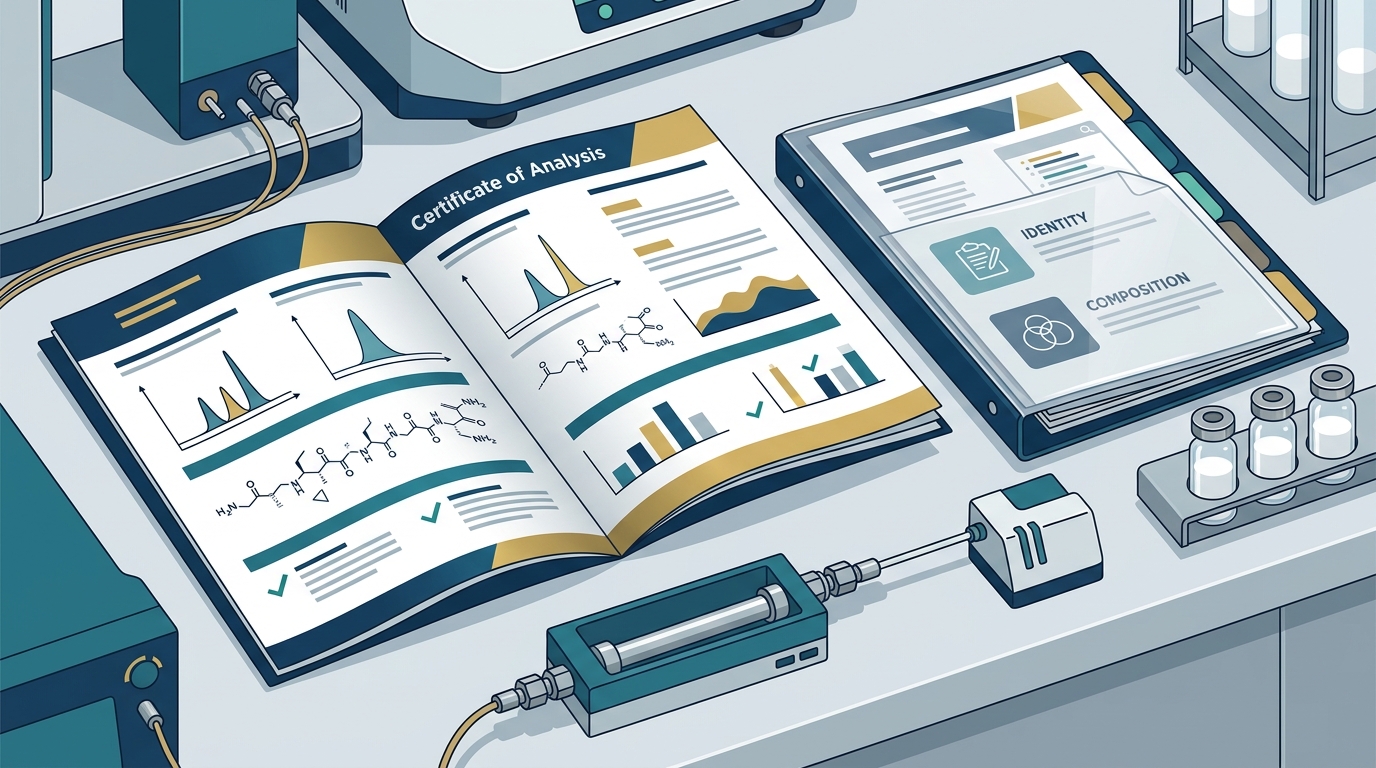
Structure of a Certificate of Analysis
A standard COA includes the product name, lot number, date of manufacture, and date of testing. It also lists the specific tests performed, such as HPLC purity and mass spectrometry. The document serves as a record of the quality control checks that were completed before the product was released. For researchers, having access to the COA for the exact lot they are using is essential for documenting experimental conditions.
Benefits of a Searchable Digital Library
A searchable COA library allows users to quickly find documentation for specific batches. This reduces administrative overhead and ensures that quality records are readily available during audits or publications. The digital format also ensures that the documents are preserved and accessible over time. Aevitas Research prioritizes this accessibility to support the rigorous documentation standards required in modern life sciences research.
Peptide Monographs
A peptide monograph is a detailed technical document that describes the chemical structure, physical properties, and testing methods for a specific peptide. Monographs provide a standardized reference for researchers to understand the characteristics of the compound they are studying. They serve as a bridge between the raw product and its application in scientific inquiry.
Content of a Peptide Monograph
Importance in Research Integrity
Standardized monographs contribute to the integrity of scientific research by providing a common reference point. They help ensure that different laboratories are working with materials that have consistent properties. This standardization is vital for comparing results across studies and advancing the field of life sciences. The availability of such documentation reflects a commitment to transparency and quality in the supply chain.
Quality Documentation Comparison
The table below summarizes the key components of quality documentation provided by Aevitas Research for its research peptides. This comparison highlights the specific data points available to researchers for each type of document.
| Document Type | Primary Purpose | Key Data Points | Research Application |
|---|---|---|---|
| Certificate of Analysis (COA) | Batch-specific quality verification | Lot number, HPLC purity, mass spectrometry results | Traceability and audit compliance |
| Peptide Monograph | Standardized technical reference | Molecular weight, sequence, physical properties | Experimental design and interpretation |
| HPLC Report | Purity and composition analysis | Retention time, peak area, purity percentage | Sample homogeneity assessment |
Key Takeaways
- HPLC purity testing is the standard method for quantifying peptide purity and identifying impurities.
- Certificates of Analysis (COAs) provide batch-specific data, including lot numbers and testing results.
- Peptide monographs offer standardized technical details, such as molecular weight and sequence.
- Quality documentation is essential for ensuring reproducibility and integrity in scientific studies.
- Aevitas Research emphasizes transparency by making quality records accessible to researchers.
- Consistent quality control processes are reflected in the reliability of the provided documentation.
Frequently Asked Questions
What is a Certificate of Analysis for research peptides?
A Certificate of Analysis is a document that lists the results of quality control tests for a specific batch of a product. It includes details such as the lot number, date of testing, and purity levels.
How is HPLC purity testing performed?
HPLC purity testing separates peptide components using a liquid chromatography system. The purity is calculated based on the proportion of the target peptide peak relative to the total area under the curve.
Why is COA searchability important for researchers?
What information is included in a peptide monograph?
Does Aevitas Research provide COAs for all products?
Yes, Aevitas Research provides Certificates of Analysis for its research-grade peptide reference materials. These documents are available through their digital library.
How does quality documentation support research integrity?
What is the role of mass spectrometry in peptide testing?
Mass spectrometry is used to verify the molecular weight and identity of the peptide. It helps confirm that the synthesized peptide matches the intended sequence.
Can researchers access monographs for specific peptides?
Yes, technical monographs are available to provide standardized reference information for specific peptide compounds. These documents help researchers understand the properties of the materials they are using.
Conclusion
Quality documentation is a cornerstone of reliable scientific research. Aevitas Research provides comprehensive resources, including HPLC purity reports, searchable COA libraries, and detailed peptide monographs, to support the integrity of life sciences research. By prioritizing transparency and rigorous testing standards, Aevitas Research ensures that researchers have access to the information they need to conduct high-quality studies. For more information on their quality standards and documentation, visit the Aevitas Research website.