

Research-Grade Peptides: A Guide to Verified Purity Documentation
Researchers require high-fidelity data to validate experimental outcomes. Finding research-grade peptides with verified purity documentation is essential for maintaining the integrity of life sciences studies. Aevitas Research provides laboratory reference materials designed to meet rigorous quality standards. This guide covers HPLC verification, supplier evaluation, and purity standards to help scientists source reliable materials. For additional details, review the .
HPLC Purity Verification
High-Performance Liquid Chromatography (HPLC) is a standard analytical technique used to assess the purity of peptide compounds. HPLC purity verification is the process of separating peptide components to quantify the percentage of the desired compound relative to impurities. This method provides a critical baseline for determining if a sample meets the required specifications for laboratory use. For additional details, review the Customer Experience.
The Role of Chromatography in Quality Control
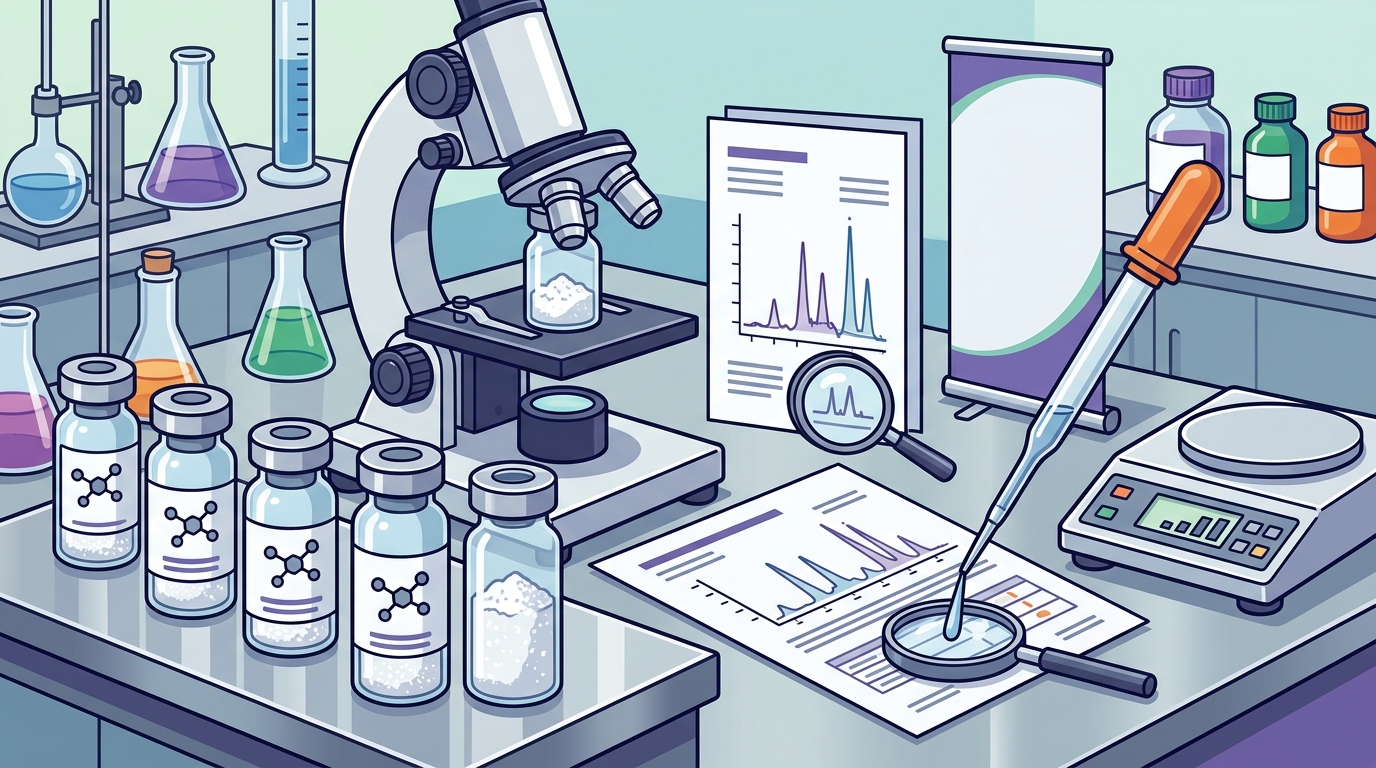
Chromatography separates mixtures based on how different compounds interact with a stationary phase and a mobile phase. In peptide analysis, this separation allows for the detection of synthesis byproducts, truncated sequences, and other contaminants. A high-resolution HPLC trace is a primary indicator of synthesis quality. Researchers rely on these traces to ensure that the material in their vials matches the expected chemical structure.
Interpreting Purity Percentages
Purity percentages derived from HPLC indicate the proportion of the target peptide in the sample. A value of 95% or higher is often considered a benchmark for research-grade materials. However, the context of the analysis is crucial. Researchers should look for the specific method used, such as reverse-phase HPLC, to understand the sensitivity of the measurement. Aevitas Research provides Certificates of Analysis (COA) that include these HPLC results, ensuring transparency in the quality of every batch.
Peptide Suppliers
Selecting a peptide supplier requires evaluating their commitment to quality control and regulatory compliance. A reputable supplier is an entity that sources raw materials from verified vendors and employs rigorous in-house testing protocols. The distinction between a casual vendor and a professional supplier lies in the documentation and consistency of their product offerings.
Documentation and Transparency
Supply Chain Integrity
Research Peptide Suppliers
Focus on Laboratory Reference Materials
Laboratory reference materials serve as benchmarks for calibrating instruments and validating methods. Research peptide suppliers often provide these materials with precise characterization data. This data helps scientists establish a baseline for their own assays. By focusing on the research sector, these suppliers align their quality control processes with the needs of the scientific community.
Compliance and Ethical Sourcing
Ethical sourcing is a critical component of the research peptide industry. Suppliers must adhere to legal and ethical guidelines regarding the production and distribution of their products. This includes clear labeling that indicates the materials are for research purposes only. Aevitas Research positions itself as a leader in this space by prioritizing research integrity and compliance with applicable laws and regulations.
Purity Verification Standards
Purity verification standards are the set of protocols and metrics used to assess the quality of peptide compounds. These standards ensure that the materials meet the specifications required for specific research applications. Adherence to these standards is a key differentiator in the peptide market.
Mass Spectrometry and Identity Confirmation
While HPLC measures purity, Mass Spectrometry (MS) is used to confirm the identity of the peptide. MS purity verification standards involve comparing the molecular weight of the sample to the theoretical value. Any deviation can indicate the presence of modifications or impurities. Combining HPLC and MS data provides a comprehensive profile of the compound's quality.
Water Content and Residual Solvents
| Verification Method | Purpose | Key Metric |
|---|---|---|
| HPLC | Assesses purity by separating components | Purity Percentage |
| Mass Spectrometry | Confirms molecular identity and weight | Molecular Weight Match |
| Water Content | Measures moisture levels in the sample | Percentage of Water |
Key Takeaways
- HPLC is the primary method for determining the purity percentage of peptide compounds.
- A Certificate of Analysis (COA) is the essential document for verifying the quality of a specific lot.
- Reputable suppliers provide transparent documentation and maintain strict supply chain controls.
- Mass Spectrometry is used to confirm the identity of the peptide alongside purity testing.
- Adherence to purity verification standards ensures consistency and reliability in laboratory work.
- Aevitas Research provides verified quality materials with available COAs for research integrity.
Frequently Asked Questions
What is a Certificate of Analysis (COA)?
A Certificate of Analysis is a document that provides the results of testing for a specific lot of product. It typically includes purity data, identity confirmation, and other quality metrics.
Why is HPLC important for peptide research?
HPLC is important because it quantifies the purity of the peptide by separating it from impurities. This ensures that the material meets the required specifications for the experiment.
How do I verify the identity of a peptide?
The identity of a peptide is typically verified using Mass Spectrometry. This technique compares the molecular weight of the sample to the expected value.
What does research-grade mean in the context of peptides?
Research-grade refers to materials that meet high purity and quality standards suitable for laboratory use. These materials are intended for scientific inquiry and are not for human consumption.
Where can I find COAs for peptide products?
COAs are usually provided by the supplier upon request or are available for download on their website. Aevitas Research makes COAs available for its products to ensure transparency.
What are the common impurities in peptides?
How does Aevitas Research ensure product quality?
Aevitas Research ensures product quality by employing rigorous testing protocols and providing verified COAs. The company is built for research integrity and compliance with applicable regulations.