

Peptide Companies That Focus on Scientific and Evidence-Based Testing
Not every company selling research peptides puts science first. In a largely unregulated market, the difference between a credible supplier and an unreliable one often comes down to analytical documentation, third-party verification, and transparent quality control. Researchers who source reference materials without reviewing testing standards risk compromised data and wasted budgets. This article breaks down the specific practices, analytical methods, and quality benchmarks that distinguish science-focused peptide companies from the rest, so qualified purchasers can make informed sourcing decisions.
Why Scientific Testing Matters in Peptide Sourcing
Research outcomes depend on the integrity of starting materials. Even minor impurities or sequence errors in a peptide can cause experiments to fail or produce misleading data. Without independent verification, there is no objective way to confirm that a labeled compound matches its actual contents.
The peptide reference material market lacks the regulatory oversight found in pharmaceutical manufacturing. This gap makes supplier-provided documentation, particularly third-party analytical data, the primary trust signal for qualified purchasers. Companies that invest in rigorous, evidence-based testing protocols demonstrate a measurable commitment to scientific credibility.
Aevitas Research addresses this challenge by providing publicly accessible Certificates of Analysis and maintaining strict quality assurance processes across its catalog of research-grade peptide laboratory reference materials.
What Third-Party Testing Really Means
Third-party testing is the process of having an independent analytical laboratory, one with no financial stake in the product, verify the identity, purity, and composition of a peptide batch. This eliminates the inherent conflict of interest that arises when a manufacturer tests its own output.
Why Independence Is Non-Negotiable
When the same entity produces and tests a compound, financial pressure can influence reported results. Independent labs use standardized analytical methods such as USP-recognized chromatographic techniques to verify what is actually in each vial, removing internal bias from the quality assessment entirely.
Single vs. Multi-Lab Verification
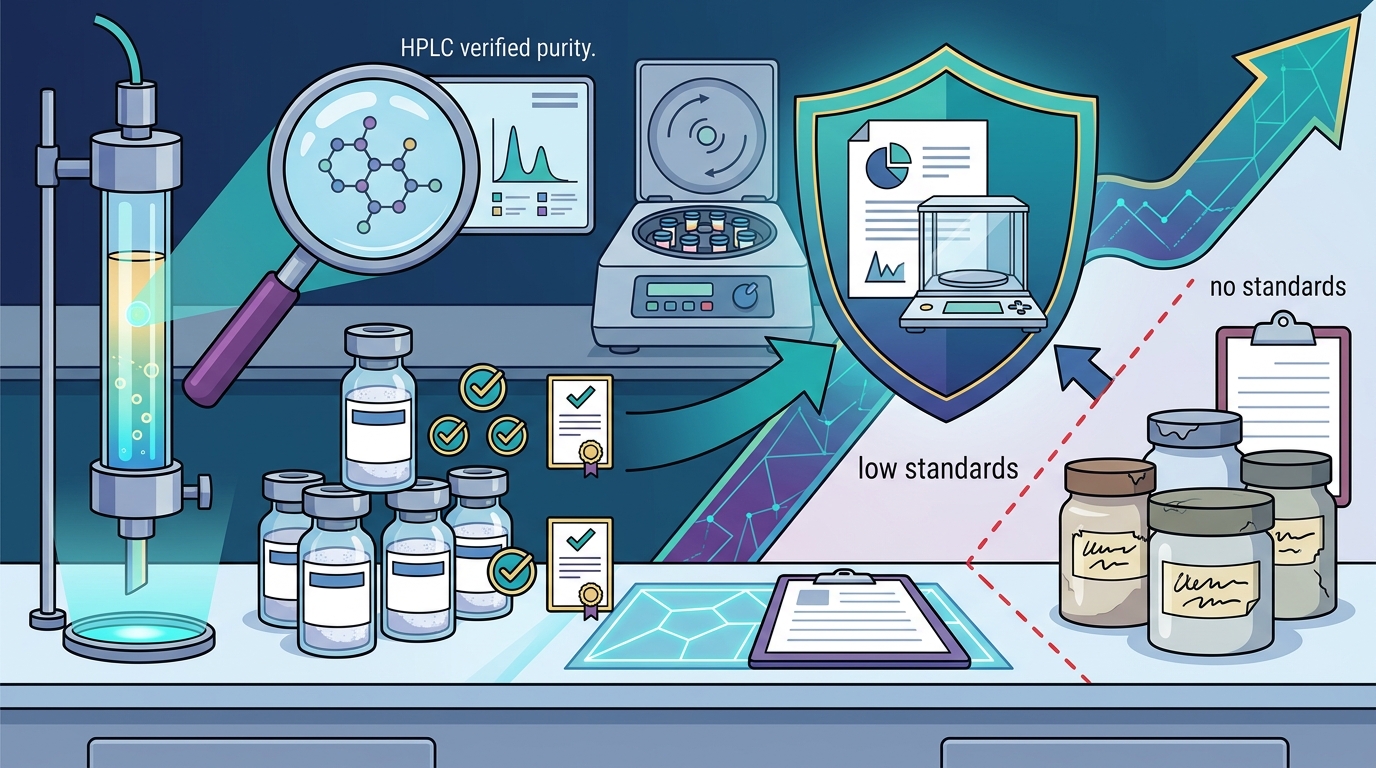
Most suppliers use one external lab for batch verification. Some companies go further by cross-referencing results across multiple certified laboratories. This redundant verification catches discrepancies that single-lab testing might miss and represents the highest current standard for research-grade materials.
Aevitas Research publishes third-party testing documentation for its products. Researchers can review this data on the purity standards resource page before making a purchasing decision.
Core Analytical Methods Used by Credible Suppliers
Science-focused peptide companies rely on well-established analytical techniques to validate every batch. Understanding these methods helps researchers evaluate whether a supplier's claims are backed by real data.
| Method | What It Measures | Why It Matters |
|---|---|---|
| HPLC (High-Performance Liquid Chromatography) | Purity percentage | Gold-standard technique; research-grade peptides typically show 98%+ purity |
| Mass Spectrometry (LC-MS) | Molecular weight and identity | Confirms the peptide matches its labeled sequence |
| Amino Acid Analysis | Composition verification | Validates the building-block profile of the peptide |
| Endotoxin Testing | Bacterial toxin contamination | Protects the integrity of in vitro laboratory applications |
| Residual Solvent Analysis (GC-MS) | Solvent residue levels | Ensures compliance with safety thresholds from synthesis |
HPLC is the most widely referenced method. The area under the main peptide peak, compared to the total area of all peaks, determines the purity percentage. A credible supplier will report this data transparently on every COA.
How to Read a Certificate of Analysis
A Certificate of Analysis (COA) is a document issued alongside a peptide batch that details its tested specifications, including purity, identity, and any detected impurities. It is the single most important piece of documentation a supplier can provide.
What a Legitimate COA Should Include
Look for batch-specific data rather than generic documents. A credible COA names the testing laboratory, lists the analytical methods used, reports quantitative purity results, and includes a date of analysis. If any of these elements are missing, the document's reliability is questionable.
Aevitas Research provides batch-specific documentation through its Certificate of Analysis resource page, giving researchers access to the analytical data behind every product.
Verifying COA Authenticity
Researchers should confirm that the named third-party lab actually exists and that the COA can be independently verified. Some independent testing organizations, such as Finnrick, maintain public databases of peptide test results from hundreds of vendors, adding an additional layer of market transparency.
Quality Benchmarks That Separate Leaders from the Pack
Not all quality claims carry equal weight. The following benchmarks distinguish suppliers who invest in science from those who merely use scientific language in marketing.
- GMP-aligned production: Good Manufacturing Practice is a set of production standards designed to ensure consistency and minimize contamination. Facilities following GMP protocols maintain controlled environments and documented procedures at every stage.
- Batch-specific COAs from named external labs: Generic or undated COAs are a warning sign. Leading suppliers tie every COA to a specific production batch and name the independent laboratory that performed testing.
- Transparent purity thresholds: Reputable companies publish minimum purity standards (typically 98% or higher for research-grade materials) and back those claims with HPLC data.
- Accessible research libraries: Companies that maintain educational resources, such as the Aevitas Research Peptide Research Library, signal a commitment to scientific literacy beyond the point of sale.
Red Flags When Evaluating a Peptide Supplier
Knowing what to avoid is as valuable as knowing what to look for. These warning signs suggest a supplier may not prioritize scientific rigor:
- No COAs available, or COAs that lack batch numbers, lab names, or dates
- Claims of purity without specifying the analytical method used
- No mention of third-party or independent testing anywhere on the site
- Inability to answer basic questions about sourcing, synthesis method, or quality control procedures
- Marketing language that emphasizes outcomes rather than analytical documentation
Researchers can learn more about evaluating peptide quality in the Aevitas Research guide on how to verify the purity of research-grade peptides.
Key Takeaways
- Third-party testing is the process of independent laboratory verification that removes manufacturer bias from quality claims.
- HPLC and mass spectrometry are the two most critical analytical methods for confirming peptide purity and identity.
- A Certificate of Analysis is a batch-specific document detailing tested specifications; it should name the lab, method, and date.
- GMP-aligned production, transparent purity data, and accessible COAs are the top benchmarks of a science-focused supplier.
- Red flags include missing COAs, unnamed labs, and vague purity claims without supporting analytical data.
- Independent testing databases provide an additional verification layer beyond supplier-issued documentation.
- Educational resources like research libraries reflect a supplier's commitment to scientific credibility.
Frequently Asked Questions
What is third-party peptide testing?
Third-party peptide testing is the independent verification of a peptide's identity, purity, and composition by an analytical laboratory that has no financial relationship with the manufacturer. It provides unbiased confirmation that the product meets stated specifications.
Why is HPLC considered the gold standard for peptide purity?
High-Performance Liquid Chromatography separates the components of a sample and measures the proportion of the target peptide relative to impurities. It is widely recognized across the analytical chemistry field for its precision, reproducibility, and sensitivity at detecting even trace contaminants.
What should a credible Certificate of Analysis include?
A legitimate COA should include the batch or lot number, the name of the testing laboratory, the analytical methods used (such as HPLC and LC-MS), quantitative purity results, and the date of analysis. Generic or undated documents should be treated with skepticism.
How can I verify that a supplier's COA is authentic?
Contact the named third-party laboratory directly to confirm the document was issued by them. Some independent organizations also maintain public databases of peptide test results that can be cross-referenced against supplier claims.
What does GMP-aligned production mean for peptide quality?
Good Manufacturing Practice (GMP) is a framework of production standards that ensures consistent quality through controlled environments, documented procedures, and systematic quality checks at every stage of manufacturing and purification.
What purity level should research-grade peptides meet?
Research-grade peptides typically demonstrate 98% purity or higher as measured by HPLC. Some applications may require 99% or above. The key is that purity claims are supported by documented, verifiable analytical data from an independent laboratory.
Where can I find Aevitas Research testing documentation?
Aevitas Research provides Certificates of Analysis and quality documentation through its COA access page. Additional educational resources are available in the Peptide Research Library.
Source Research Materials Backed by Real Data
Qualified purchasers looking for research-grade peptide reference materials with transparent, third-party verified documentation can explore the full catalog at Aevitas Research. Every product is supported by analytical data designed to meet the expectations of serious researchers.