

ISO 17025 Accreditation: The Backbone of Research Peptide Quality
ISO 17025 accreditation is the international benchmark for laboratory competence, ensuring that testing results are scientifically valid and reliable. For research peptide suppliers, this standard mandates rigorous quality management systems, validated analytical methods, and strict traceability. Aevitas Research aligns its operational framework with these principles to provide reference materials that meet the highest standards of scientific integrity.
Defining the Standard: What ISO 17025 Actually Is
ISO/IEC 17025 is the international standard that specifies general requirements for the competence, impartiality, and consistent operation of testing and calibration laboratories. It is not a product certification but a laboratory accreditation standard. This distinction is critical for researchers. A supplier may claim to follow ISO 17025 guidelines, but true accreditation involves an independent assessment by a recognized body. The standard ensures that the laboratory has the technical capability to produce trustworthy results.
In the context of peptide research, this means the lab must demonstrate proficiency in complex analytical techniques. It requires documented procedures for every step of the testing process. The goal is to eliminate variability and human error from the data generation process. When a laboratory operates under this framework, the resulting data carries a higher degree of scientific weight.
Analytical Competence and Method Validation
At the core of ISO 17025 is the requirement for method validation. Laboratories must prove that their analytical methods, such as High-Performance Liquid Chromatography (HPLC) or Mass Spectrometry (MS), are fit for purpose. This involves establishing parameters like linearity, precision, and accuracy. For peptide reference materials, this ensures that the reported purity levels are not just estimates but verified measurements.
Quality Management Systems in Practice
ISO 17025 requires a comprehensive quality management system (QMS). This system governs how the laboratory operates, from personnel competence to equipment maintenance. It mandates that all staff involved in testing are qualified and trained. Furthermore, it requires that all equipment is calibrated and maintained according to strict schedules. This infrastructure supports the reliability of the data produced.
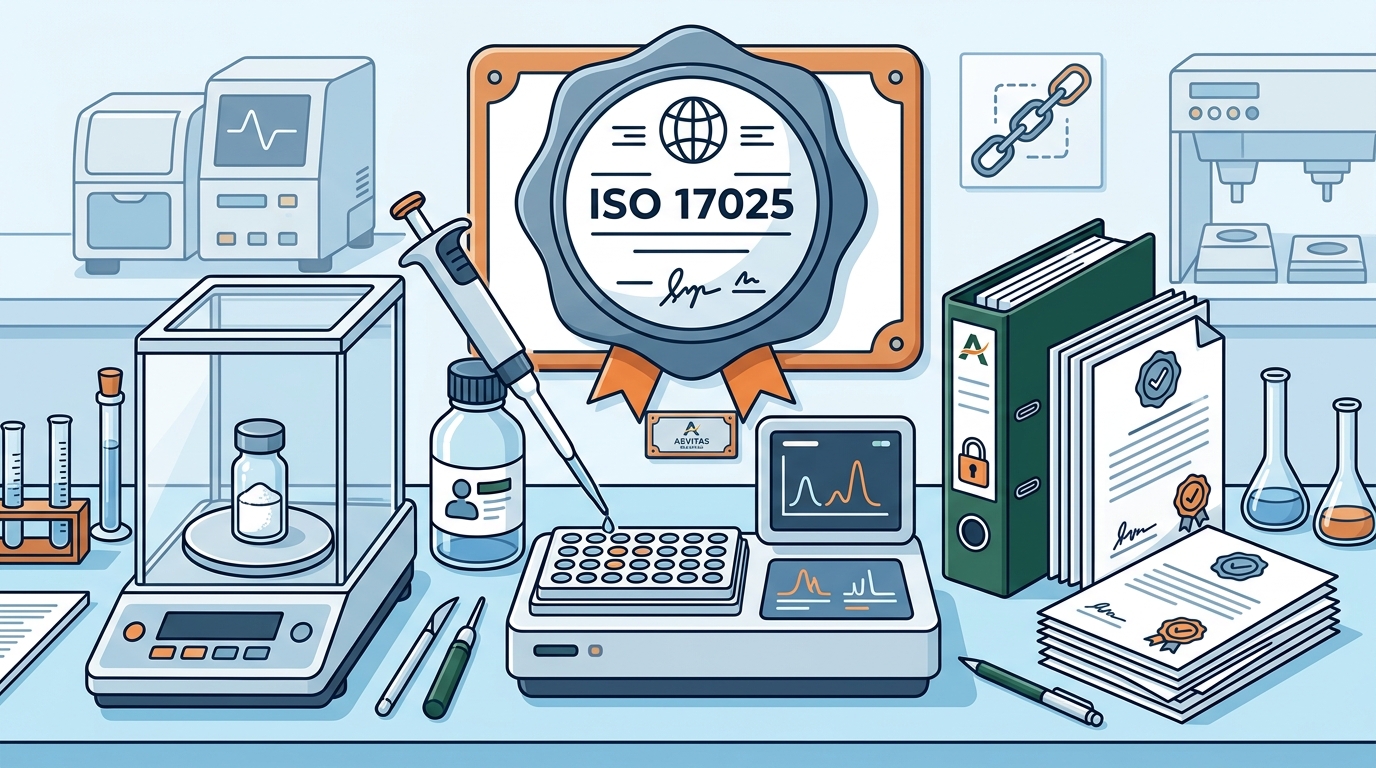
Documentation is a key component of this system. Every test result must be traceable to specific procedures, equipment, and personnel. This creates an audit trail that can be reviewed by independent assessors. Aevitas Research emphasizes this transparency by making Certificates of Analysis (COA) available for their products. These documents provide the specific data points that validate the quality of each batch. This level of documentation is a hallmark of a laboratory operating under rigorous quality standards. according to IAS ISO IEC
Implications for Research Integrity
Using reference materials from laboratories that adhere to ISO 17025 principles enhances the credibility of research findings. When the starting material is verified through accredited testing, the downstream results are more likely to be accepted by the scientific community. This is particularly important in fields where reproducibility is a major concern. The standard helps bridge the gap between raw chemical synthesis and validated scientific data.
Researchers should look for suppliers who provide detailed COAs and explain their testing protocols. The presence of specific analytical data, such as retention times and peak areas, indicates a robust testing process. This transparency allows scientists to verify the quality of the materials they are using. It shifts the focus from marketing claims to empirical evidence. This approach supports the broader goal of scientific rigor and data integrity.
Key Takeaways
- ISO 17025 is a laboratory accreditation standard, not a product certification.
- It mandates method validation for techniques like HPLC and Mass Spectrometry.
- Accredited laboratories must maintain a comprehensive quality management system.
- Traceability and documentation are essential components of the standard.
- Using materials from ISO 17025-aligned labs enhances research reproducibility.
- Certificates of Analysis provide the empirical evidence for product quality.
Frequently Asked Questions
Is ISO 17025 a product certification?
No, ISO 17025 is a standard for laboratory competence. It accredits the testing laboratory, not the product itself. The product quality is verified through the tests performed by the accredited lab.
What does method validation involve?
Why is traceability important in peptide testing?
Traceability ensures that every result can be linked back to specific procedures, equipment, and personnel. This allows for audits and verification of the data's integrity.
How does ISO 17025 differ from GMP?
Good Manufacturing Practice (GMP) focuses on the production process, while ISO 17025 focuses on the testing and calibration capabilities of the laboratory. They are complementary but distinct standards.
Can a supplier claim to follow ISO 17025 without accreditation?
Yes, a supplier can state that they follow ISO 17025 guidelines. However, true accreditation requires an independent assessment by a recognized body. Researchers should distinguish between following guidelines and holding accreditation.
Conclusion
ISO 17025 accreditation represents the gold standard for laboratory competence in the scientific community. For research peptide suppliers, adherence to this standard ensures that quality claims are backed by rigorous, validated testing. Aevitas Research is committed to these principles, providing reference materials that support high-integrity scientific inquiry. By prioritizing transparency and analytical rigor, researchers can ensure the reliability of their foundational data.