
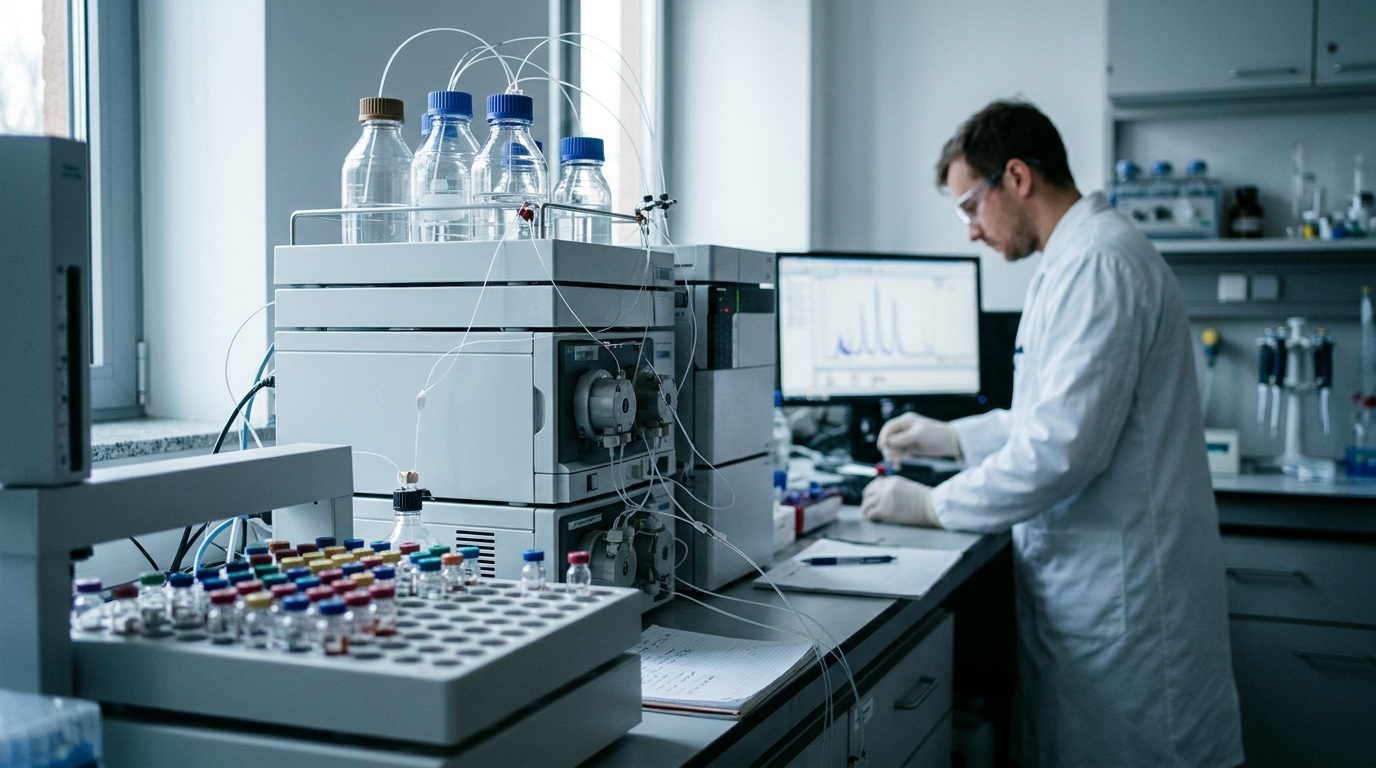
High-Performance Liquid Chromatography (HPLC) is the primary analytical technique used to determine the chemical purity of synthetic peptides. It separates peptide components based on their interaction with a stationary phase, allowing researchers to quantify the target molecule against impurities. For laboratory reference materials, this data is critical for ensuring experimental reproducibility and data integrity.
The Mechanics of HPLC Separation
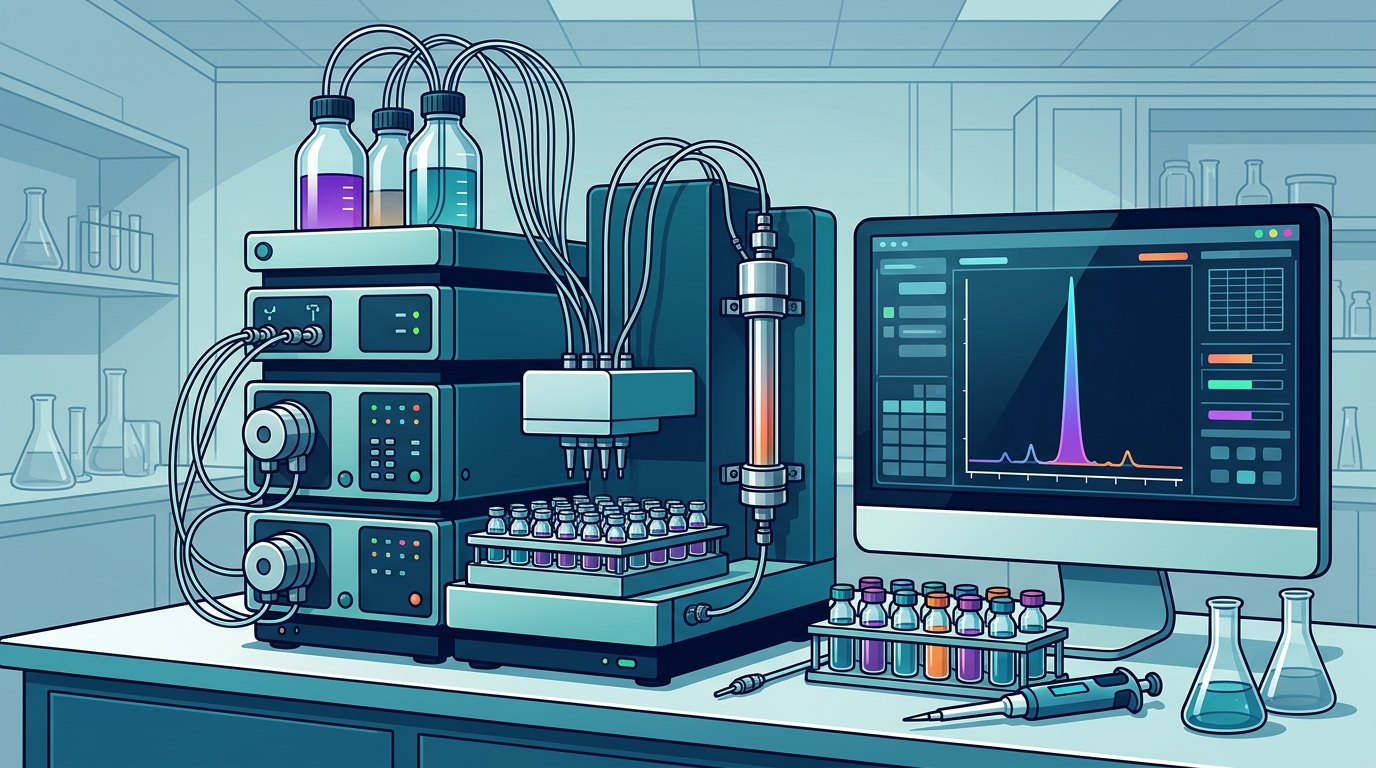
HPLC operates by pumping a liquid solvent, known as the mobile phase, through a column packed with a stationary phase. As the peptide sample enters the column, different components interact with the stationary phase at varying rates. The target peptide elutes at a specific retention time, while impurities and byproducts elute at different times. This separation allows for the distinct identification of the primary compound.
The process relies on precise pressure and temperature control to maintain consistent flow rates. In reverse-phase HPLC, which is standard for peptide analysis, the stationary phase is non-polar, while the mobile phase is polar. This setup effectively separates peptides based on their hydrophobicity. Understanding these mechanics helps researchers interpret chromatograms accurately.
Interpreting Purity Percentages
Purity is calculated by comparing the area under the peak of the target peptide to the total area of all peaks in the chromatogram. A result of 98% purity indicates that 98% of the detected material is the target peptide, while the remaining 2% consists of impurities. Researchers must distinguish between purity and identity, as HPLC confirms the amount of the target compound but does not inherently prove its sequence.
High purity is essential for quantitative assays where impurities can interfere with binding or enzymatic activity. In research settings, even small amounts of related peptides or synthesis byproducts can skew results. Therefore, the purity percentage is a foundational metric for assessing the quality of any peptide reference material.
The Role of Mass Spectrometry
While HPLC measures purity, it does not confirm the molecular identity of the eluting peaks. Mass Spectrometry (MS) is the complementary technique used to verify the molecular weight and sequence of the peptide. When coupled with HPLC, the system provides both quantitative purity data and qualitative identity confirmation. This dual approach is the gold standard for peptide characterization in life sciences research.
Quality Standards and Certificates of Analysis
Aevitas Research emphasizes the importance of verified quality in their product offerings. Their commitment to providing COAs with available data reflects a focus on research integrity. By prioritizing transparent documentation, researchers can make informed decisions about the reference materials they use in their studies. This transparency is a key differentiator in the peptide supply chain.
Key Takeaways
- HPLC separates peptide components based on hydrophobicity to quantify purity.
- Purity percentage reflects the proportion of the target peptide relative to total detected material.
- Mass Spectrometry is required to confirm the molecular identity and sequence of the peptide.
- Reverse-phase HPLC is the standard method for peptide analysis due to its effectiveness with non-polar stationary phases.
- A Certificate of Analysis provides traceability and confirms that a batch meets quality specifications.
- Researchers should verify that suppliers provide both HPLC and MS data for comprehensive characterization.
Frequently Asked Questions
What is the difference between HPLC purity and identity?
HPLC purity measures the percentage of the target compound in the sample, while identity is confirmed through Mass Spectrometry. HPLC tells you how much of the target is present, but MS confirms that the eluting peak is actually the target peptide and not an impurity with a similar retention time.
Why is reverse-phase HPLC preferred for peptides?
What should be included in a peptide Certificate of Analysis?
How does HPLC detect impurities in peptides?
HPLC detects impurities by separating them from the target peptide based on their different interactions with the stationary phase. Each impurity elutes at a different retention time, creating distinct peaks in the chromatogram that can be quantified.
Is 98% purity sufficient for research applications?
The required purity level depends on the specific research application. For many quantitative assays, 98% or higher is often considered acceptable, but highly sensitive experiments may require higher purity. Researchers should consult the specific requirements of their experimental protocol.
Conclusion
Understanding HPLC purity testing is essential for researchers seeking reliable peptide reference materials. By verifying both purity and identity through combined HPLC and MS analysis, scientists can ensure the integrity of their experimental data. Aevitas Research is dedicated to providing high-quality reference materials that meet these rigorous standards, supporting the advancement of life sciences research.