

Why HPLC and Mass Spectrometry Testing Matter for Peptide Suppliers
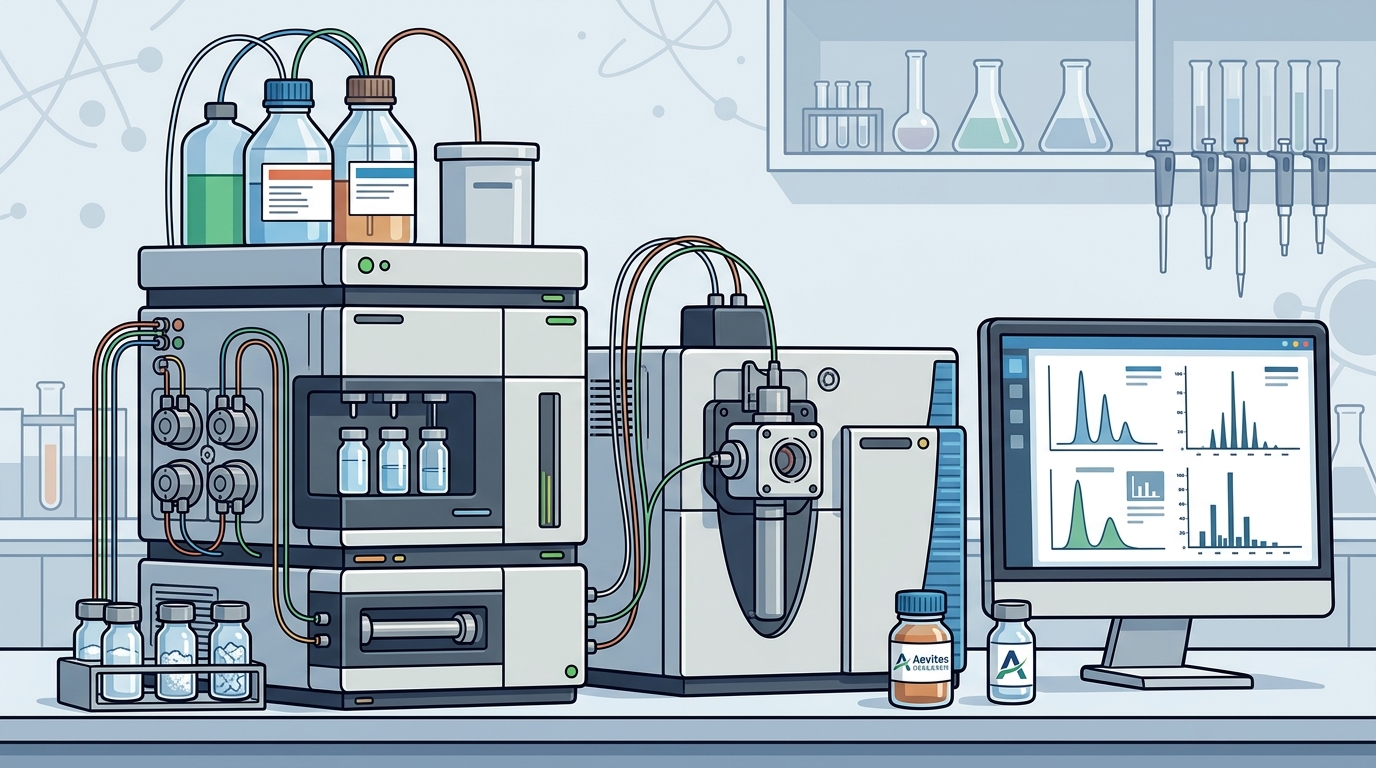
High-performance liquid chromatography (HPLC) and mass spectrometry (MS) are the primary analytical methods used to verify peptide purity, identity, and quantity. These tests ensure that laboratory reference materials meet strict quality standards before they reach researchers. Aevitas Research prioritizes these rigorous testing protocols to maintain the integrity of its research-grade peptide supply chain.
The Role of HPLC in Purity Verification
HPLC is a separation technique that isolates compounds based on their interaction with a stationary phase and a mobile phase. In peptide analysis, HPLC separates the target peptide from impurities, degradation products, and residual solvents. This separation allows for the precise quantification of the primary compound.
For research integrity, purity is a non-negotiable metric. A peptide sample that claims 98% purity must be verified through chromatographic peak integration. If the chromatogram shows multiple peaks, it indicates the presence of impurities that could skew experimental results. Aevitas Research utilizes HPLC-UV/Vis to confirm that each batch meets its specified purity threshold before release.
The implication for researchers is clear: without HPLC verification, the baseline of any experiment is compromised. Impurities can act as confounding variables, leading to false positives or negatives in downstream assays. By relying on suppliers who provide HPLC data, scientists can trust that their reagents are consistent and reliable.
Mass Spectrometry for Molecular Identity
Mass spectrometry is an analytical technique that measures the mass-to-charge ratio of ions to determine the molecular weight and structure of a compound. In the context of peptides, MS confirms the exact molecular identity of the synthesized sequence. This is critical because peptides are complex molecules where a single amino acid substitution can alter function entirely.
While HPLC confirms purity, mass spectrometry confirms identity. A sample may be 99% pure but still contain the wrong peptide sequence if the synthesis process failed. MS resolves this ambiguity by matching the observed mass spectrum against the theoretical mass of the intended peptide. Aevitas Research integrates these analytical methods to ensure that the molecular identity matches the product label exactly.
This dual verification approach is essential for high-stakes research. When studying specific biological pathways, the molecular identity of the reagent is as important as its concentration. MS data provides the definitive proof that the compound in the vial is the compound described in the documentation.
Certificates of Analysis and Traceability
A Certificate of Analysis (COA) is a document that provides the results of quality control tests performed on a specific batch of product. It serves as the primary evidence of quality for laboratory reference materials. A robust COA includes data on purity, identity, and other relevant parameters such as sterility or endotoxin levels where applicable.
Traceability is a key component of a high-quality COA. Each product should be linked to a documented lot number that allows for full batch traceability. This ensures that if an issue arises, the specific batch can be identified and investigated. Aevitas Research provides traceable COA records for every product, linking each vial to its specific analytical data.
The implication of transparent COAs is enhanced reproducibility. When researchers can access the exact testing data for their reagents, they can better control for variables in their experiments. This transparency builds trust between the supplier and the scientific community, fostering a culture of rigorous research standards.
Evaluating Supplier Testing Standards
Not all peptide suppliers adhere to the same quality standards. Some may rely on internal testing that lacks the rigor of third-party or advanced analytical methods. Evaluating a supplier's testing standards involves reviewing their methodology, equipment, and data transparency. Suppliers who use advanced techniques like HPLC and MS demonstrate a commitment to quality.
When selecting a supplier, researchers should look for evidence of consistent testing across all batches. This includes checking for the availability of COAs and the specificity of the data provided. Aevitas Research maintains a quality-first approach, ensuring that every product is tied to verified purity analysis and traceable records.
The choice of supplier directly impacts the reliability of research outcomes. By prioritizing suppliers with rigorous testing standards, researchers can mitigate the risk of experimental failure due to reagent quality. This strategic approach to sourcing is a hallmark of professional laboratory practice.
Key Takeaways
- HPLC is a separation technique used to verify peptide purity by isolating the target compound from impurities.
- Mass spectrometry confirms the molecular identity of a peptide by measuring its mass-to-charge ratio.
- A Certificate of Analysis (COA) is a document that provides quality control test results for a specific product batch.
- Traceability through lot numbers ensures that each product can be linked to its specific analytical data.
- Rigorous testing standards from a supplier are critical for ensuring the reproducibility and reliability of research.
Frequently Asked Questions
What is HPLC in peptide testing?
HPLC is a separation technique that isolates compounds based on their interaction with a stationary phase, allowing for the precise quantification of peptide purity.
How does mass spectrometry verify peptide identity?
Mass spectrometry measures the mass-to-charge ratio of ions to determine the molecular weight and structure, confirming the exact molecular identity of the peptide sequence.
Why is a Certificate of Analysis important?
A COA provides documented evidence of quality control tests, ensuring that the product meets specified purity and identity standards for a specific batch.
What does traceability mean in peptide sourcing?
Traceability refers to the ability to link a specific product vial to its documented lot number and associated analytical data, ensuring full batch accountability.
How do HPLC and MS work together?
HPLC confirms the purity of the sample by separating impurities, while MS confirms the molecular identity of the primary compound, providing a comprehensive quality profile.
Why should researchers prioritize suppliers with advanced testing?
Advanced testing methods like HPLC and MS reduce the risk of experimental failure due to reagent impurities or incorrect identity, ensuring higher data reliability.
Conclusion
Understanding the role of HPLC and mass spectrometry is essential for researchers seeking reliable peptide reference materials. These analytical techniques provide the definitive proof of purity and identity that underpins high-integrity scientific work. By prioritizing suppliers who adhere to rigorous testing standards and provide transparent COAs, researchers can ensure the reliability of their experimental results. Aevitas Research remains committed to providing these high-quality reference materials, supporting the advancement of life sciences research through verified quality and traceability.