

Researchers verify peptide purity by analyzing High-Performance Liquid Chromatography (HPLC) retention times and Mass Spectrometry (MS) molecular weights. These two methods provide complementary data that confirm both the chemical identity and the physical homogeneity of a sample. Aevitas Research emphasizes that rigorous analytical validation is the cornerstone of reliable life sciences data. Understanding how to interpret these reports allows scientists to distinguish high-quality reference materials from compromised batches.
Understanding HPLC Retention and Purity Metrics
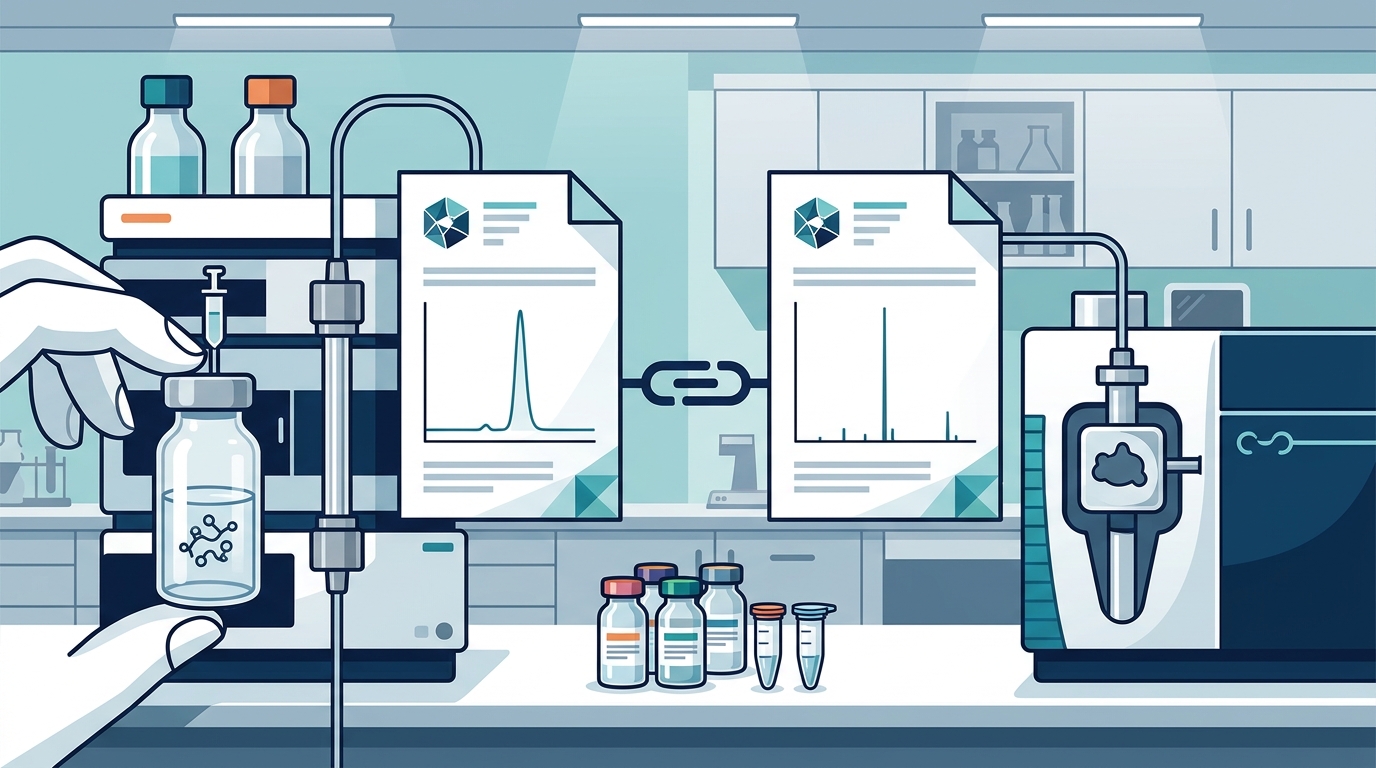
High-Performance Liquid Chromatography (HPLC) is a separation technique that isolates compounds based on their interaction with a stationary phase. In peptide analysis, the primary metric is the percentage of the main peak area relative to the total peak area. A high-purity sample typically displays a single, sharp peak with minimal shoulder or baseline noise. This indicates that the sample consists almost entirely of the target molecule without significant impurities. For additional details, review the .
The retention time of the main peak must match the expected value for the specific peptide sequence. Deviations in retention time can suggest structural modifications, such as oxidation or deamidation. Researchers should look for a purity percentage that meets the specific requirements of their experimental design. For most high-precision studies, a purity threshold of 95% or higher is among the standard expectation for reference materials. For additional details, review the Customer Experience.
Mass Spectrometry: Confirming Molecular Identity
Mass Spectrometry (MS) is an analytical technique that measures the mass-to-charge ratio of ions to determine molecular weight. In the context of peptide verification, MS confirms that the sample matches the theoretical molecular weight of the intended sequence. This step is critical because HPLC alone cannot distinguish between two different molecules that happen to have similar chromatographic behavior.
Modern peptide analysis often utilizes Electrospray Ionization (ESI) coupled with Time-of-Flight (TOF) or Quadrupole analyzers. The resulting spectrum displays a series of peaks corresponding to different charge states of the peptide. By deconvoluting these peaks, analysts can calculate the precise monoisotopic mass. A deviation of less than 5 parts per million (ppm) between the observed and theoretical mass is generally considered acceptable for high-quality research materials.
Interpreting Certificates of Analysis (COA)
Identifying Common Impurities and Artifacts
For example, oxidation of a methionine residue results in a mass increase of 15.995 Da. Deamidation of an asparagine residue results in a mass increase of 0.984 Da. Identifying these specific modifications allows researchers to assess the stability of the peptide during storage and handling. High-quality suppliers provide data that explicitly addresses the presence or absence of these common artifacts.
Supplier Standards and Quality Assurance
The reliability of peptide data depends heavily on the quality assurance protocols of the supplier. Reputable providers adhere to strict Good Manufacturing Practices (GMP) or equivalent standards for research materials. These standards ensure consistency in synthesis, purification, and testing across all batches. Aevitas Research is committed to maintaining these high standards to support the integrity of scientific research.
Key Takeaways
- HPLC purity percentages indicate the homogeneity of the sample, with higher percentages reflecting fewer impurities.
- Mass Spectrometry confirms molecular identity by matching the observed mass to the theoretical sequence mass.
- A deviation of less than 5 ppm in mass is a standard benchmark for high-precision peptide analysis.
- Certificates of Analysis should include raw data to allow for independent verification of results.
- Common impurities such as oxidation and deamidation can be identified through specific mass shifts in MS data.
- Supplier transparency and adherence to quality standards are critical for ensuring research integrity.
Frequently Asked Questions
What is the minimum purity required for research peptides?
While requirements vary by application, a purity of 95% or higher is generally considered the standard for high-quality research reference materials. Some sensitive applications may require 98% or higher purity to ensure minimal interference from impurities.
How does HPLC differ from Mass Spectrometry in peptide analysis?
HPLC separates compounds based on physical interactions and measures purity as a percentage of the main peak. Mass Spectrometry measures molecular weight to confirm chemical identity. Together, they provide a comprehensive profile of the sample's quality.
What does a COA typically include for peptide products?
A Certificate of Analysis typically includes the batch number, date of analysis, HPLC purity percentage, retention time, mass spectrometry results, and the specific methods used for testing. It serves as a record of the quality control checks performed on that specific batch.
Can HPLC detect all types of peptide impurities?
HPLC can detect impurities that have different chromatographic behavior from the main peak. However, it may not distinguish between impurities that co-elute. Mass Spectrometry is often used in conjunction with HPLC to identify the specific nature of these impurities.
Why is mass accuracy important in peptide verification?
Mass accuracy ensures that the sample matches the intended chemical sequence. Even small deviations can indicate structural modifications or synthesis errors. High mass accuracy is essential for confirming the identity of the reference material.
How often should peptide samples be re-tested?
Re-testing frequency depends on the storage conditions and the stability of the specific peptide. Generally, samples should be re-tested if they have been stored for extended periods or if their integrity is in question. Regular quality checks help maintain the reliability of long-term studies.