
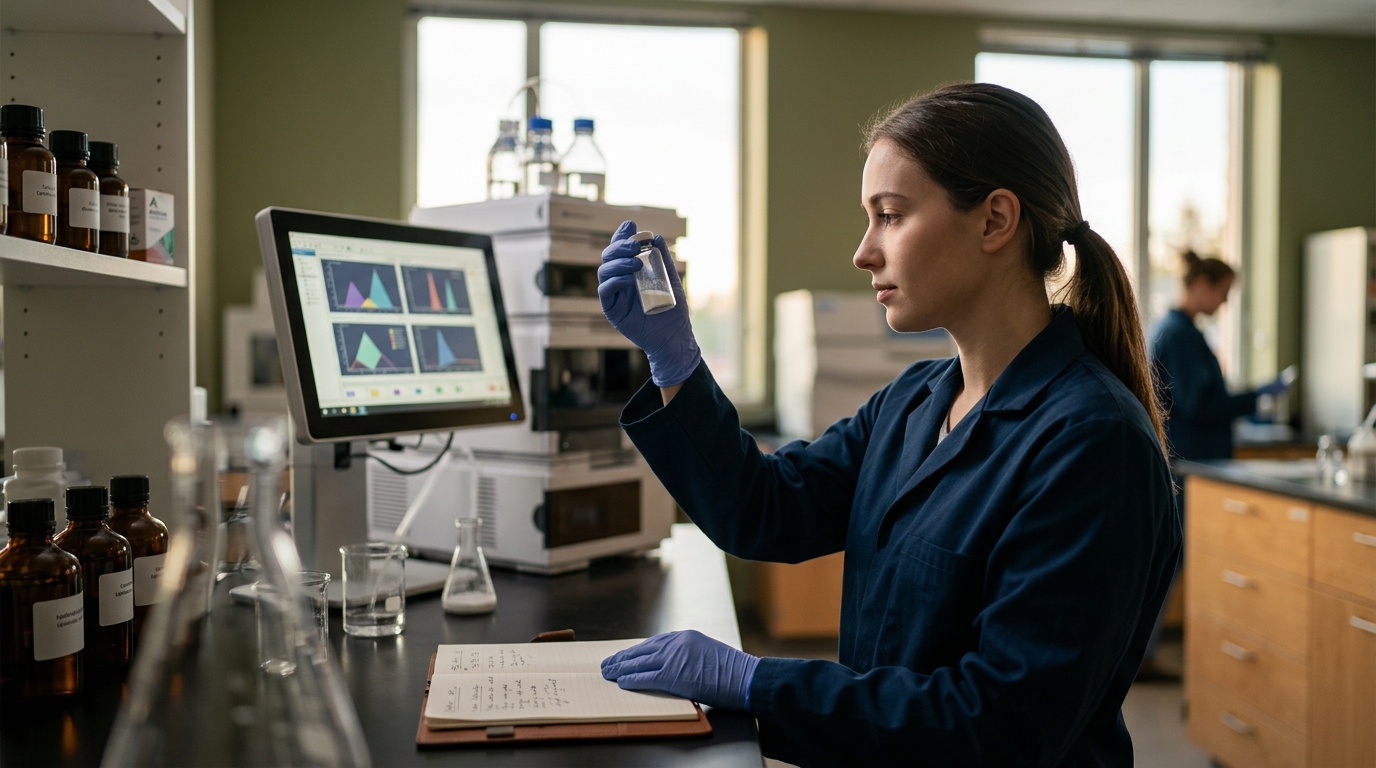
Peptide purity is the single most important quality attribute that determines whether your research data will be reliable or misleading. Impurities from incomplete synthesis, side reactions, or degradation can confound experimental results, alter dose-response curves, and waste valuable lab time. Knowing how to verify purity before you begin an experiment is not optional; it is foundational to credible science. This guide walks you through every verification method, what to look for in documentation, and how to choose suppliers that meet research-grade standards.
Why Peptide Purity Matters for Research
Peptide purity is the percentage of the correct target peptide relative to all analytes present in a sample. Even small amounts of impurities can introduce unexpected biological activity or reduce the effective concentration of your compound. As a result, experiments built on impure materials produce data that cannot be reproduced across laboratories.
Common contaminants include truncated sequences, deletion peptides, oxidized residues, and residual salts such as trifluoroacetic acid (TFA). These impurities originate from chemical synthesis, incomplete deprotection, or purification artifacts. Understanding why purity matters in research-grade peptides is the first step toward building a reliable quality-control workflow.
HPLC Analysis: The Gold Standard for Purity
High-Performance Liquid Chromatography (HPLC) is a technique used to separate, identify, and quantify each component in a peptide mixture. Reverse-phase HPLC (RP-HPLC) with UV detection at 214 nm is the industry-standard method because the peptide bond absorbs strongly at that wavelength, according to published analytical protocols (Creative Proteomics).
How Purity Is Calculated
The instrument produces a chromatogram where the main peak represents the target peptide. Purity is calculated by dividing the area of that main peak by the total area of all detected peaks and expressing the result as a percentage. A single, sharp peak with minimal shoulders indicates a high-purity sample.
What to Look For
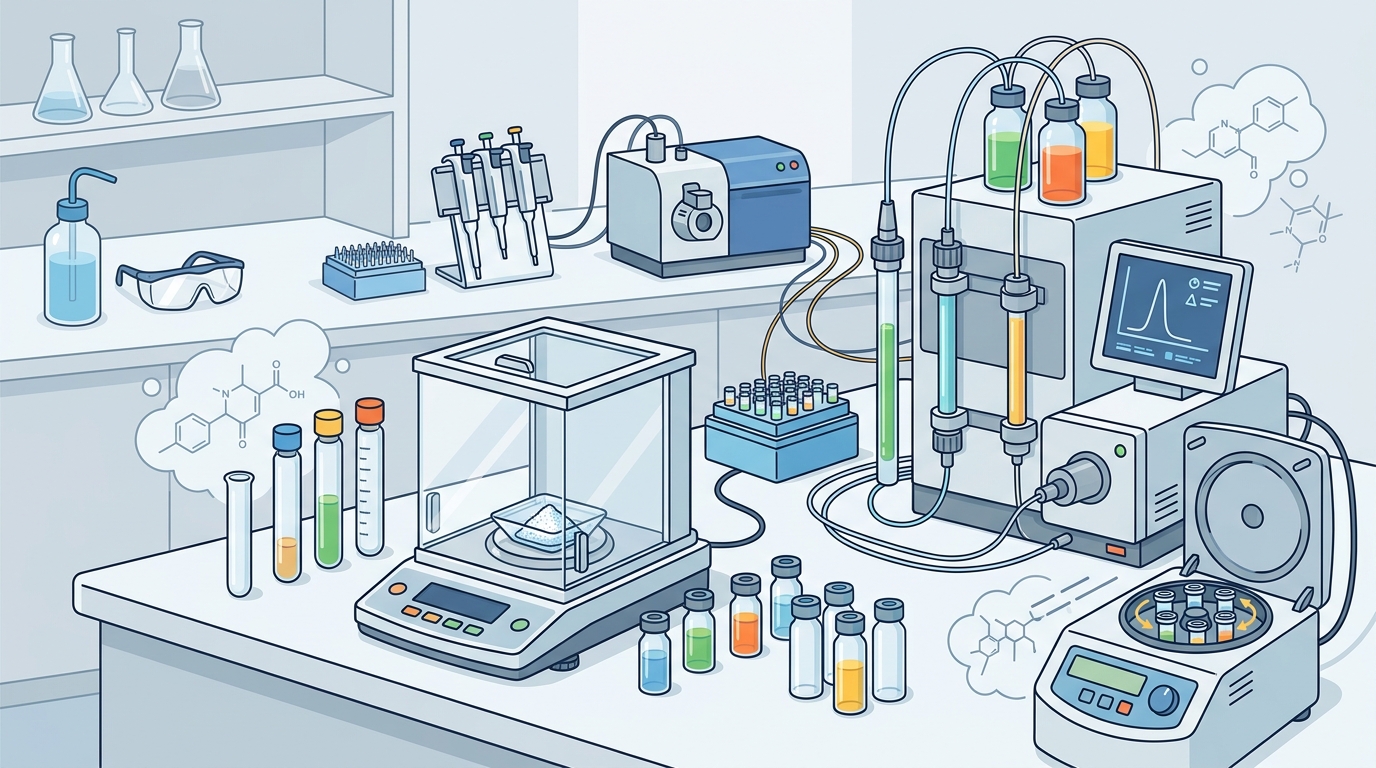
When reviewing HPLC data, check for baseline resolution between peaks, a clean baseline with minimal noise, and a clearly labeled retention time. Multiple peaks or broad shoulders suggest co-eluting impurities that warrant further investigation. Aevitas Research publishes batch-specific HPLC results on its Certificates of Analysis page.
Mass Spectrometry for Identity Confirmation
Mass spectrometry (MS) is a technique that measures the mass-to-charge ratio of ions to confirm the molecular weight and identity of a peptide. While HPLC tells you how pure a sample is, MS tells you whether the compound is actually what it claims to be. The two methods are complementary, not interchangeable.
Common MS Techniques
Two mass spectrometers are routinely used in peptide analysis: matrix-assisted laser desorption ionization time-of-flight (MALDI-TOF) and electrospray ionization mass spectrometry (ESI-MS), as described by Creative Proteomics. LC-MS, which couples liquid chromatography with mass spectrometry, provides both purity and identity data in a single run.
A matching observed molecular weight versus theoretical molecular weight confirms sequence integrity. Any mass shift may indicate oxidation, deamidation, or an incorrect amino acid incorporation.
How to Read a Certificate of Analysis
A Certificate of Analysis (CoA) is a document that records the analytical test results for a specific peptide batch, providing traceability and quality verification. Every CoA you review should include the following data points:
- Batch or lot number
- Amino acid sequence
- Molecular formula and theoretical molecular weight
- HPLC purity percentage with chromatogram
- MS observed mass versus theoretical mass
- Date of analysis and laboratory name
Aevitas Research provides detailed CoA documentation for every product batch. You can learn more in our guide on peptide certificates of analysis and view current reports on our CoA archive.
Purity Thresholds by Application
Not every experiment demands the same level of purity. The table below summarizes recommended thresholds based on application type, drawing on guidelines published by GenScript.
| Application | Minimum Purity | Notes |
|---|---|---|
| Antibody generation/screening | ≥70% | Lower purity acceptable for immunization |
| Enzyme assays / bioactivity studies | ≥85% | Moderate purity reduces confounding signals |
| Quantitative analysis / SAR studies | ≥95% | High purity needed for dose-response accuracy |
| In vitro mechanistic research | ≥98% | Research-grade threshold for rigorous work |
| Publication-quality / GLP studies | ≥99% | Premium purity minimizes batch variability |
For most laboratory reference material applications, a purity of 98% or higher is considered research-grade. Aevitas Research supplies research-grade peptide lab reference materials that meet this standard.
The Role of Third-Party Testing
Third-party testing is the process of sending peptide samples to an independent, accredited laboratory for analysis rather than relying solely on the manufacturer's in-house results. This eliminates bias and provides an additional layer of verification that researchers can trust.
Look for suppliers that use ISO 17025-accredited labs and publish verifiable CoA codes. Aevitas Research includes third-party testing documentation with its products to support transparency. Proper storage also affects purity over time, so review best practices in our guide on peptide stability and proper storage.
Red Flags When Evaluating Peptide Suppliers
Not all suppliers are equal. Watch for these warning signs before purchasing:
- No CoA provided: Any reputable supplier will furnish batch-specific analytical data.
- HPLC-only claims: Purity percentage without mass spectrometry confirmation does not verify identity.
- Generic or undated documents: A valid CoA references a specific lot number and analysis date.
- No third-party verification: In-house testing alone lacks independent accountability.
- Unusually low pricing: Research-grade synthesis and testing have real costs. Extreme discounts often indicate corners being cut.
Choosing a transparent supplier is as important as the analytical method itself. Browse the Aevitas Research catalog to see how quality documentation accompanies every listing.
Key Takeaways
- HPLC is the primary method for quantifying peptide purity; always request chromatogram data.
- Mass spectrometry is essential alongside HPLC to confirm molecular identity, not just purity percentage.
- A complete Certificate of Analysis should include batch number, HPLC purity, MS data, and analysis date.
- Research-grade peptides require a minimum of 98% purity; publication-quality work often demands 99% or higher.
- Third-party testing from accredited labs provides independent verification you can trust.
- Red flags include missing CoAs, no MS data, undated documents, and lack of independent testing.
- Proper storage preserves purity over time; lyophilized peptides should be kept at freezer temperatures.
Frequently Asked Questions
What is the best method to test peptide purity?
Reverse-phase HPLC with UV detection at 214 nm is the gold-standard method for peptide purity quantification. It should be paired with mass spectrometry for identity confirmation to form a complete analytical picture.
What purity level do I need for research-grade peptides?
Most rigorous preclinical research requires peptides at 98% purity or higher. For publication-quality mechanistic studies, 99% purity or above is preferred to minimize impurity-related variability.
What is a Certificate of Analysis (CoA)?
A CoA is a document that records the analytical test results for a specific peptide batch, including HPLC purity, mass spectrometry identity data, lot number, and date of testing. It provides traceability and quality verification.
Why is mass spectrometry needed if HPLC already shows high purity?
HPLC measures purity but not identity. A sample could show 99% purity by HPLC yet contain the wrong peptide entirely. Mass spectrometry confirms the observed molecular weight matches the theoretical weight of the intended sequence.
How do I know if a supplier's CoA is trustworthy?
Look for batch-specific lot numbers, named third-party laboratories, and verifiable report codes. Trustworthy suppliers like Aevitas Research publish CoAs that can be cross-referenced with the testing lab.
What are common impurities in synthetic peptides?
Typical impurities include truncated sequences, deletion peptides, oxidized methionine residues, incompletely deprotected side chains, and residual counterions such as TFA or acetate salts.
Does peptide purity degrade over time?
Yes. Exposure to heat, moisture, and repeated freeze-thaw cycles can degrade peptide purity. Lyophilized peptides should be stored at freezer temperatures and reconstituted only when needed.
Can I verify peptide purity without my own HPLC instrument?
Yes. You can rely on the supplier's CoA if it includes third-party lab data from an accredited facility. You can also send samples to independent testing labs for verification at costs starting around $200 per basic HPLC and LC-MS panel.
Start With Verified Peptides
Reliable research starts with verified materials. Explore the Aevitas Research product catalog to find research-grade peptide reference materials backed by third-party Certificates of Analysis, transparent quality documentation, and responsive support.