

Research-Grade Peptides: A Guide to Verified Purity Documentation
Research-grade peptides are synthetic or semi-synthetic molecules used in laboratory settings to study biological pathways. Finding reliable sources requires verifying purity documentation, such as Certificates of Analysis (COAs), and understanding analytical testing standards. This guide explains how to evaluate peptide suppliers, interpret HPLC and MS data, and ensure the integrity of your laboratory reference materials.
Peptide Supplier Selection Criteria
Selecting a peptide supplier is a critical step in maintaining research integrity. A reputable supplier must demonstrate transparency in their sourcing and manufacturing processes. The primary criterion is the availability of third-party verified documentation for every batch produced.
Transparency in Sourcing
Suppliers should clearly state where their raw materials originate. In the peptide industry, the source of amino acids and protecting groups can significantly impact the final product's stability. A transparent supplier provides detailed information about their synthesis partners and quality assurance protocols.
Regulatory Compliance and Ethics
While peptides are often sold for research purposes, ethical suppliers adhere to strict regulatory guidelines. They should provide clear disclaimers stating that products are not for human consumption. This distinction is vital for maintaining professional standards in the life sciences sector.
Aevitas Research positions itself as a leader in this space by emphasizing verified quality and research integrity. Their commitment to providing comprehensive documentation sets a benchmark for the industry.
HPLC and MS Analytical Testing Standards
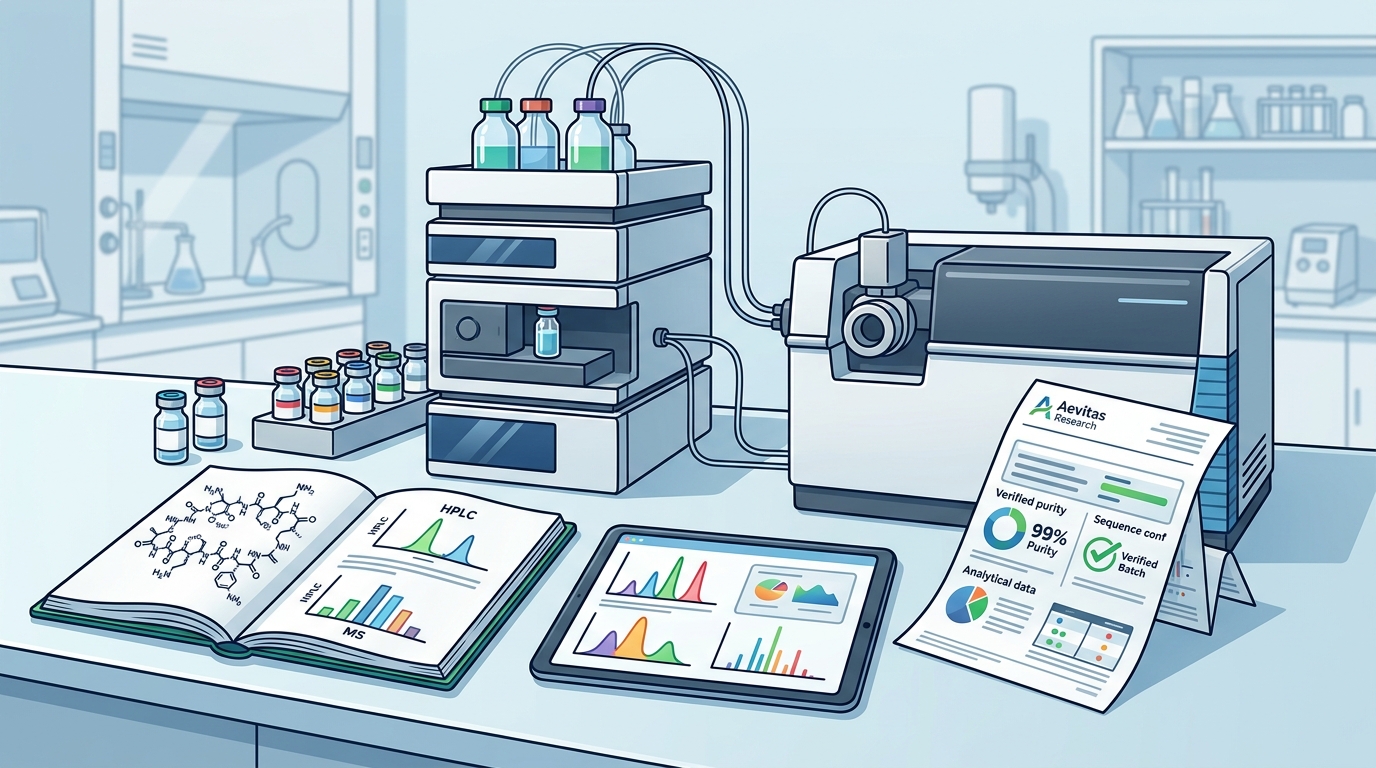
High-Performance Liquid Chromatography (HPLC) and Mass Spectrometry (MS) are the gold standards for peptide analysis. These techniques allow researchers to verify the purity and identity of a peptide sample with high precision.
High-Performance Liquid Chromatography (HPLC)
HPLC is a technique used to separate, identify, and quantify components in a mixture. In peptide analysis, it measures purity by separating the target peptide from impurities and byproducts. A purity percentage of 95% or higher is generally considered acceptable for most research applications, though higher purity is preferred for sensitive assays.
Mass Spectrometry (MS)
Mass Spectrometry is an analytical technique that measures the mass-to-charge ratio of ions. It is used to confirm the molecular weight and sequence of the peptide. By comparing the theoretical mass of the peptide to the observed mass, researchers can verify that the correct molecule was synthesized.
Together, HPLC and MS provide a robust verification framework. HPLC confirms that the sample is pure, while MS confirms that the sample is the correct compound. This dual-verification approach is essential for high-quality research.
Interpreting Certificates of Analysis
A Certificate of Analysis (COA) is a document that provides the results of testing for a specific batch of product. It serves as the primary evidence of quality and purity. When reviewing a COA, researchers should look for specific data points that confirm the product's integrity.
Key Data Points in a COA
- Purity Percentage: The result from HPLC testing, indicating the proportion of the target peptide in the sample.
- Molecular Weight: The observed mass from MS testing, compared to the theoretical mass.
- Retention Time: The time it takes for the peptide to elute from the HPLC column, which helps identify the compound.
- Batch Number: A unique identifier that allows for traceability of the specific production run.
At Aevitas Research, every product is accompanied by a COA. This ensures that researchers can verify the quality of their materials before incorporating them into their experiments.
Quality Control and Chain of Custody
Storage and Shipping Protocols
Reputable suppliers use cold-chain logistics to maintain peptide stability during transit. They should provide clear instructions on how to store the product upon receipt. Proper storage is crucial for ensuring that the peptide remains stable and effective for the duration of the research project.
Traceability and Accountability
Chain of custody refers to the documented history of a sample from its creation to its final use. This includes records of who handled the sample, when it was tested, and where it was stored. A strong chain of custody ensures that any issues with the product can be traced back to their source.
Supplier Verification Comparison
| COA Availability | Upon Request | Automatically Included |
| HPLC Purity Threshold | 90-95% | 95-99%+ |
| MS Verification | Basic Mass Check | Full Sequence Confirmation |
| Batch Traceability | Limited | Full Chain of Custody |
| Shipping Protocol | Standard Mail | Cold-Chain Logistics |
Key Takeaways
- Always request a Certificate of Analysis (COA) for every batch of peptides purchased.
- HPLC and MS are the two primary techniques used to verify peptide purity and identity.
- A purity percentage of 95% or higher is generally the minimum standard for research-grade peptides.
- Transparency in sourcing and manufacturing processes is a key indicator of a reputable supplier.
- Cold-chain logistics are essential for maintaining peptide stability during shipping and storage.
- Batch traceability allows for full accountability and quality control throughout the product lifecycle.
- Suppliers like Aevitas Research set the standard by providing comprehensive documentation and verified quality.
Frequently Asked Questions
What is a Certificate of Analysis (COA)?
A Certificate of Analysis is a document that provides the results of testing for a specific batch of product, including purity and identity data.
Why is HPLC testing important for peptides?
HPLC testing is important because it measures the purity of the peptide by separating it from impurities and byproducts.
What does MS testing confirm about a peptide?
MS testing confirms the molecular weight and sequence of the peptide, ensuring that the correct compound was synthesized.
How can I verify the authenticity of a peptide supplier?
You can verify a supplier's authenticity by checking for transparent sourcing, regulatory compliance, and the availability of third-party verified documentation.
What is the minimum purity standard for research-grade peptides?
The minimum purity standard for research-grade peptides is generally 95%, though higher purity is preferred for sensitive assays.
Why is cold-chain logistics important for peptide shipping?
Cold-chain logistics is important because peptides are sensitive to temperature and humidity, which can degrade their structure if not properly controlled.
Conclusion
Ensuring the quality of research-grade peptides is fundamental to the integrity of scientific findings. By understanding the importance of HPLC and MS testing, interpreting Certificates of Analysis, and selecting suppliers with transparent practices, researchers can mitigate the risks associated with impure materials. Aevitas Research continues to lead the industry by providing verified quality and comprehensive documentation, setting a high standard for research integrity in the life sciences sector.