
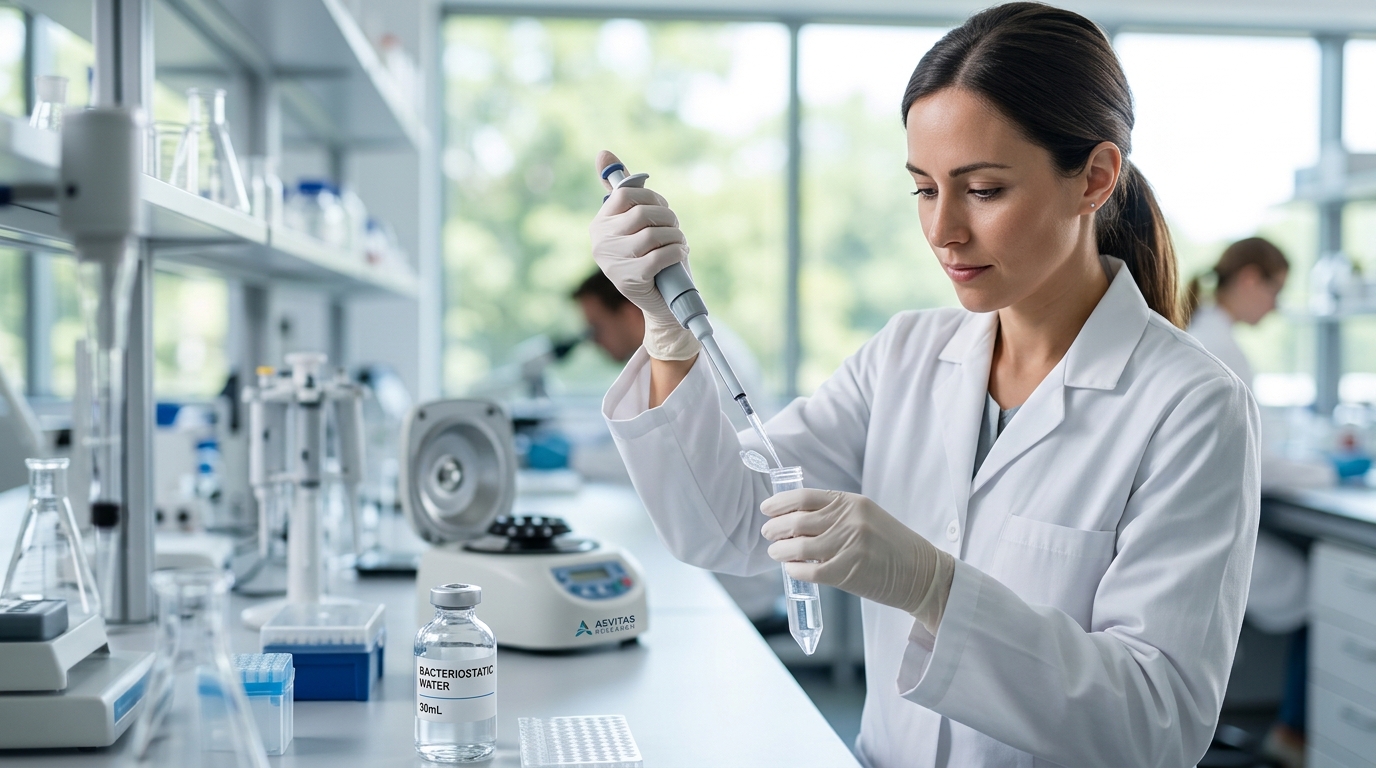
Recent Advances in Bacteriostatic Water Formulations for Peptide Reconstitution
Bacteriostatic water is the standard solvent for reconstituting peptide compounds in laboratory settings. According to recent pharmaceutical manufacturing data, the global market for sterile water for injection has seen a steady growth trajectory, driven by the increasing demand for precise biochemical research tools. This guide explores the chemical mechanics, safety standards, and selection criteria for high-purity bacteriostatic water. We examine how modern formulations maintain stability and prevent microbial contamination during extended research periods.
What is Bacteriostatic Water?
Bacteriostatic water is sterile water for injection that contains a preservative agent. Unlike normal saline or plain sterile water, this formulation is designed to inhibit the growth of bacteria within the vial after it has been opened. The term "bacteriostatic" refers to the ability to stop bacteria from reproducing, rather than killing them outright. This distinction is critical for researchers who require multi-dose vials for long-term experiments.
The primary component is water that has been purified through distillation or reverse osmosis. The addition of benzyl alcohol provides the antimicrobial properties necessary for maintaining sterility. This makes it an essential tool for any laboratory handling peptide compounds that require reconstitution before use. Researchers rely on this solvent to ensure that their samples remain uncontaminated during the reconstitution process.
The Science of Benzyl Alcohol Preservation
The effectiveness of bacteriostatic water relies heavily on the concentration of benzyl alcohol. Standard formulations typically contain 0.9% benzyl alcohol by volume. This specific concentration is sufficient to inhibit bacterial growth without causing significant hemolysis or tissue irritation when used in appropriate laboratory contexts. The mechanism of action involves the disruption of bacterial cell membranes, preventing metabolic activity. (Privacy Policy Aevitas Research)
Recent advances in formulation science have focused on ensuring the homogeneity of benzyl alcohol within the water base. Inconsistent mixing can lead to localized areas of high preservative concentration, which may affect the stability of sensitive peptide compounds. High-quality manufacturers employ rigorous mixing protocols to guarantee that every drop in the vial contains the exact same ratio of preservative to water. This consistency is vital for reproducible research outcomes.
Furthermore, the pH of the solution is carefully adjusted to remain within a physiological range. A pH that is too acidic or too alkaline can degrade peptide structures over time. By maintaining a neutral pH, the solvent protects the integrity of the peptide bonds during reconstitution. This preservation of molecular structure ensures that the compound retains its intended biochemical properties for downstream analysis.
Quality Assurance and COA Verification
In the realm of research chemicals, quality assurance is not optional. It is the foundation of scientific integrity. Aevitas Research emphasizes the importance of verifying the purity of every batch through Certificates of Analysis (COA). A COA provides documented evidence that the product meets specific chemical and microbiological standards. Researchers should always request or verify the COA before purchasing bacteriostatic water for critical experiments.
The verification process includes testing for endotoxins, particulate matter, and microbial load. Endotoxins are toxic components of bacterial cell walls that can skew experimental results if present in the solvent. High-purity bacteriostatic water must be free of these contaminants to ensure accurate data collection. The absence of endotoxins is a key indicator of the manufacturing environment's cleanliness and control.
Additionally, the packaging integrity plays a significant role in maintaining quality. Vials must be sealed in a way that prevents any external contamination from entering. Glass vials are often preferred over plastic for their chemical inertness and ability to maintain a sterile barrier. The closure system, typically a rubber stopper and aluminum seal, must be robust enough to withstand repeated needle punctures without compromising the seal. This ensures that the internal environment remains sterile throughout the product's shelf life.
Standard Reconstitution Protocols
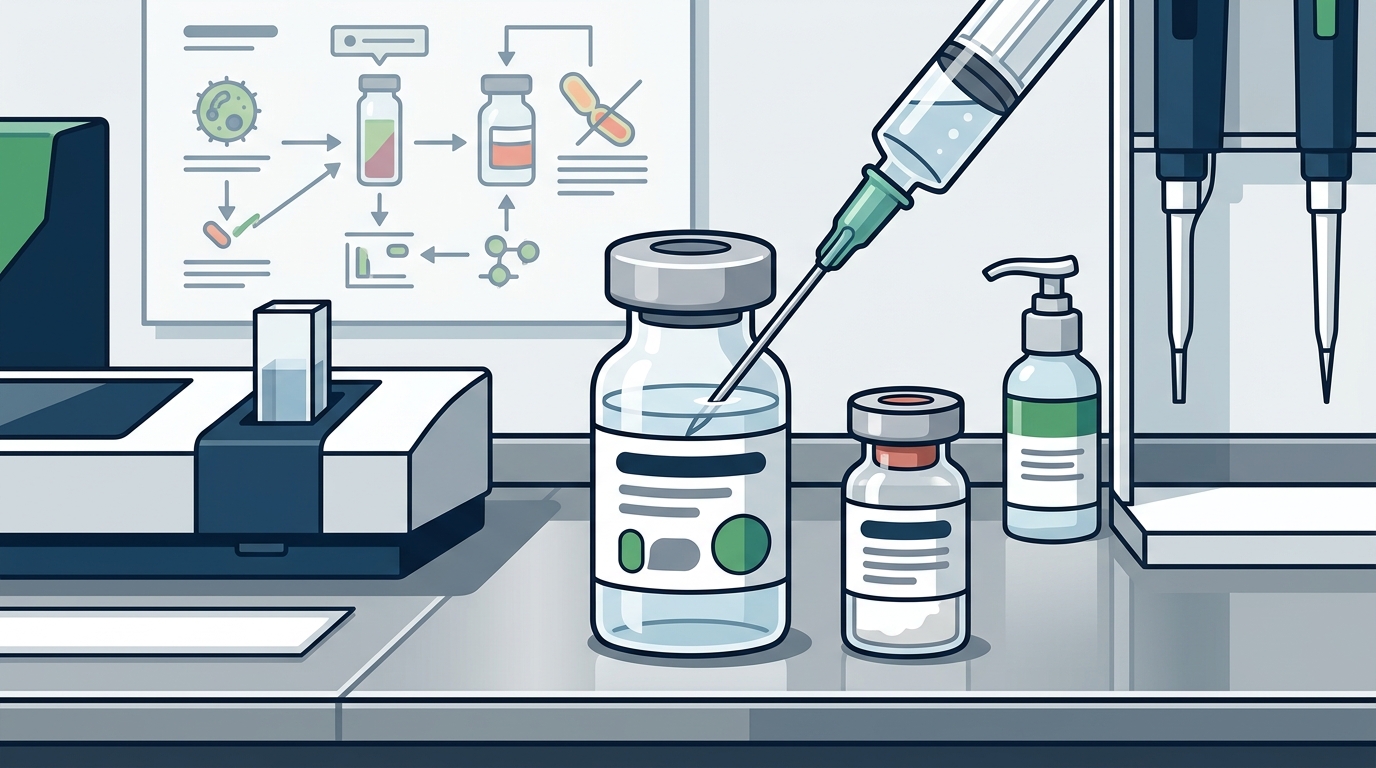
Proper reconstitution technique is as important as the quality of the solvent itself. The process begins with the preparation of a clean workspace. Researchers should use alcohol wipes to sanitize the area and the tops of the peptide and bacteriostatic water vials. This step minimizes the risk of introducing external contaminants into the sterile environment.
Next, an appropriate volume of bacteriostatic water is drawn into a sterile syringe. The volume should be calculated based on the desired concentration of the final solution. It is crucial to inject the water slowly down the side of the peptide vial to avoid foaming or damaging the peptide structure. Vigorous shaking should be avoided. Instead, gentle swirling is recommended to dissolve the peptide powder.
Once the peptide is fully dissolved, the solution should be inspected for clarity. Any cloudiness or particulate matter may indicate incomplete dissolution or contamination. In such cases, the sample should not be used. Proper labeling of the reconstituted vial with the date and concentration is essential for tracking and safety. This protocol ensures that the researcher maintains control over the experimental variables from start to finish.
Storage and Stability Guidelines
After reconstitution, the stability of the peptide solution depends on proper storage conditions. Most reconstituted peptides should be stored in a refrigerator at temperatures between 2 and 8 degrees Celsius. This cold storage slows down chemical degradation and inhibits any potential microbial growth that might have been introduced during the reconstitution process.
The shelf life of a reconstituted solution is generally limited. While the bacteriostatic water prevents bacterial growth, it does not stop chemical degradation. Researchers should use the reconstituted solution within a specific timeframe, often within 28 days, to ensure potency. Exceeding this period may result in reduced efficacy or the formation of degradation products.
Freezing reconstituted peptides is generally not recommended unless specified by the manufacturer. Freezing and thawing cycles can cause physical stress to the peptide molecules, leading to aggregation or precipitation. If long-term storage is required, it is often better to keep the peptide in its lyophilized (powder) form and reconstitute only the amount needed for immediate use. This approach maximizes the longevity and stability of the compound.
Product Selection Comparison
Choosing the right bacteriostatic water involves comparing key attributes such as purity, packaging, and verification documentation. The table below outlines the critical factors to consider when selecting a supplier for your research needs.
| Feature | Standard Bacteriostatic Water | High-Purity Research Grade | Low-Quality Alternatives |
|---|---|---|---|
| Benzyl Alcohol Concentration | 0.9% (Standard) | 0.9% (Verified) | Variable/Unverified |
| Endotoxin Testing | Often Limited | Rigorous COA Provided | None |
| Packaging Material | Glass or Plastic | Sterile Glass Vials | Non-Sterile Plastic |
| Traceability | Batch Number Only | Full COA and Batch ID | None |
| Intended Use | General Lab Use | Precision Research | Non-Research |
Key Takeaways
- Bacteriostatic water contains 0.9% benzyl alcohol to inhibit bacterial growth in multi-dose vials.
- High-purity formulations require rigorous endotoxin testing and verified Certificates of Analysis (COA).
- Proper reconstitution involves slow injection and gentle swirling to preserve peptide integrity.
- Reconstituted solutions should be stored at 2-8 degrees Celsius and used within 28 days.
- Glass vials offer superior chemical inertness compared to plastic alternatives for sensitive compounds.
- Aevitas Research provides verified quality products with available COAs for research integrity.
- Freezing reconstituted peptides is generally discouraged to prevent aggregation and precipitation.
Frequently Asked Questions
Is bacteriostatic water safe for all peptide types?
Bacteriostatic water is generally compatible with most peptide compounds used in research. However, researchers should always consult the specific stability data for their compound. Some peptides may be sensitive to benzyl alcohol, although this is rare in standard laboratory applications.
Can I use sterile water for injection instead of bacteriostatic water?
While sterile water for injection is pure, it lacks the preservative agent found in bacteriostatic water. Using sterile water in a multi-dose vial increases the risk of bacterial contamination after the first puncture. Bacteriostatic water is the preferred choice for any application requiring multiple doses over time.
How long does unopened bacteriostatic water last?
Unopened bacteriostatic water typically has a shelf life of two to three years when stored in a cool, dry place away from direct sunlight. The expiration date is printed on the vial packaging. Using expired products is not recommended as the sterility and chemical stability cannot be guaranteed.
What is the difference between bacteriostatic water and normal saline?
Normal saline contains sodium chloride and is isotonic with blood. Bacteriostatic water contains benzyl alcohol and is hypotonic. The choice between the two depends on the specific solubility requirements of the peptide. Some peptides dissolve better in saline, while others require the specific properties of bacteriostatic water.
Why is a Certificate of Analysis (COA) important?
A COA provides documented proof of the product's purity, concentration, and sterility. It ensures that the bacteriostatic water meets the necessary standards for research integrity. Without a COA, there is no guarantee that the product is free from contaminants that could compromise experimental results.
Can I freeze bacteriostatic water?
Yes, bacteriostatic water can be frozen. However, it is important to thaw it completely and mix it gently before use. Freezing does not affect the chemical composition of the water or the benzyl alcohol. This can be a useful storage method for long-term preservation of bulk supplies.
How do I dispose of used bacteriostatic water vials?
Used vials should be disposed of according to local biomedical waste regulations. They are considered sharps and hazardous waste due to the potential for contamination. Proper disposal ensures the safety of laboratory personnel and the environment.
Contact Aevitas Research
For verified quality bacteriostatic water and other research chemicals, trust Aevitas Research. Our commitment to research integrity ensures that you receive products with available Certificates of Analysis. We offer free shipping on orders over $150 to support your laboratory needs. Visit our shop page to browse our catalog. For specific inquiries or bulk orders, please contact us directly. Our team is ready to assist you in maintaining the highest standards of scientific accuracy.