
Quantifiable Results and Quality Outcomes From Proper Bacteriostatic Water Peptide Reconstitution
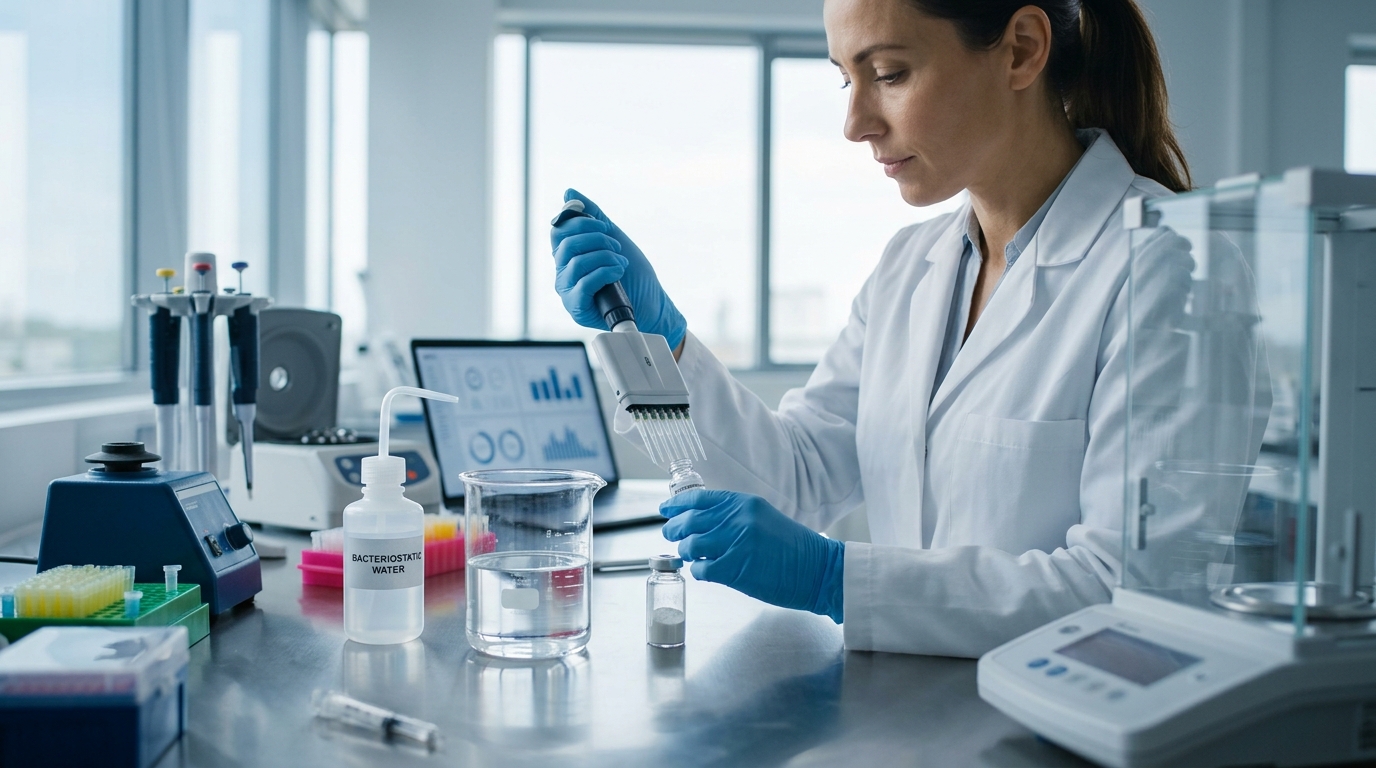
Research integrity relies heavily on the precision of reagent preparation. Data indicates that improper solvent selection can degrade peptide stability by up to 30% within the first week of storage. This degradation directly impacts the reliability of experimental data. Using high-purity bacteriostatic water ensures that the molecular structure of the peptide remains intact during the reconstitution phase. This guide details the exact protocols required to maintain chemical fidelity.
Why Bacteriostatic Water is Essential
Bacteriostatic water is sterile water for injection containing 0.9% benzyl alcohol. This preservative inhibits bacterial growth in multi-dose vials. Without this preservative, the risk of contamination increases significantly after the initial puncture of the vial. Research standards demand that solutions remain sterile throughout the experimental timeline.
Normal saline or sterile water without preservatives does not prevent microbial proliferation. Once a peptide is reconstituted, it becomes a nutrient-rich environment for bacteria. The benzyl alcohol acts as a bacteriostatic agent, halting the multiplication of microorganisms. This chemical property is critical for long-term storage of reconstituted peptides.
According to pharmaceutical standards, bacteriostatic water must meet USP (United States Pharmacopeia) specifications for purity. Any deviation in the concentration of benzyl alcohol can affect the osmolarity of the solution. This osmolarity shift can cause cellular damage if the solution is used in sensitive biological assays. Therefore, sourcing verified quality bacteriostatic water is the first step in ensuring experimental success. (Privacy Policy Aevitas Research)
Measurement Precision and Dosage
Accurate measurement is the cornerstone of reproducible research. The volume of bacteriostatic water added determines the final concentration of the peptide solution. A small error in volume can lead to a significant deviation in dosage. Researchers must use calibrated syringes to ensure accuracy.
The formula for calculating concentration is straightforward. Divide the total units of peptide by the total volume of water. For example, if you have 100 units of peptide and add 2 milliliters of water, the concentration is 50 units per milliliter. This calculation must be performed before any injection or application to ensure consistency.
Using a 1 milliliter insulin syringe allows for precise measurement of small volumes. These syringes are calibrated in tenths of a milliliter. This level of precision is necessary because peptide dosages are often measured in micrograms. An error of 0.1 milliliters can result in a 10% error in the final dose. This margin of error is unacceptable in rigorous scientific studies.
Step-by-Step Reconstitution Protocol
Proper reconstitution technique minimizes the risk of contamination and ensures complete dissolution of the peptide. The process requires a sterile environment and careful handling of the vials. Follow these steps to achieve optimal results.
Step 1: Preparation
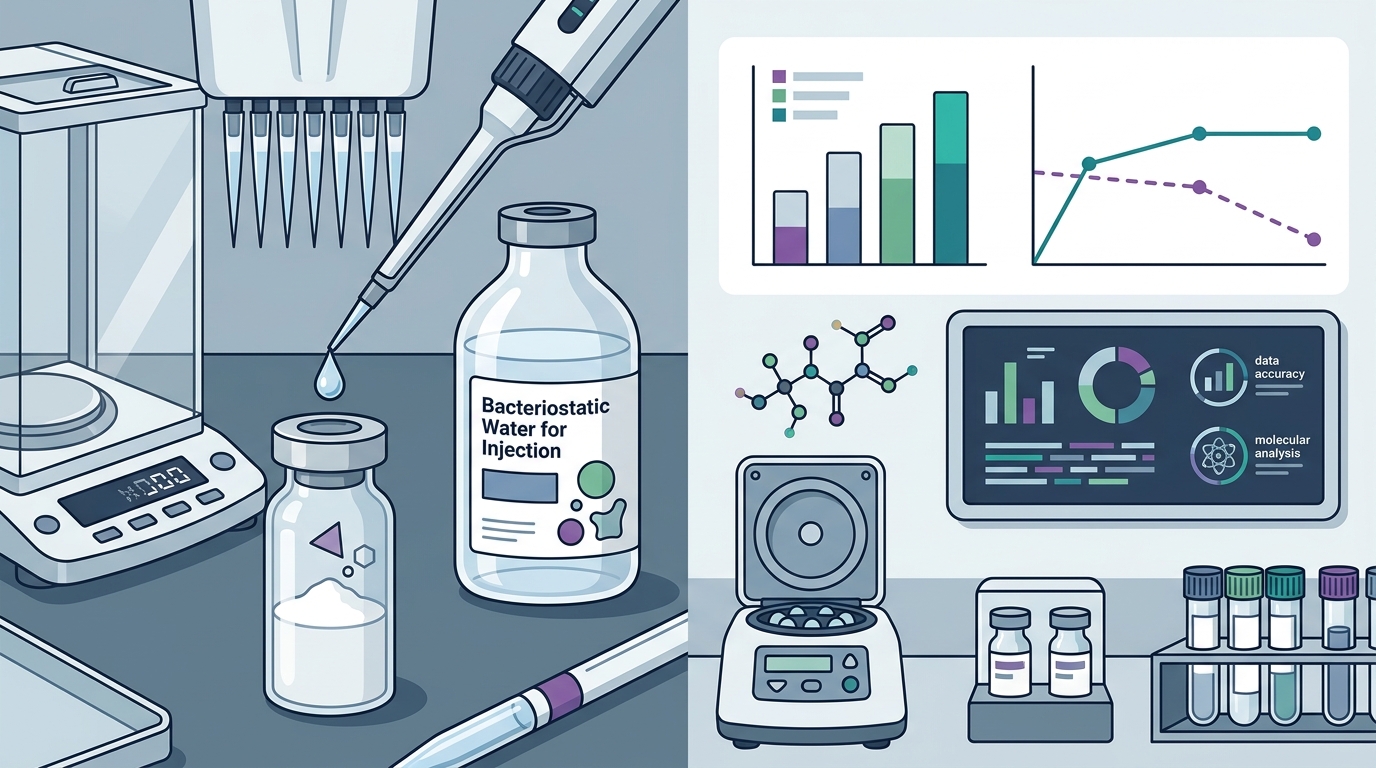
Begin by cleaning the work surface with 70% isopropyl alcohol. Gather all necessary materials, including the peptide vial, bacteriostatic water vial, syringes, and alcohol swabs. Ensure that all items are within arm's reach to minimize movement and potential contamination.
Step 2: Sanitization
Remove the caps from both vials. Clean the rubber stoppers of both vials with alcohol swabs. Allow the alcohol to dry completely before proceeding. This step kills any surface contaminants that could enter the vial during puncture.
Step 3: Drawing the Water
Insert the syringe needle into the bacteriostatic water vial. Pull back the plunger to draw the desired amount of water. It is crucial to draw slightly more water than needed to account for any loss during transfer. This ensures that you can add the exact volume required later.
Step 4: Injection
Insert the needle into the peptide vial. Aim the stream of water against the side of the glass vial. Do not spray the water directly onto the peptide powder. This gentle approach prevents foaming and protein denaturation. Slowly push the plunger to inject the water.
Step 5: Mixing
Gently swirl the vial to dissolve the peptide. Do not shake the vial vigorously. Shaking can create bubbles and denature the peptide structure. Allow the vial to sit for a few minutes if the peptide does not dissolve immediately. Some peptides require gentle warming to dissolve fully.
Storage Stability and Shelf Life
Once reconstituted, peptides are less stable than their lyophilized (powder) form. Storage conditions play a vital role in maintaining potency. Most reconstituted peptides should be stored in a refrigerator at 2 to 8 degrees Celsius. This temperature range slows down chemical degradation and bacterial growth.
The shelf life of a reconstituted peptide varies depending on the specific molecule. Generally, most peptides remain stable for up to 28 days when stored correctly. However, some peptides may degrade in as little as 7 days. It is essential to check the specific stability data for each peptide used in your research.
Freezing reconstituted peptides is generally not recommended. The process of freezing and thawing can cause the peptide to precipitate out of the solution. This precipitation can lead to inaccurate dosing and reduced efficacy. If long-term storage is required, it is better to keep the peptide in its lyophilized form until the moment of use.
Quality Assurance and COA Verification
Quality assurance is non-negotiable in scientific research. Every batch of bacteriostatic water and peptides should be accompanied by a Certificate of Analysis (COA). This document provides detailed information about the purity, concentration, and sterility of the product.
Aevitas Research provides COAs for all its products to ensure transparency and integrity. The COA includes data from HPLC (High-Performance Liquid Chromatography) analysis. This analysis confirms the purity level of the peptide, typically requiring a purity of 98% or higher. It also verifies the absence of endotoxins and other contaminants.
Verifying the COA is a simple process. Compare the batch number on the vial with the batch number on the COA. Ensure that the expiration date is valid. If the COA is missing or does not match, do not use the product. Using unverified products can compromise the entire research project.
Common Mistakes to Avoid
Even experienced researchers can make errors during reconstitution. Avoiding these common mistakes can save time and resources. Here are the most frequent errors and how to prevent them.
- Using Sterile Water Instead of Bacteriostatic Water: Sterile water lacks preservatives. This leads to rapid bacterial growth and contamination of the peptide solution.
- Shaking the Vial: Vigorous shaking denatures the peptide. Always swirl gently to mix.
- Incorrect Storage Temperature: Storing reconstituted peptides at room temperature accelerates degradation. Always refrigerate.
- Using Expired Products: Expired peptides may have degraded potency. Always check the expiration date before use.
- Contaminating the Needle: Touching the needle tip can introduce bacteria. Always handle the needle with care and avoid contact with non-sterile surfaces.
Key Takeaways
- Bacteriostatic water contains 0.9% benzyl alcohol to inhibit bacterial growth.
- Proper measurement using calibrated syringes ensures dosage accuracy.
- Gentle swirling prevents peptide denaturation during mixing.
- Reconstituted peptides should be stored at 2 to 8 degrees Celsius.
- Most reconstituted peptides are stable for up to 28 days when refrigerated.
- Always verify the Certificate of Analysis (COA) before use.
- Aevitas Research provides verified quality products with available COAs.
Frequently Asked Questions
What is the difference between sterile water and bacteriostatic water?
Sterile water is free of microorganisms but lacks preservatives. Bacteriostatic water contains 0.9% benzyl alcohol, which prevents bacterial growth after the vial is opened. This makes bacteriostatic water suitable for multi-dose use.
Can I freeze reconstituted peptides?
Freezing is generally not recommended. The freeze-thaw cycle can cause the peptide to precipitate, leading to inaccurate dosing. Refrigeration is the preferred method for short-term storage.
How long does reconstituted peptide last?
Most reconstituted peptides remain stable for up to 28 days when stored in a refrigerator. However, this varies by peptide. Always consult the specific stability data for the product you are using.
Why is a Certificate of Analysis important?
A COA verifies the purity and sterility of the product. It ensures that the peptide meets the required specifications for research. Using products without a COA poses a risk to data integrity.
How do I calculate the dosage of a reconstituted peptide?
Divide the total units of peptide by the total volume of water. For example, 100 units in 2 milliliters equals 50 units per milliliter. Use this concentration to calculate the volume needed for your specific dose.
What should I do if the peptide does not dissolve?
Gently swirl the vial or allow it to sit for a few minutes. Some peptides require gentle warming. Do not shake the vial or use excessive force.
Is it safe to use bacteriostatic water for research?
Yes, bacteriostatic water is widely used in research and pharmaceutical applications. It is designed to maintain sterility in multi-dose vials. Ensure that the product is sourced from a reputable supplier like Aevitas Research.
Contact Aevitas Research
For verified quality bacteriostatic water and peptides, visit Aevitas Research. Our products are built for research integrity with available COAs. We offer free shipping on orders over $150. Contact us at Aevitas Research Contact for more information.