

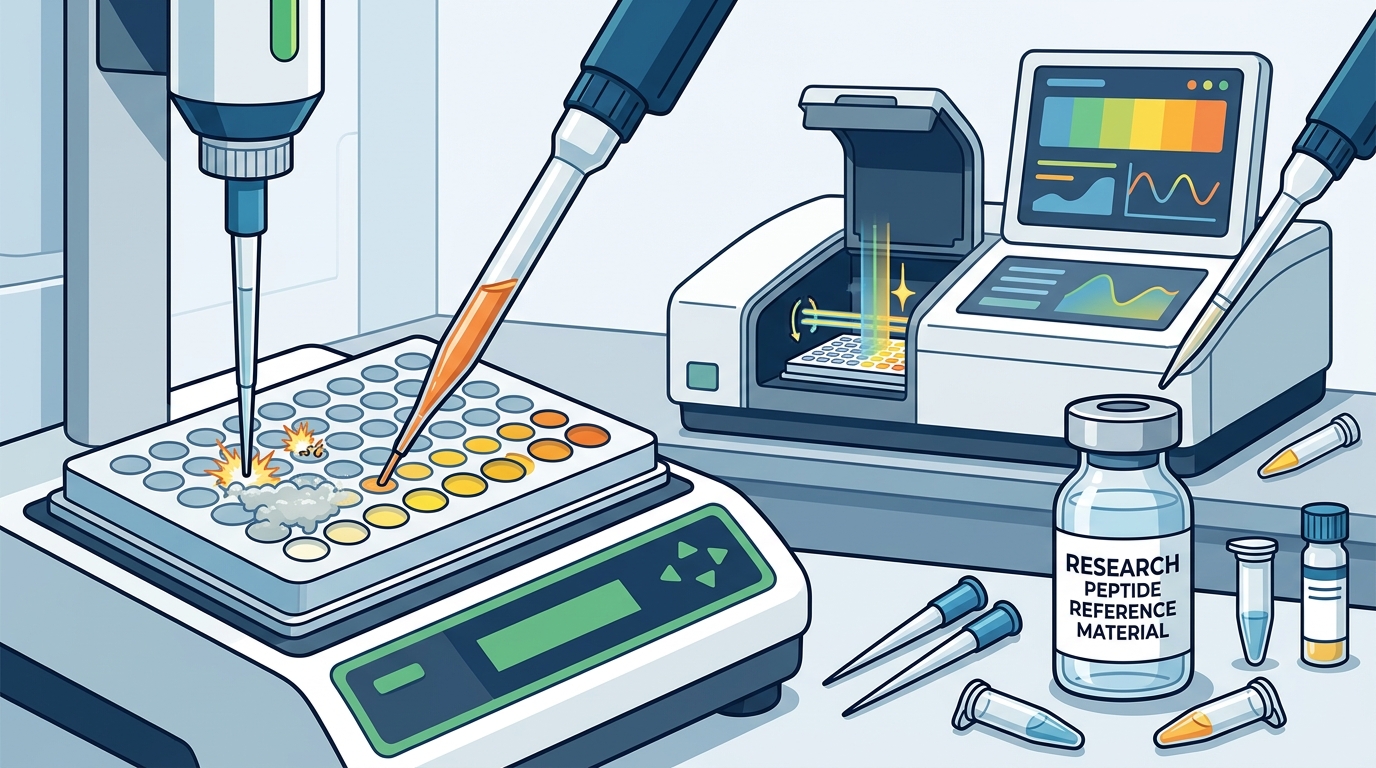
Modern laboratories detect endotoxins in peptide samples primarily through the Limulus Amebocyte Lysate (LAL) assay and Kinetic Chromogenic (KC) methods. These techniques measure the coagulation cascade triggered by lipopolysaccharides (LPS) in Gram-negative bacteria. Aevitas Research integrates these rigorous testing protocols to ensure the integrity and safety of its research-grade reference materials. according to Highly Sensitive Endotoxin
The LAL Assay: The Gold Standard
The Limulus Amebocyte Lysate (LAL) assay is a biological detection method that utilizes the immune response of horseshoe crabs to identify endotoxins. This technique relies on the fact that LPS triggers a specific coagulation cascade in the lysate. When endotoxin is present, the fluid gels, indicating a positive result. This method has been the industry standard for decades due to its high sensitivity and specificity. according to Highly Sensitive Endotoxin For additional details, review the .
Traditional gel-clot LAL assays are qualitative, meaning they confirm the presence or absence of endotoxin above a certain threshold. However, they do not provide a precise quantitative measurement. For research applications requiring strict control, laboratories often move beyond simple gel-clot tests to more precise quantitative methods. The biological basis of this test ensures that it detects the specific toxic component of Gram-negative bacteria rather than general bacterial contamination.
Kinetic Chromogenic Methods for Precision
Managing Interference in Peptide Matrices
Peptide samples can sometimes interfere with LAL assays, leading to false positives or false negatives. This interference occurs when the peptide matrix inhibits or enhances the coagulation cascade. Laboratories must perform interference testing to ensure that the peptide itself does not affect the assay results. This involves testing the sample at various concentrations to identify any inhibitory or enhancing effects.
When interference is detected, laboratories may need to dilute the sample or use alternative detection methods. Proper sample preparation is crucial to obtaining accurate endotoxin results. Aevitas Research employs rigorous quality control measures to ensure that its peptide reference materials are free from endotoxin contamination. This includes testing every batch to verify that the samples meet the required purity standards.
Quality Standards and Certificates of Analysis
Reputable peptide suppliers provide Certificates of Analysis (COAs) that document the endotoxin testing results for each batch. These COAs detail the method used, the detection limit, and the specific results for each sample. This transparency allows researchers to verify the quality of the materials they are using. Aevitas Research makes COAs available for every batch, ensuring full traceability and accountability.
Adherence to established quality standards is a hallmark of a trustworthy supplier. These standards ensure that the testing methods are validated and that the results are reliable. By maintaining high standards for endotoxin testing, Aevitas Research supports the integrity of scientific research. Researchers can rely on these materials to produce accurate and reproducible results in their studies.
Key Takeaways
- The LAL assay is the primary method for detecting endotoxins in peptide samples.
- Peptide matrices can interfere with LAL assays, requiring careful sample preparation.
- Certificates of Analysis provide documented proof of endotoxin testing for each batch.
- Aevitas Research ensures the integrity of its reference materials through rigorous quality control.
- Transparency in testing methods and results is essential for building trust in research materials.
Frequently Asked Questions
What is the LAL assay?
How does the Kinetic Chromogenic method work?
The Kinetic Chromogenic method measures the rate of the coagulation cascade triggered by endotoxins, providing a quantitative result.
Can peptides interfere with endotoxin testing?
Yes, some peptides can inhibit or enhance the LAL assay, so interference testing is necessary to ensure accurate results.
What is an Endotoxin Unit (EU)?
An Endotoxin Unit (EU) is the standard unit of measurement for endotoxin activity, defined by the potency of a reference standard.
Why are COAs important for peptide research?
Certificates of Analysis provide documented proof of the quality and purity of each batch, ensuring traceability and reliability.
Does Aevitas Research test every batch for endotoxins?
Yes, Aevitas Research tests every batch of its reference materials for endotoxins and provides COAs for full transparency.
Conclusion
Understanding the methods used to detect endotoxins is essential for ensuring the quality of peptide research materials. The LAL assay and Kinetic Chromogenic methods provide reliable and precise detection of these toxic contaminants. Aevitas Research is committed to maintaining the highest standards of quality and transparency in its reference materials. By providing rigorous testing and detailed COAs, Aevitas Research supports the integrity of scientific research. To explore our range of research-grade peptide reference materials, visit our research access portal.