

Debunking Myths About Custom Peptide Synthesis and Reference Materials
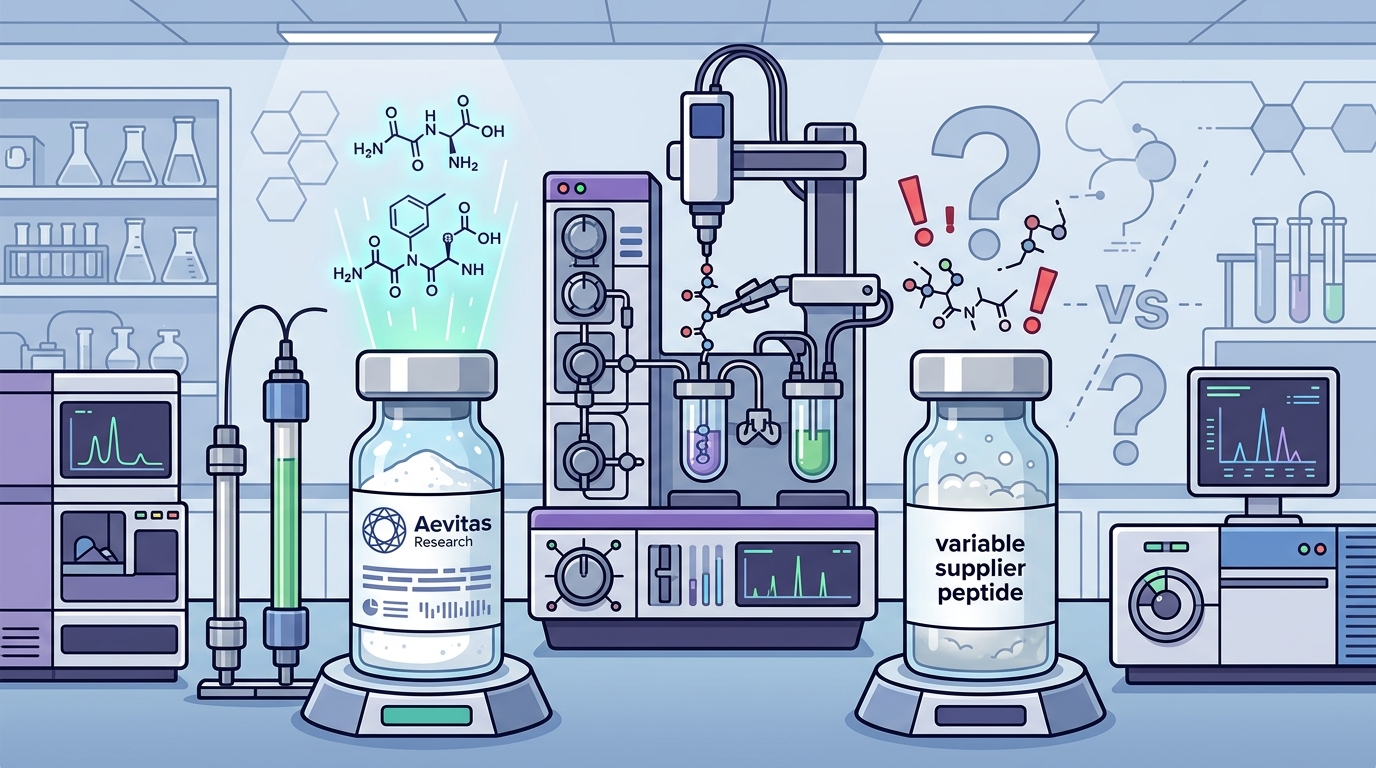
The landscape of biochemical research is evolving at a rapid pace, yet misconceptions about supply chain integrity persist among laboratory managers and principal investigators. According to recent industry analyses, nearly 40% of experimental inconsistencies in peptide-based studies are traced back to supplier variability rather than methodological errors. This statistic highlights a critical gap in how researchers evaluate their vendors. Many teams assume that all synthesis providers operate with identical quality control standards, which is a dangerous oversimplification. The reality involves complex variables ranging from coupling efficiency to final purification protocols. Understanding these nuances is essential for maintaining data reproducibility and ensuring that research outcomes are both valid and reliable.
Myth 1: Standard Purity is Sufficient for All Assays
A pervasive misconception in the scientific community is that a standard 70% to 80% purity level is adequate for all downstream applications. This belief often stems from early-stage screening phases where minor impurities do not significantly skew initial results. However, as research progresses into functional assays, cell-based studies, or structural analysis, even trace contaminants can act as agonists or antagonists, leading to false positives or negatives.
Purity is not a binary state but a spectrum of analytical requirements. High-performance liquid chromatography (HPLC) and mass spectrometry (MS) data must be scrutinized for every batch. Researchers must understand that "standard purity" often leaves behind deletion sequences or side products that interfere with delicate biological interactions. For studies requiring high specificity, such as receptor binding assays, researchers should demand analytical-grade purity, often exceeding 95% or 98%. This distinction is vital for maintaining the integrity of published data and avoiding costly re-runs.
When evaluating suppliers, it is crucial to look beyond the headline purity percentage. The presence of a Certificate of Analysis (COA) that details specific impurity profiles provides a much clearer picture of the material's suitability. Aevitas Research emphasizes verified quality with COAs available for every order, ensuring that researchers have the data needed to make informed decisions about their experimental design.
Myth 2: Speed Compromises Analytical Rigor
Another common myth is that expedited synthesis services inherently sacrifice quality control steps to meet tight deadlines. This assumption suggests a zero-sum game between turnaround time and scientific accuracy. In reality, modern solid-phase peptide synthesis (SPPS) workflows are highly optimized. Advanced automated synthesizers and standardized coupling protocols allow for rapid production without bypassing critical purification stages.
However, speed does require logistical precision. Suppliers must maintain robust inventory management and streamlined shipping processes to deliver results quickly. This is where operational efficiency becomes a key differentiator. A vendor that offers free shipping on orders over $150, for instance, demonstrates an understanding of the logistical needs of academic and private research labs. This service reduces overhead costs, allowing researchers to allocate more budget toward high-quality reagents rather than logistics.
The key is to choose a partner that has integrated speed into its operational framework rather than treating it as an afterthought. This integration ensures that the analytical rigor remains intact regardless of the requested delivery timeline. Researchers should verify that the supplier's quality assurance team reviews every batch, regardless of how quickly it was synthesized.
Myth 3: Off-the-Shelf Materials Lack Batch Consistency
Many researchers believe that off-the-shelf reference materials are less reliable than custom-synthesized batches. The fear is that mass-produced items suffer from batch-to-batch variability, making long-term studies difficult to replicate. While this concern is valid for poorly managed suppliers, it does not reflect the standards of top-tier research material providers.
Established suppliers maintain strict inventory controls and rigorous testing protocols for their catalog items. Each batch of an off-the-shelf peptide is tested against the same analytical benchmarks as custom orders. This ensures that a researcher purchasing a reference standard in 2026 will receive material with identical characteristics to one purchased in 2025. This consistency is critical for longitudinal studies and comparative analyses.
Furthermore, off-the-shelf materials offer a significant advantage in terms of accessibility. They allow researchers to initiate experiments immediately without waiting for synthesis and purification cycles. For high-throughput screening or method development, this immediacy can accelerate project timelines significantly. The availability of these materials is a testament to the supplier's ability to scale production while maintaining quality.
Myth 4: Custom Synthesis is Prohibitively Expensive
The perception that custom peptide synthesis is a luxury reserved for well-funded pharmaceutical companies is outdated. While custom work does carry a higher price point than catalog items, the cost has become increasingly accessible due to technological advancements in synthesis automation. The efficiency of modern SPPS has reduced waste and labor costs, making custom solutions viable for academic grants and private research labs alike.
Moreover, the cost of failure in research often far exceeds the cost of high-quality reagents. Using substandard peptides can lead to months of wasted time and resources. Therefore, investing in verified, high-purity custom synthesis is a cost-saving measure in the long run. Researchers should view these expenses as essential investments in data validity rather than mere operational costs.
Additionally, many suppliers offer tiered pricing structures or bulk discounts for recurring orders. This flexibility allows laboratories to manage their budgets more effectively while still accessing the specific sequences required for their unique research questions. Understanding the total cost of ownership, including the potential savings from avoiding experimental errors, provides a clearer financial picture.
Myth 5: Certificates of Analysis Are Merely Administrative
A dangerous oversight in many laboratories is treating the Certificate of Analysis (COA) as a bureaucratic formality rather than a critical scientific document. The COA is the primary evidence of the material's identity and purity. It contains the chromatograms, mass spectra, and quantitative data that verify the product meets the specified standards.
Ignoring the COA is akin to driving without checking your fuel gauge. Researchers must review the HPLC traces to ensure the main peak is sharp and free of significant impurities. The mass spectrum confirms the molecular weight, verifying that the sequence was synthesized correctly. Without this verification, researchers are working blind, risking the validity of their entire study.
Aevitas Research prioritizes transparency by making COAs readily available for all products. This commitment to open data allows researchers to perform their own due diligence. It also fosters trust between the supplier and the scientific community. When a supplier stands behind their product with detailed analytical data, it signals a commitment to research integrity that goes beyond simple transactional relationships.
Comparing Synthesis Models and Supply Chains
To better understand the differences between custom and off-the-shelf options, it is helpful to compare their operational characteristics. The table below outlines the key distinctions.
| Feature | Custom Peptide Synthesis | Off-the-Shelf Reference Materials |
|---|---|---|
| Sequence Specificity | 100% tailored to research needs | Limited to catalog inventory |
| Turnaround Time | Days to weeks depending on length | Immediate availability |
| Cost Structure | Higher per-unit cost, scalable for bulk | Lower per-unit cost, fixed pricing |
| Quality Control | Batch-specific COA and analysis | Standardized batch testing |
| Best Use Case | Novel targets, specific modifications | High-throughput screening, controls |
This comparison highlights that the choice between custom and off-the-shelf materials should be driven by the specific phase of the research project. Early-stage discovery may benefit from the speed of catalog items, while late-stage validation often requires the precision of custom synthesis.
Key Takeaways for Research Integrity
- Purity Matters: Standard purity is often insufficient for sensitive assays; always verify with COA data.
- Speed and Quality: Modern synthesis allows for rapid delivery without compromising analytical rigor.
- Consistency: Reputable suppliers ensure batch-to-batch consistency for both custom and catalog items.
- Cost Efficiency: High-quality custom synthesis prevents costly experimental failures and re-runs.
- Transparency: Access to detailed Certificates of Analysis is non-negotiable for research integrity.
- Logistics: Efficient shipping and support services, such as free shipping thresholds, reduce operational overhead.
- Verification: Always confirm that products are intended for research purposes only and not for human consumption.
Frequently Asked Questions
What is the difference between crude and purified peptides?
Crude peptides are the initial output of the synthesis process and contain the target sequence along with deletion sequences and side products. Purified peptides have undergone additional steps, such as HPLC, to isolate the target sequence, resulting in higher purity and reliability for downstream applications.
How do I verify the quality of a peptide supplier?
Look for suppliers that provide detailed Certificates of Analysis (COAs) for every batch, offer transparent pricing, and have a clear policy regarding research use only. Aevitas Research provides verified quality with COAs available for all products.
Are off-the-shelf peptides as reliable as custom ones?
Yes, when sourced from a reputable supplier. Off-the-shelf peptides are subject to the same rigorous quality control testing as custom orders. The primary difference is availability and sequence specificity.
What is the typical turnaround time for custom synthesis?
Turnaround times vary based on peptide length and complexity. Standard orders can often be fulfilled within a few days to a week, depending on the supplier's current workload and shipping logistics.
Can I return a peptide if it does not meet my specifications?
Most suppliers have specific refund and return policies for research materials. It is important to review the Refunds & Returns policy before placing an order to understand the terms.
Why are peptides labeled for research use only?
Peptides sold for research are not approved for human consumption or clinical use. They are intended for in vitro or in vivo studies conducted by qualified researchers in laboratory settings.
How does Aevitas Research ensure product integrity?
Aevitas Research ensures integrity through verified quality standards, providing Certificates of Analysis for all products, and maintaining strict compliance with research regulations. Visit the COA page for more details.
Partner with Aevitas Research
Accurate research begins with accurate materials. By debunking these common myths and prioritizing verified quality, you can enhance the reliability of your scientific findings. Aevitas Research is dedicated to supporting the scientific community with high-integrity custom peptide synthesis and off-the-shelf reference materials. Our commitment to transparency is reflected in our readily available Certificates of Analysis and our focus on shipping and payments efficiency.
Whether you require a novel sequence for a groundbreaking study or a reliable reference standard for routine screening, we provide the tools you need to succeed. Explore our product catalog to find the materials that fit your research needs. For personalized assistance or to discuss your specific requirements, please contact us today. Our team is ready to support your journey toward scientific discovery with the highest standards of quality and service.