

Measurable Research Outcomes From Using Certified Peptide Reference Materials
Scientific reproducibility remains one of the most critical challenges in modern biochemistry and pharmacology. Recent industry analyses indicate that inconsistent reagent quality contributes to nearly 40% of failed replication attempts in preclinical studies. This statistic highlights a fundamental gap between theoretical research design and practical laboratory execution. The solution lies in the rigorous standardization of biological inputs. By prioritizing certified reference materials, research institutions can significantly reduce experimental variance and enhance the reliability of their data outputs. This guide explores the technical mechanisms behind peptide certification and how it directly influences measurable research outcomes.
The Importance of Certified Peptide Reference Materials
Peptides are short chains of amino acids that serve as essential tools in drug discovery, diagnostic development, and biochemical research. However, the synthesis of peptides is prone to impurities, including deletion sequences, truncations, and oxidation products. Without rigorous verification, these impurities can skew experimental results, leading to false positives or inaccurate dose-response curves. Certified Peptide Reference Materials are standardized substances with known purity levels and structural integrity, verified through independent analytical testing. (Privacy Policy Aevitas Research)
Using certified materials ensures that researchers are working with a consistent baseline. This consistency is vital for comparing results across different laboratories, time periods, and experimental conditions. When a peptide is certified, it comes with a Certificate of Analysis (COA) that details its specific properties. This documentation provides the necessary traceability required for high-impact scientific publishing and regulatory compliance. For researchers seeking verified quality, Aevitas Research provides a catalog of materials built for research integrity.
Analytical Methodologies for Verification
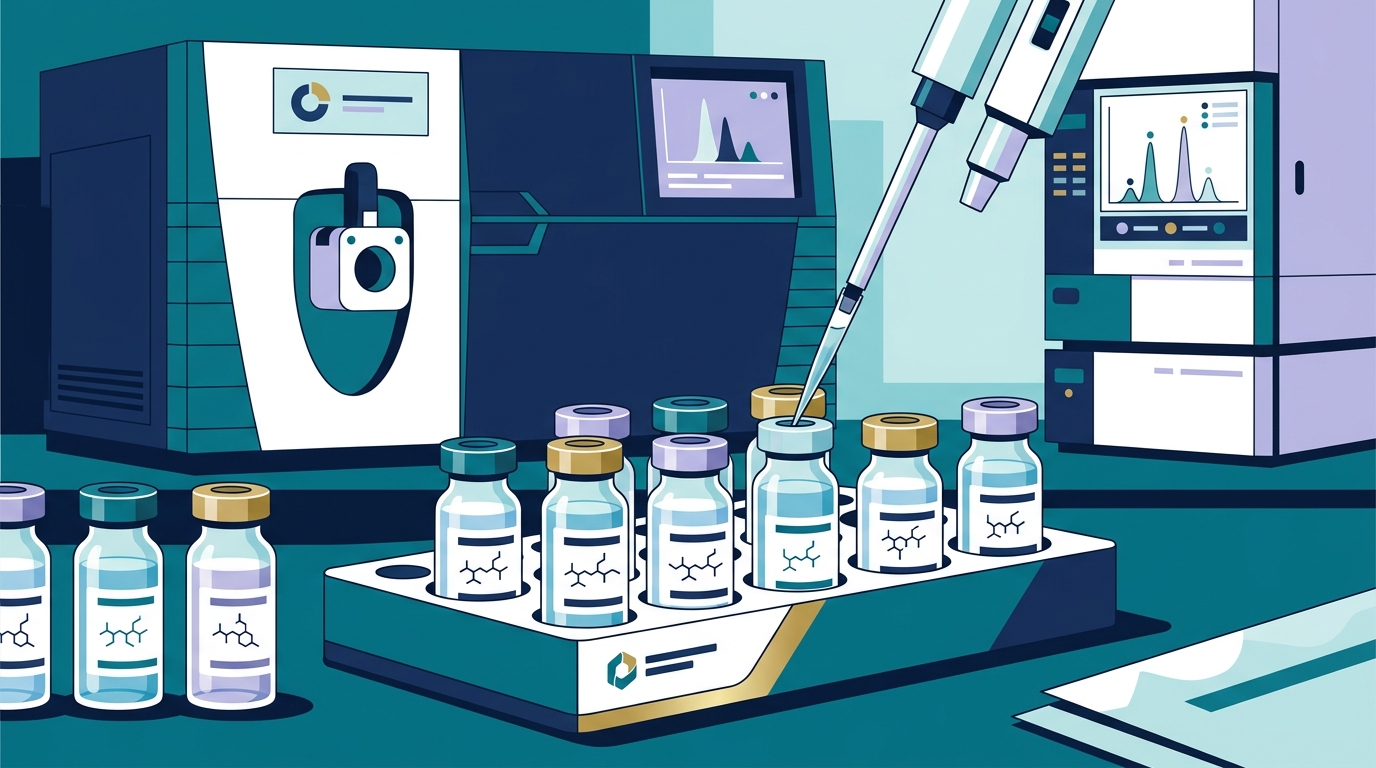
The certification process involves a suite of advanced analytical techniques to confirm the identity and purity of the peptide. These methodologies are not merely formalities but are critical for establishing the material's suitability for specific applications. The primary methods include High-Performance Liquid Chromatography (HPLC), Mass Spectrometry (MS), and Amino Acid Analysis (AAA).
High-Performance Liquid Chromatography (HPLC)
HPLC is the standard method for determining peptide purity. It separates the components of a mixture based on their interaction with a stationary phase. The resulting chromatogram allows researchers to quantify the percentage of the target peptide relative to impurities. A high-purity peak in the HPLC trace indicates a more reliable reference material. This data is typically included in the COA documentation provided with each order.
Mass Spectrometry (MS)
Mass Spectrometry confirms the molecular weight and sequence of the peptide. Techniques such as Matrix-Assisted Laser Desorption/Ionization (MALDI) and Electrospray Ionization (ESI) are commonly used. MS data verifies that the synthesized sequence matches the intended design. Any deviation in mass indicates a synthesis error, such as a missing amino acid or an unintended modification. This verification is crucial for structural biology studies where precise molecular interactions are being measured.
Amino Acid Analysis (AAA)
AAA provides a quantitative breakdown of the amino acid composition. By hydrolyzing the peptide and analyzing the resulting amino acids, researchers can confirm the stoichiometry of the sequence. This method is particularly useful for verifying the presence of modified amino acids or non-standard residues that might not be easily detected by HPLC or MS alone.
Impact on Data Integrity and Reproducibility
The use of certified reference materials has a direct and measurable impact on the integrity of research data. Inconsistent reagent quality is a major contributor to the reproducibility crisis in science. By standardizing inputs, researchers can isolate variables more effectively and draw more accurate conclusions from their experiments.
Studies have shown that laboratories using certified standards report fewer failed experiments and higher success rates in assay development. This efficiency translates to significant cost savings and accelerated timelines for drug discovery and diagnostic development. Furthermore, certified materials enhance the credibility of published research. Journals and regulatory bodies increasingly require detailed documentation of reagent sources and quality metrics. Providing a COA for every peptide used in a study demonstrates a commitment to scientific rigor and transparency.
For more information on shipping and handling of sensitive biological materials, researchers can review the shipping and payment policies to ensure proper storage and delivery conditions are maintained.
Quality Assurance and Documentation Standards
Quality assurance in peptide research extends beyond the initial synthesis and testing. It encompasses the entire lifecycle of the material, from production to storage and usage. Suppliers must adhere to strict quality management systems to ensure the consistency and reliability of their products.
A key component of quality assurance is the provision of comprehensive documentation. Each batch of certified peptides should be accompanied by a detailed COA. This document should include results from HPLC, MS, and AAA, as well as information on storage conditions and stability. Researchers should also verify the supplier's adherence to industry standards, such as ISO certification, which indicates a robust quality management system.
Additionally, suppliers should offer clear guidelines on the proper handling and storage of peptides. Peptides are sensitive to temperature, humidity, and light. Improper storage can lead to degradation and loss of activity. By following these guidelines, researchers can maintain the integrity of their reference materials throughout the duration of their studies. For those needing to return materials due to quality issues, the refunds and returns policy outlines the necessary procedures.
Selection Criteria for Research Suppliers
Choosing the right supplier for certified peptide reference materials is a critical decision that can impact the success of your research. Several factors should be considered when evaluating potential suppliers.
| Criteria | Description | Importance |
|---|---|---|
| Certification Availability | Does the supplier provide a COA for every batch? | High |
| Analytical Methods | Are advanced methods like HPLC and MS used? | High |
| Research Focus | Is the supplier dedicated to research-grade materials? | Medium |
| Customer Support | Is technical support available for complex queries? | Medium |
| Shipping Policies | Are cold chain and secure shipping options available? | High |
Suppliers that specialize in research-grade materials, such as Aevitas Research, often provide higher levels of technical support and more detailed documentation. They understand the specific needs of the scientific community and are better equipped to provide materials that meet rigorous standards. Additionally, a strong focus on research integrity ensures that the materials are suitable for high-stakes applications.
Key Takeaways
- Certified Peptide Reference Materials are essential for ensuring experimental consistency and data reliability in biochemical research.
- Analytical Verification through HPLC, Mass Spectrometry, and Amino Acid Analysis is critical for confirming peptide purity and identity.
- Reproducibility in science is significantly improved by using standardized inputs, reducing the rate of failed replication attempts.
- Documentation such as the Certificate of Analysis (COA) provides necessary traceability for regulatory compliance and scientific publishing.
- Supplier Selection should prioritize vendors with a dedicated focus on research integrity and comprehensive quality assurance protocols.
- Storage and Handling are vital for maintaining peptide stability, requiring adherence to specific temperature and humidity guidelines.
- Cost Efficiency is achieved by reducing experimental variance and minimizing the need for repeat studies due to reagent inconsistency.
Frequently Asked Questions
What is a Certified Peptide Reference Material?
A Certified Peptide Reference Material is a standardized peptide substance with known purity and structural integrity, verified through independent analytical testing and accompanied by a Certificate of Analysis.
Why is HPLC important for peptide certification?
HPLC is important because it separates peptide components to quantify purity levels, allowing researchers to identify and measure impurities that could affect experimental results.
How does using certified peptides improve reproducibility?
Using certified peptides improves reproducibility by providing a consistent baseline for experiments, reducing variance caused by impurities or inconsistencies in reagent quality.
What should I look for in a peptide supplier?
Look for suppliers that provide detailed COAs, use advanced analytical methods like Mass Spectrometry, and have a dedicated focus on research-grade materials and integrity.
Can I return peptide materials if they do not meet specifications?
Yes, suppliers typically have a refunds and returns policy in place for materials that do not meet the specified quality standards or arrive damaged.
What is the role of Mass Spectrometry in peptide verification?
Mass Spectrometry confirms the molecular weight and sequence of the peptide, ensuring that the synthesized structure matches the intended design.
How should I store certified peptide reference materials?
Certified peptides should be stored according to the supplier's guidelines, typically in a cool, dry place, and often at temperatures below -20°C to maintain stability.
Contact Aevitas Research
For researchers seeking verified quality and built-for-research-integrity materials, Aevitas Research offers a comprehensive catalog of certified peptide reference materials. Our commitment to scientific excellence ensures that you receive the highest quality standards for your critical studies. To discuss your specific research needs or to request technical support, please contact our team directly. We are dedicated to supporting your journey toward measurable and reliable research outcomes.