
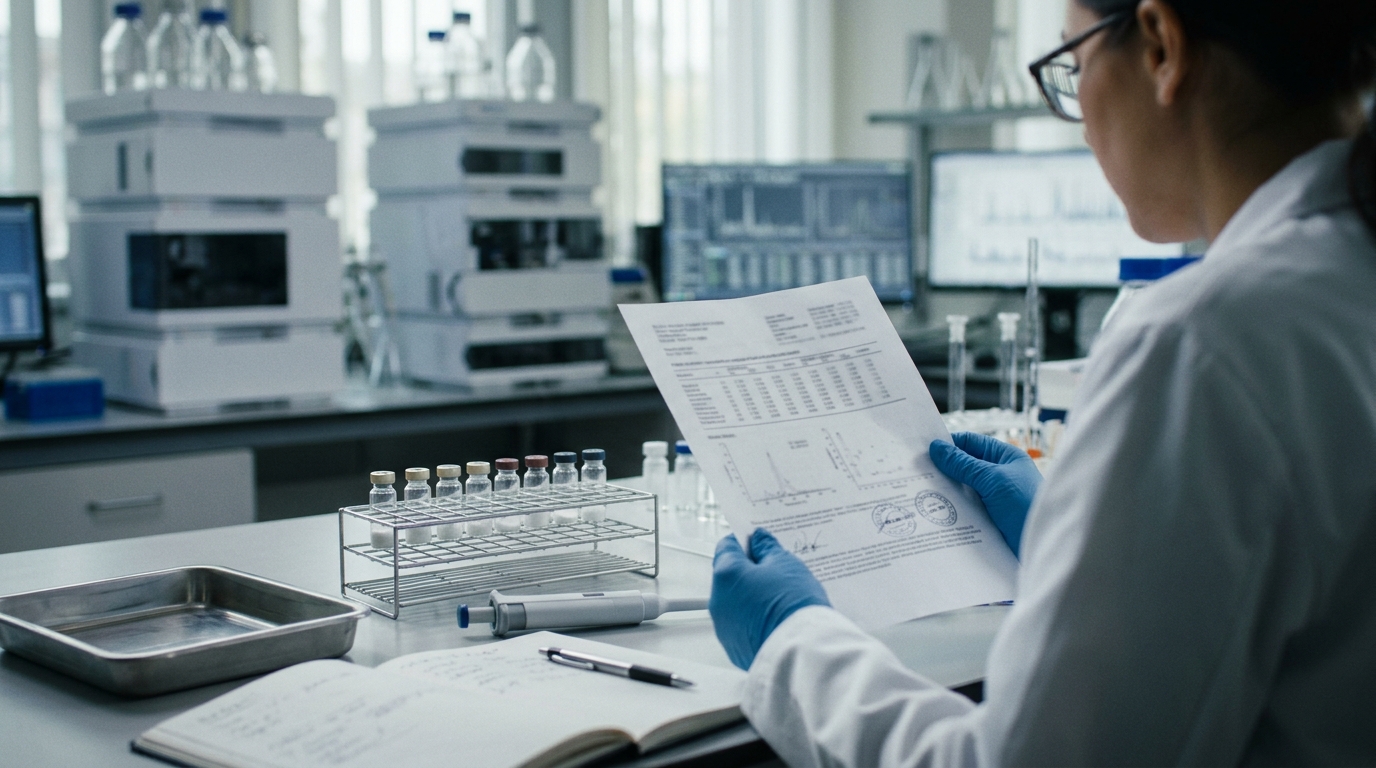
A certificate of analysis (COA) is a laboratory-issued document that verifies the identity, purity, and safety of a specific peptide batch. For organizations evaluating research peptides, the COA is the primary evidence of product integrity. It confirms that the material matches the manufacturer's specifications and has passed rigorous quality control testing. Aevitas Research emphasizes that verified quality and available COAs are foundational to research integrity and professional trust.
Identity Verification and Purity Metrics
Safety Testing and Contaminant Screening
Stability Data and Storage Conditions
Peptides are sensitive to environmental factors such as temperature, light, and humidity. The COA should reference the stability profile of the batch, indicating how long the material remains viable under recommended storage conditions. This data helps research facilities plan inventory management and shelf-life expectations. If the COA does not include stability data, the supplier should provide a separate stability study report. Understanding the degradation profile ensures that the material remains consistent across experimental timelines.
Supplier Credibility and Documentation Standards
Common Pitfalls in COA Interpretation
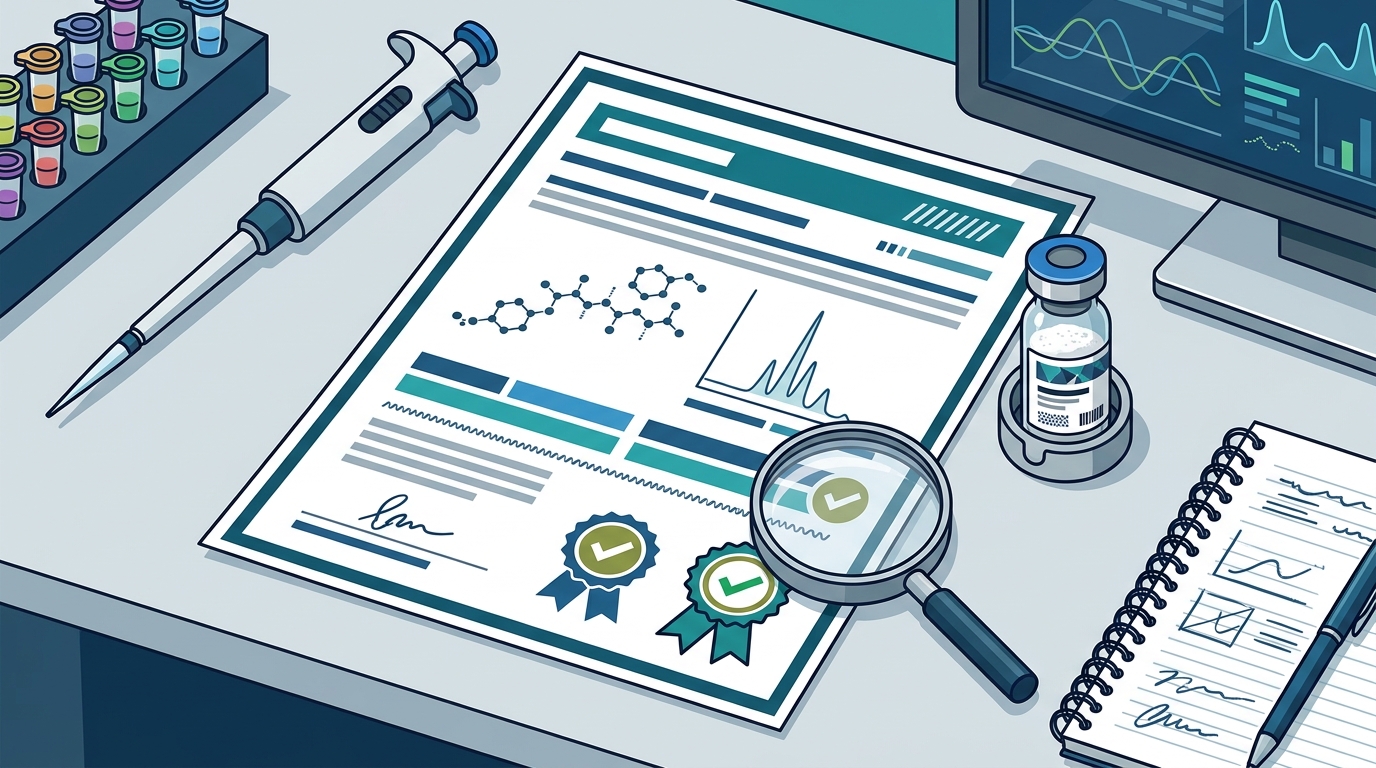
Many buyers overlook critical details on the COA, leading to potential quality issues. One common pitfall is accepting a COA that lacks specific batch numbers. Each document must correspond to the exact lot received. Another issue is vague language in the testing methods. The COA should specify the analytical techniques used, such as HPLC or LC-MS/MS. Finally, ensure that the testing laboratory is independent or accredited. A COA from an unaccredited lab may not meet regulatory or industry standards. Researchers should request full COAs before finalizing any purchase agreement.
Key Takeaways
- Identity verification via mass spectrometry or HPLC is the first check on any COA.
- Purity levels should be explicitly stated and meet or exceed 95% for most applications.
- Endotoxin and sterility testing results are mandatory for safety assurance.
- Stability data helps determine shelf life and proper storage protocols.
- Every batch must have a unique, signed COA from a qualified laboratory.
- Reputable suppliers like Aevitas Research prioritize verified quality and documentation.
Frequently Asked Questions
What is a certificate of analysis for peptides?
Why is endotoxin testing important on a COA?
Endotoxin testing measures bacterial lipopolysaccharides, which can cause adverse reactions. Ensuring low endotoxin levels is critical for the safety of biological materials in professional settings.
How do I verify the identity of a peptide?
Identity is typically verified using mass spectrometry or HPLC. These methods confirm that the molecular structure matches the expected peptide sequence.
What purity level should I expect from a high-quality peptide?
High-quality peptides generally have a purity of 95% or higher. Some specialized compounds may require even higher purity levels, depending on the application.
Does Aevitas Research provide COAs with their products?
Yes, Aevitas Research provides verified quality documentation, including COAs, for their research-grade peptide laboratory reference materials. This ensures transparency and reliability for their clients.
What is the difference between sterility and mycobacterial testing?
Sterility testing checks for the presence of any viable microorganisms, while mycobacterial testing specifically screens for slow-growing bacteria like Mycobacterium species, which may not be detected in standard sterility tests. Learn more: Aevitas Research Aevitas Research.