

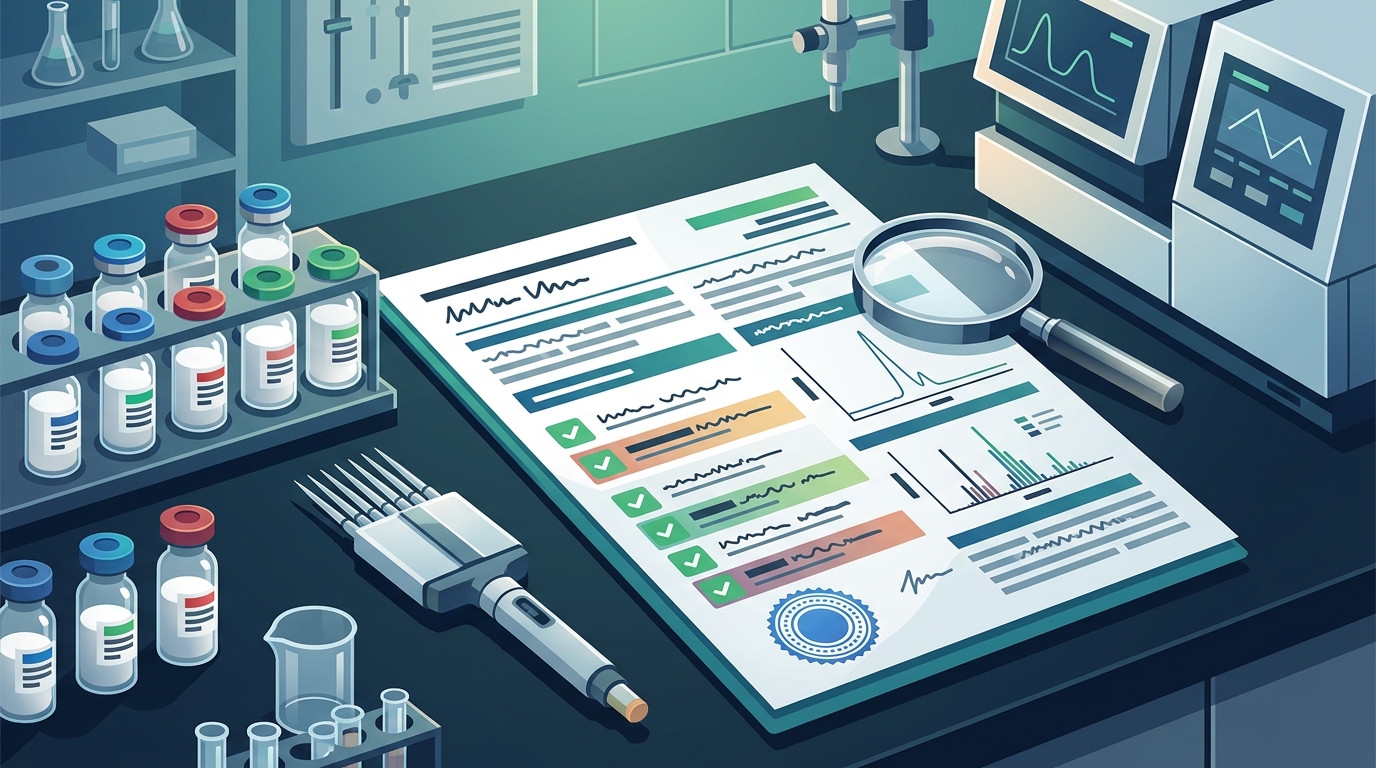
When evaluating research-grade peptide suppliers, the Certificate of Analysis (COA) serves as the primary document verifying product identity and purity. A robust COA is the foundation of research integrity, ensuring that the materials received match the specifications required for accurate experimental outcomes. This guide outlines the seven essential data points to verify on any peptide COA to ensure your laboratory reference materials meet high-end quality standards.
1. Purity Percentage and Methodology
The purity percentage must be verified using High-Performance Liquid Chromatography (HPLC). Purity is a critical metric that indicates the proportion of the desired peptide relative to impurities. Reputable suppliers utilize HPLC to quantify this value, often reporting results above 95% or 98% for research-grade materials. The specific HPLC method used, including the column type and mobile phase, should be documented to ensure reproducibility and transparency in the testing process.
2. Mass Spectrometry Confirmation
3. Identity Verification via NMR
Nuclear Magnetic Resonance (NMR) spectroscopy provides structural confirmation of the peptide. NMR is a powerful tool for verifying the chemical structure and stereochemistry of complex molecules. For high-value or complex peptides, the inclusion of NMR data in the COA adds a layer of structural validation. This technique helps confirm the spatial arrangement of atoms, which is crucial for understanding the biological activity and stability of the reference material in a laboratory setting.
4. Water Content and Residual Solvents
Water content and residual solvent levels must be within specified limits. Peptides are often synthesized using organic solvents, and residual traces can affect stability and assay accuracy. The COA should report water content, typically determined via Karl Fischer titration, and list any residual solvents detected. Ensuring these levels are low and consistent is a key indicator of a well-controlled manufacturing and purification process, which is a hallmark of premium suppliers.
5. Endotoxin and Sterility Testing
6. Batch-Specific Traceability
Each COA must be linked to a specific batch or lot number for full traceability. Traceability allows researchers to track the exact production run of the material they received. The COA should clearly state the batch number, manufacturing date, and expiration date. This level of detail is crucial for quality control and regulatory compliance. If a quality issue arises, the batch number enables the supplier to investigate the specific production conditions, ensuring accountability and transparency in the supply chain.
7. Authorized Signature and Date
The document must be signed and dated by an authorized quality control representative. A COA is not valid without formal authorization from the supplier's quality assurance team. The signature indicates that the testing was performed by qualified personnel and that the results have been reviewed and approved. The date of issue should align with the manufacturing date. This formal attestation is a key differentiator between legitimate research-grade suppliers and unverified sources, reinforcing the credibility of the data provided.
Choosing the Right Supplier
Frequently Asked Questions
What is a Certificate of Analysis (COA)?
A Certificate of Analysis is a document issued by a manufacturer that provides the results of testing performed on a specific batch of product. It serves as proof of quality and identity, detailing metrics such as purity, mass, and stability to ensure the material meets specified standards.
Why is HPLC purity important for peptides?
HPLC purity is important because it quantifies the proportion of the desired peptide relative to impurities. High purity levels are essential for reliable experimental results, as impurities can interfere with biological assays and data interpretation.
Does Aevitas Research provide COAs with all orders?
Yes, Aevitas Research provides verified quality documentation and COAs for its products. This commitment to transparency ensures that researchers can verify the identity and purity of the materials they receive, supporting the integrity of their scientific work.
What is the difference between HPLC and Mass Spectrometry?
HPLC measures the purity of a sample by separating components based on their chemical properties, while Mass Spectrometry confirms the molecular identity by measuring the mass-to-charge ratio of ions. Together, they provide a comprehensive verification of both purity and structural identity.
How do I verify the authenticity of a COA?
To verify the authenticity of a COA, check for a specific batch number, authorized signature, and detailed testing methodologies. You can also contact the supplier directly to confirm that the document matches their records for that specific batch, ensuring the data is genuine and up-to-date.
Why is endotoxin testing critical for research peptides?
Endotoxin testing is critical because endotoxins can cause significant interference in cell culture and biological assays. Ensuring low endotoxin levels helps maintain the validity of experimental results, particularly in studies involving sensitive biological systems. Learn more: Aevitas Research Aevitas Research.