

The FDA Regulatory Framework for Compounded Peptides
The Food and Drug Administration (FDA) regulates compounded drugs under specific sections of the Federal Food, Drug, and Cosmetic Act. Compounding is the process of preparing, mixing, assembling, or packaging a drug product based on a prescription from a licensed practitioner. For peptides, the regulatory landscape is complex because many are not approved as standalone drugs but are used in compounded formulations.
The FDA requires that any API used in compounding must be sourced from a facility registered with the FDA. This ensures that the raw material has undergone periodic inspections for Good Manufacturing Practices (GMP). If a compounding pharmacy sources API from an unregistered facility, the resulting product is considered adulterated. Med spas acting as downstream users must ensure their pharmacy partners can prove this supply chain integrity.
According to Johns Hopkins University, some peptides like insulin have robust FDA approval, while others have limited evidence. This distinction is critical for med spas. When sourcing peptides with limited clinical evidence, the burden of quality verification shifts heavily to the compounding pharmacy and the reference materials used for testing.
State Board of Pharmacy Requirements
In addition to federal rules, state boards of pharmacy enforce specific compounding regulations. These rules often dictate the maximum quantity of drugs a pharmacy can compound and the types of ingredients they can use. State regulations are the primary mechanism for ensuring that compounding pharmacies operate within safe and ethical boundaries.
Med spas must confirm that their compounding partners are licensed in the state where the pharmacy operates and where the med spa is located. If a pharmacy is located in a different state, interstate compounding rules apply. The FDA has issued guidance on outsourcing facilities, but traditional compounding pharmacies are primarily regulated at the state level. This dual-layer regulatory structure means that compliance is not a one-size-fits-all process.
For example, a med spa in California must ensure its pharmacy partner complies with both FDA federal standards and the California Board of Pharmacy rules. Failure to do so can result in the seizure of products and legal liability for the med spa. Aevitas Research provides certificates of analysis for every batch, which helps pharmacies and med spas document compliance with these state and federal requirements.
API Sourcing and Supply Chain Integrity
The integrity of the Active Pharmaceutical Ingredient (API) is the cornerstone of peptide quality. API sourcing refers to the procurement of the raw peptide material from a manufacturing facility. The FDA mandates that this facility must be registered and inspected. This requirement is designed to prevent the use of counterfeit or substandard raw materials.
Compounding pharmacies must maintain records that trace the API back to its source. Med spas should request these records as part of their vendor qualification process. If a pharmacy cannot provide a clear supply chain trail, the med spa should consider alternative partners. The Obesity Medicine Association highlights that using FDA-registered facilities for API production is a key mitigation strategy for safety risks.
Aevitas Research focuses on this exact aspect of the supply chain. By providing research-grade reference materials, we enable laboratories to verify that the API in a compounded batch matches the expected chemical structure and purity. This independent verification adds a layer of trust that is essential for high-end med spas.
Batch Testing and Quality Assurance Standards
Med spas should require that their compounding partners provide a Certificate of Analysis (COA) for every batch they receive. The COA should detail the testing methods used and the results obtained. Without this documentation, the med spa cannot verify that the product is safe or consistent. Aevitas Research makes COAs available for every batch, reflecting the industry standard for transparency. according to Frequently asked questions
The use of reference materials is critical in this testing process. Laboratories use these standards to calibrate their instruments and validate their methods. If a laboratory does not use certified reference materials, the accuracy of their testing is compromised. This is why sourcing from a provider like Aevitas Research, which specializes in research access to high-quality materials, is vital for ensuring reliable test results.
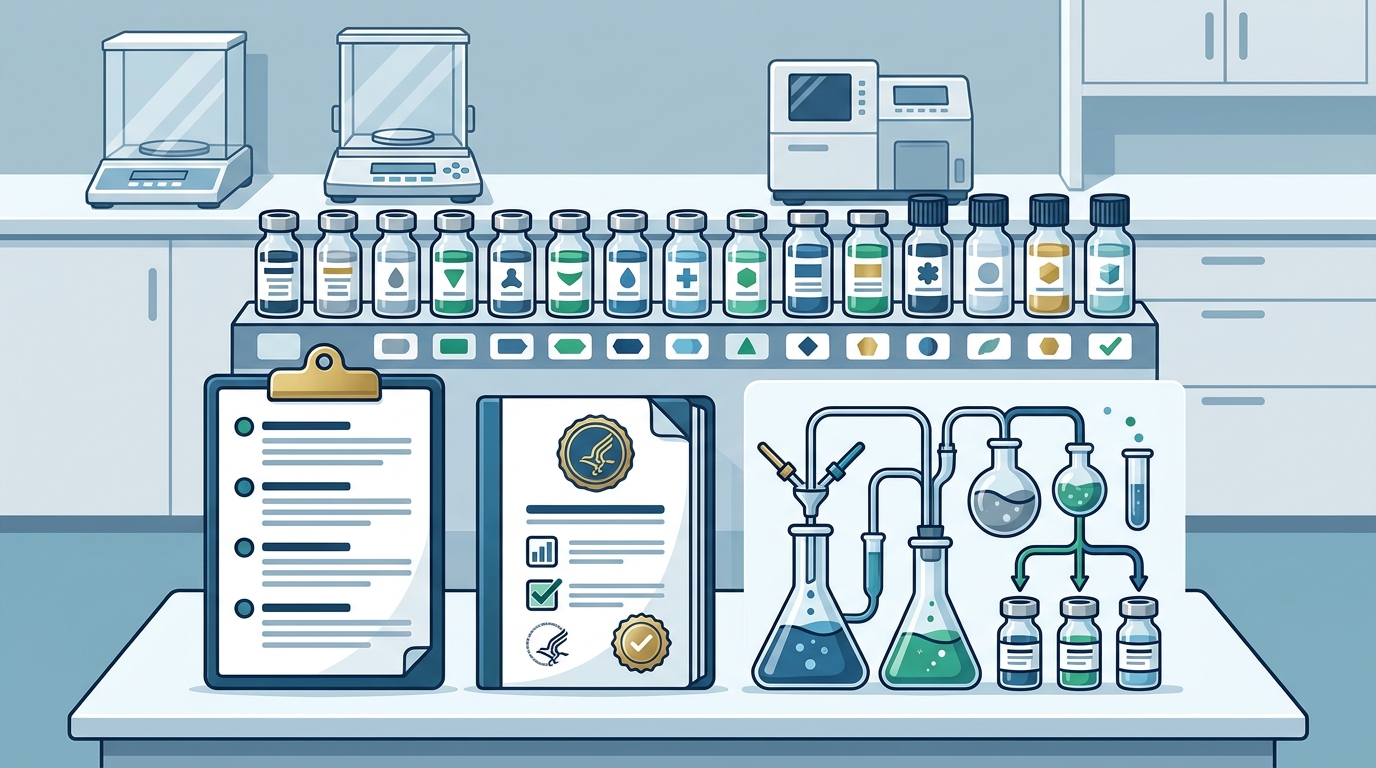
Med Spa Compliance Checklist
Med spas must implement a vendor qualification process to ensure their peptide suppliers are compliant. This process involves verifying the pharmacy's license, API sourcing, and testing protocols. Vendor qualification is the systematic evaluation of a supplier's ability to meet regulatory and quality requirements.
Key Takeaways
- Med spas must verify that compounding pharmacies source API from FDA-registered facilities.
- State board of pharmacy regulations are a critical layer of compliance for compounded peptides.
- Every batch of peptides should come with a detailed Certificate of Analysis (COA).
- Independent verification using certified reference materials is essential for accurate testing.
- Med spas should implement a formal vendor qualification process for all peptide suppliers.
- Aevitas Research provides the high-quality reference materials needed to support this compliance.
Frequently Asked Questions
What is the primary regulatory body for compounded peptides?
The FDA is the primary federal regulatory body, while state boards of pharmacy enforce local compounding rules. Both layers of regulation must be followed.
Why is API sourcing important for med spas?
API sourcing determines the quality of the raw material. Using unregistered facilities can lead to adulterated products, posing safety risks and legal liabilities.
What is a Certificate of Analysis (COA)?
A COA is a document that provides the results of testing for a specific batch of product, confirming its identity, purity, and potency.
How does Aevitas Research support compliance?
Aevitas Research provides research-grade reference materials that allow laboratories to accurately test and verify the quality of compounded peptides.
Do med spas need to be licensed to source peptides?
Med spas must ensure their pharmacy partners are licensed. The med spa itself operates under state health department regulations, which vary by location.
What is the role of reference materials in peptide testing?
Reference materials are used to calibrate testing instruments and validate methods, ensuring that the results are accurate and reliable.
Conclusion
Navigating the regulatory landscape for peptide sourcing requires diligence and a commitment to quality. Med spas must partner with compounding pharmacies that adhere to FDA and state regulations, particularly regarding API sourcing and batch testing. By using verified reference materials from Aevitas Research, laboratories can ensure that their testing is accurate and that the products they provide are of the highest standard. This approach not only ensures compliance but also builds trust with clients who expect premium, safe, and reliable services. according to How the FDA