

Research integrity relies heavily on the quality and consistency of the materials used in the laboratory. According to recent industry data, over 60% of experimental variability in peptide-based studies can be traced back to inconsistencies in raw material sourcing and purity verification. This statistic highlights why choosing between custom synthesis and pre-made reference materials is not merely a logistical decision but a critical component of experimental design. Researchers must weigh the trade-offs between the flexibility of custom work and the immediate availability of off-the-shelf options.
Understanding Peptide Sourcing Models
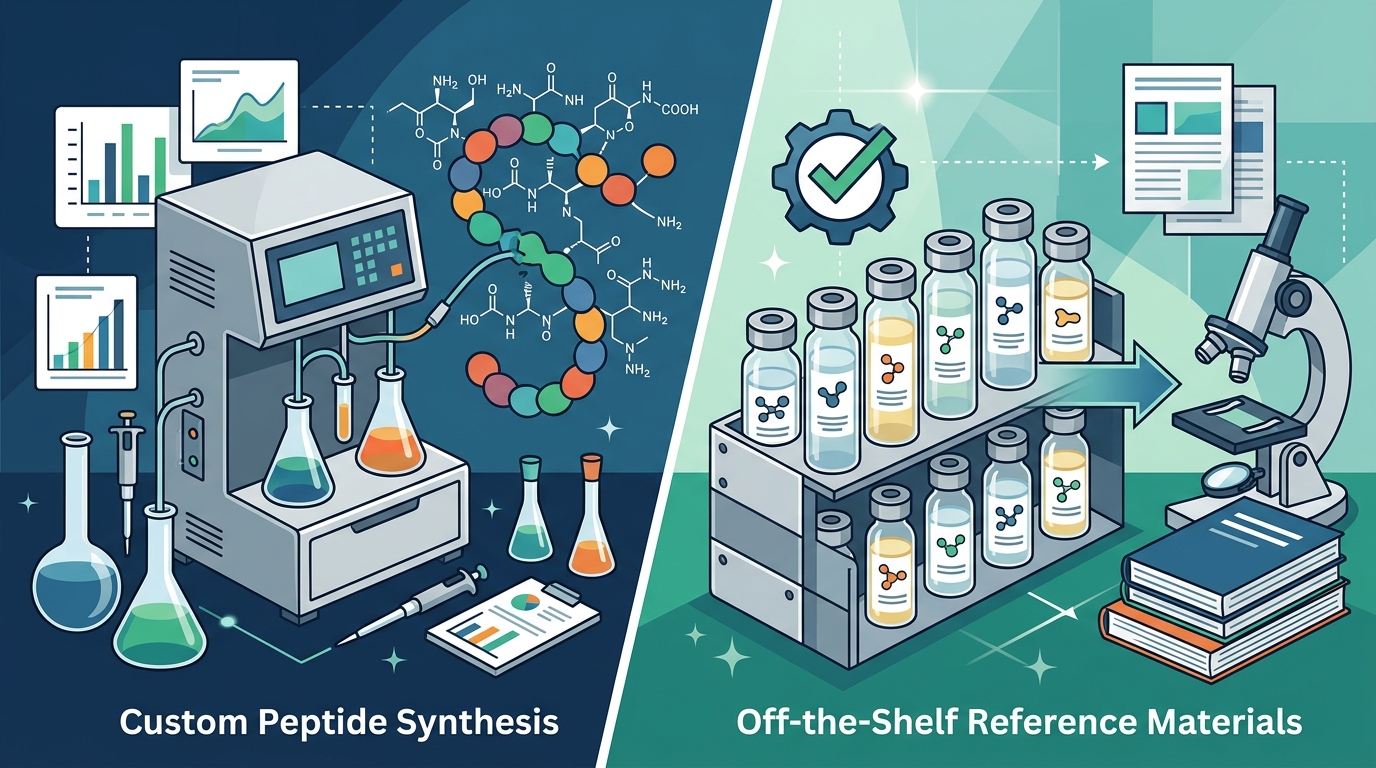
Peptide sourcing generally falls into two distinct categories: custom synthesis and off-the-shelf reference materials. Each model serves a different phase of the research lifecycle. Custom synthesis involves creating a peptide sequence from scratch based on specific research requirements. This method is ideal for novel targets or when specific modifications are needed. Off-the-shelf materials, on the other hand, are pre-synthesized, purified, and stocked for immediate shipment. These are typically standard sequences used in routine assays or calibration.
The choice between these two models depends on the specific goals of the study. Novelty and specificity drive the need for custom work. Urgency and standardization drive the preference for off-the-shelf options. Understanding the operational differences is essential for maintaining research efficiency.
The Case for Custom Peptide Synthesis
Custom peptide synthesis offers unparalleled flexibility for researchers working on unique biological targets. When a standard sequence does not exist or does not meet the specific chemical requirements of a study, custom synthesis becomes the only viable path. This process allows for the inclusion of non-natural amino acids, specific isotopic labeling, or unique terminal modifications. (Privacy Policy Aevitas Research)
One of the primary advantages of custom synthesis is the ability to tailor the purity and scale to the exact needs of the experiment. Researchers can request specific purification levels, such as HPLC purification, to ensure the highest quality for sensitive assays. This level of control is critical when working with low-abundance targets or when background noise must be minimized.
Furthermore, custom synthesis supports the development of proprietary research tools. By creating unique peptides, laboratories can establish distinct intellectual property positions or develop specialized diagnostic kits. This strategic advantage is often lost when relying solely on commercial off-the-shelf products.
Benefits of Off-the-Shelf Reference Materials
Off-the-shelf reference materials provide immediate access to well-characterized peptides. These materials are ideal for routine quality control, method validation, and calibration of analytical instruments. The primary benefit is time efficiency. Researchers can receive their materials quickly without waiting for the synthesis and purification cycles associated with custom orders.
Another significant advantage is the consistency of off-the-shelf products. Because these materials are produced in larger batches, they offer high batch-to-batch reproducibility. This consistency is crucial for longitudinal studies where data collected over months or years must remain comparable. Using the same reference material across multiple experiments reduces variability and increases confidence in the results.
Additionally, off-the-shelf materials often come with comprehensive documentation, including Certificates of Analysis (COA). These documents provide detailed information about the peptide's purity, sequence verification, and storage conditions. This transparency allows researchers to quickly assess the suitability of the material for their specific application.
Comparative Analysis: Cost and Timeline
When deciding between custom synthesis and off-the-shelf materials, cost and timeline are often the deciding factors. Custom synthesis typically involves higher upfront costs due to the labor and resources required for individual production. However, the cost per milligram can be competitive for larger orders. The timeline for custom synthesis is also longer, often ranging from several weeks to a few months, depending on the complexity of the sequence.
In contrast, off-the-shelf materials are generally more cost-effective for small-scale needs. The lower overhead of mass production allows for competitive pricing. The timeline is significantly shorter, with many suppliers offering rapid shipping options. This makes off-the-shelf materials ideal for urgent research needs or pilot studies.
| Criteria | Custom Peptide Synthesis | Off-the-Shelf Reference Materials |
|---|---|---|
| Lead Time | Several weeks to months | Days to weeks |
| Cost Structure | Higher upfront, scalable | Lower upfront, fixed price |
| Flexibility | High (sequence, modification) | Low (pre-defined) |
| Purity Verification | Custom COA per batch | Standard COA included |
| Best Use Case | Novel targets, specific mods | Calibration, routine assays |
Quality Control and COA Verification
Quality control is paramount in peptide research. Both custom and off-the-shelf materials must undergo rigorous testing to ensure accuracy. Custom peptides are typically analyzed using High-Performance Liquid Chromatography (HPLC) and Mass Spectrometry (MS) to verify sequence and purity. Off-the-shelf materials undergo similar testing but are often standardized across batches.
The Certificate of Analysis (COA) is a critical document that accompanies both types of materials. It provides detailed information about the peptide's identity, purity, and concentration. Researchers should carefully review the COA to ensure the material meets their specific requirements. Aevitas Research provides comprehensive COAs for all its products, ensuring transparency and reliability.
For more information on our quality assurance processes, please visit our COA page. Understanding the data presented in these documents is essential for interpreting experimental results accurately.
Key Takeaways
- Custom Synthesis Flexibility: Custom peptide synthesis allows for unique sequences and modifications, essential for novel research targets.
- Off-the-Shelf Efficiency: Pre-made reference materials offer immediate availability and batch-to-batch consistency for routine applications.
- Cost Considerations: Custom synthesis has higher upfront costs but offers scalability, while off-the-shelf options are cost-effective for small-scale needs.
- Timeline Impact: Off-the-shelf materials reduce lead times significantly, making them ideal for urgent projects.
- Quality Assurance: Both options require rigorous quality control, with COAs providing essential verification data.
- Strategic Sourcing: Choosing the right sourcing model depends on the specific goals and constraints of the research project.
- Vendor Reliability: Partnering with a trusted supplier like Aevitas Research ensures high-quality materials and support.
Frequently Asked Questions
What is the difference between custom peptide synthesis and off-the-shelf materials?
Custom peptide synthesis involves creating a peptide from scratch based on specific research requirements, allowing for unique sequences and modifications. Off-the-shelf materials are pre-synthesized, purified, and stocked for immediate shipment, offering consistency and speed for routine applications.
How long does custom peptide synthesis take?
The timeline for custom peptide synthesis varies depending on the complexity of the sequence and the scale of the order. Typically, it can take several weeks to a few months from order placement to delivery.
Are off-the-shelf reference materials suitable for all research applications?
Off-the-shelf reference materials are ideal for routine assays, calibration, and quality control. However, they may not be suitable for research requiring unique sequences or specific modifications, which necessitate custom synthesis.
What is a Certificate of Analysis (COA)?
A Certificate of Analysis (COA) is a document that provides detailed information about a product's identity, purity, concentration, and other relevant characteristics. It serves as proof of quality and is essential for verifying the suitability of the material for specific applications.
Can I request specific purity levels for custom peptides?
Yes, researchers can request specific purity levels for custom peptides, such as HPLC purification. This allows for tailored quality control to meet the exact needs of the experiment.
How does Aevitas Research ensure product quality?
Aevitas Research ensures product quality through rigorous testing protocols, including HPLC and Mass Spectrometry analysis. We provide comprehensive COAs for all our products to ensure transparency and reliability.
What are the shipping options for custom orders?
Aevitas Research offers various shipping options for custom orders, including free shipping on orders over $150. For specific shipping details, please refer to our Shipping & Payments page.
Get Started with Aevitas Research
Whether you need custom peptide synthesis for novel research or off-the-shelf reference materials for routine applications, Aevitas Research is your trusted partner. We are committed to providing verified quality and built-for-research integrity. Explore our product catalog to find the materials you need. For personalized assistance, contact our team via our Contact Us page. Ensure your research starts with the highest quality materials.