

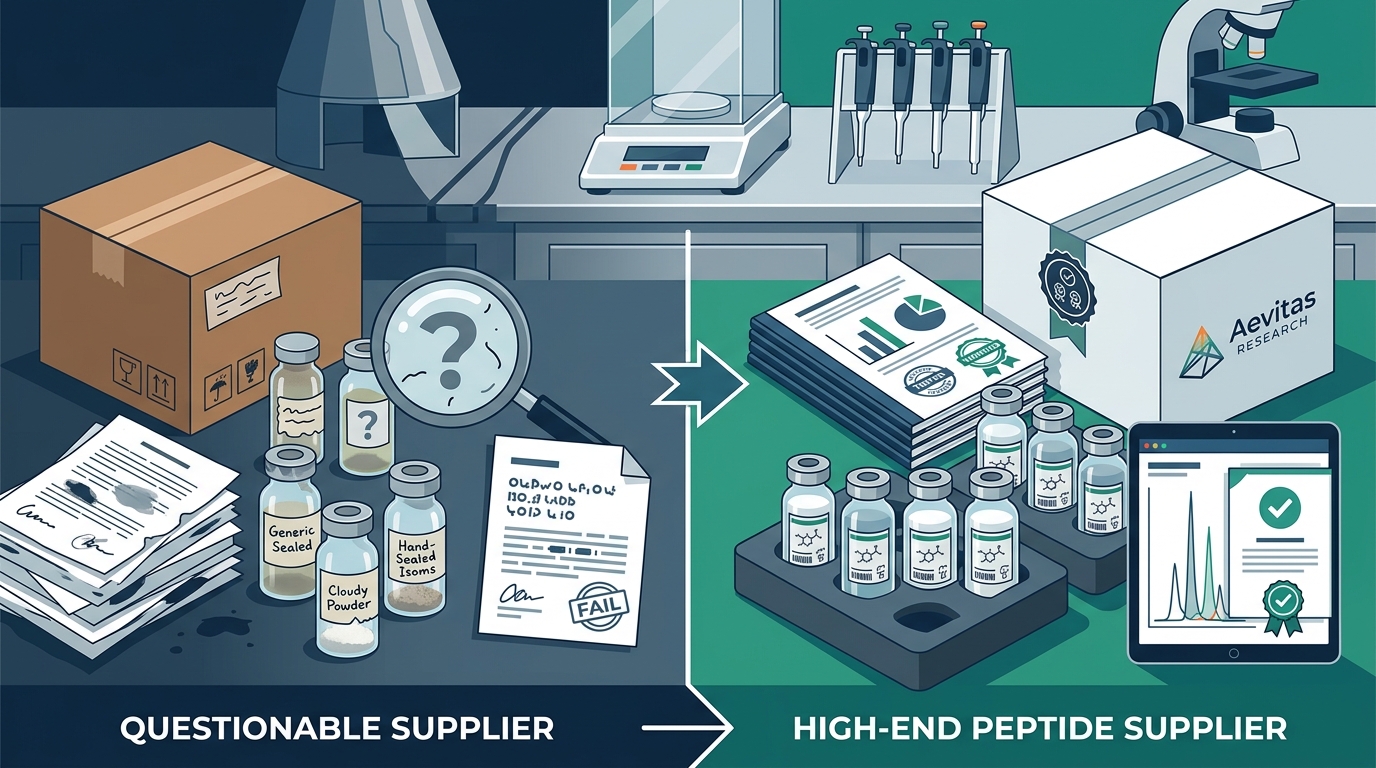
Not all research peptide suppliers operate at the same standard. The difference between a premium source and a questionable one often comes down to documentation, transparency, and analytical rigor. For researchers who depend on reproducible results, choosing the right supplier is not a minor decision. It directly affects data integrity, experimental consistency, and long-term confidence in your reference materials. This guide breaks down the critical factors that separate high-end peptide suppliers from the rest, so you can make sourcing decisions grounded in evidence rather than marketing claims.
Third-Party Testing as the Gold Standard
Third-party testing is independent analytical verification performed by an external, accredited laboratory with no financial stake in the product being sold. It is the single most important quality differentiator when evaluating peptide suppliers. As research from Verified Peptides notes, third-party COAs reduce potential conflicts of interest in reporting results.
The standard analytical methods used in third-party verification include High-Performance Liquid Chromatography (HPLC) for purity analysis and Mass Spectrometry (MS) for molecular identity confirmation. A supplier that only provides manufacturer-issued COAs without independent verification leaves a significant gap in quality assurance.
When evaluating a supplier, ask whether their testing is performed by named external laboratories. If you want to see how Aevitas Research approaches independent verification, review our Certificates of Analysis library.
What a Legitimate Certificate of Analysis Looks Like
A Certificate of Analysis (COA) is an official laboratory document summarizing the analytical test results for a specific batch of peptide material. It is the primary quality assurance tool for research-use-only compounds. Every COA you review should include batch-specific data, not generic templates reused across products.
Essential COA Data Points
Look for HPLC purity percentages (research-grade materials typically test at 95% or above), mass spectrometry confirmation showing observed versus theoretical molecular weight, and a unique batch or lot number that ties the report to your specific material. COAs lacking raw analytical data or method details cannot be independently verified.
Verifiability Matters
A legitimate COA should be verifiable directly through the issuing laboratory. Static PDFs that cannot be cross-referenced with a testing lab's records may indicate fabricated documentation. Reputable suppliers make COAs accessible on their website, often searchable by lot number. Explore how Aevitas Research documents peptide certificates of analysis for every batch.
Manufacturing Standards and GMP Compliance
Good Manufacturing Practice (GMP) is a system of quality controls governing the production environment, equipment, and processes used to manufacture research materials. GMP compliance ensures that peptides are synthesized, purified, and packaged under controlled, reproducible conditions.
Suppliers sourcing from GMP-certified facilities demonstrate a commitment to consistency that goes beyond individual batch testing. This includes environmental monitoring, equipment calibration, contamination controls, and documented standard operating procedures. To understand why purity benchmarks matter at the manufacturing level, read our overview on why purity matters in research-grade peptides.
Supplier Transparency and Documentation Access
High-end suppliers distinguish themselves through operational transparency. This means making analytical documentation available before purchase, responding promptly to technical inquiries, and clearly labeling products as Research Use Only (RUO).
Professional presentation also extends to packaging, labeling, and shipping protocols. Controlled handling, temperature-sensitive shipping options, and clear lot identification on vials all signal a supplier with structured internal workflows. You can learn more about proper material handling in our guide to best practices for storing research-grade peptides.
Credible suppliers also maintain educational resources that help researchers understand the category. The Aevitas Peptide Research Library is one example of how a supplier can support informed purchasing without overstepping into guidance territory.
Supplier Quality Indicators at a Glance
| Quality Indicator | High-End Supplier | Low-Quality Supplier |
|---|---|---|
| Third-Party Testing | Named external labs, batch-specific COAs | Manufacturer-only or no COAs provided |
| COA Accessibility | Publicly available, searchable by lot number | Available only on request or not at all |
| Manufacturing | GMP-certified facility with documented SOPs | Unverified or undisclosed production origin |
| Purity Benchmarks | HPLC purity consistently at or above 98% | No purity data or vague percentage claims |
| Labeling | Clear RUO designation, batch/lot IDs on vials | Missing identifiers, no RUO statement |
| Customer Support | Responsive to documentation and technical questions | Non-responsive or deflects quality inquiries |
Red Flags That Signal Low-Quality Sourcing
Certain patterns should immediately raise concerns. Generic COAs reused across multiple products indicate a lack of batch-level quality control. Suppliers who cannot name the external laboratories performing their testing may be relying entirely on unverified manufacturer claims.
Pricing Anomalies
Research-grade peptide materials carry inherent costs tied to synthesis, purification, analytical testing, and controlled handling. Prices dramatically below the market average often indicate corners being cut in quality assurance, documentation, or raw material sourcing.
Marketing Over Substance
Suppliers that lead with aggressive marketing claims rather than analytical documentation, scientific terminology, and RUO compliance language should be scrutinized carefully. A credible research supplier focuses on verification, not promotion. For more on evaluating what makes a source trustworthy, see our article on the best place to buy research peptides.
Key Takeaways
- Third-party testing from named, independent laboratories is the most reliable indicator of supplier quality.
- Every COA should be batch-specific, include HPLC and MS data, and be verifiable through the issuing lab.
- GMP-certified manufacturing ensures controlled, reproducible production conditions.
- Transparent suppliers provide documentation access before purchase, not just after.
- Abnormally low pricing is a warning sign that quality controls may be compromised.
- Professional labeling with RUO designations and lot numbers reflects structured internal workflows.
- Educational resources from a supplier signal long-term investment in the research community.
Frequently Asked Questions
What is third-party testing for research peptides?
Third-party testing is analytical verification performed by an independent, accredited laboratory that has no commercial relationship with the peptide supplier. It provides unbiased confirmation of purity and molecular identity.
What should a peptide COA include?
A legitimate COA should include batch or lot number, HPLC purity percentage, mass spectrometry identity confirmation, the name of the testing laboratory, and the date of analysis.
Why does GMP certification matter for peptide suppliers?
GMP certification ensures that the production facility follows standardized quality controls for manufacturing, purification, and packaging. This reduces variability between batches and supports experimental reproducibility.
How can I verify a peptide COA is authentic?
Cross-reference the COA with the issuing third-party laboratory. Many testing labs maintain online databases where reports can be verified by report number or batch identifier.
What purity level is considered research-grade?
Research-grade peptides typically have HPLC purity of 95% or higher. Many high-end suppliers consistently deliver materials testing at 98% purity or above.
Are manufacturer-issued COAs sufficient?
Manufacturer COAs can provide useful data, but they carry an inherent conflict of interest. Independent third-party COAs offer greater credibility and are preferred for rigorous research applications.
What are common red flags when evaluating a peptide supplier?
Warning signs include generic or reused COAs, missing batch numbers, refusal to provide documentation before purchase, prices far below market norms, and lack of RUO labeling.
Start With a Trusted Source
Choosing a high-end peptide supplier is ultimately about verifiable quality, not marketing promises. Aevitas Research provides third-party tested, research-grade peptide reference materials with full documentation for every batch. Browse our catalog and review our COAs before you purchase.