
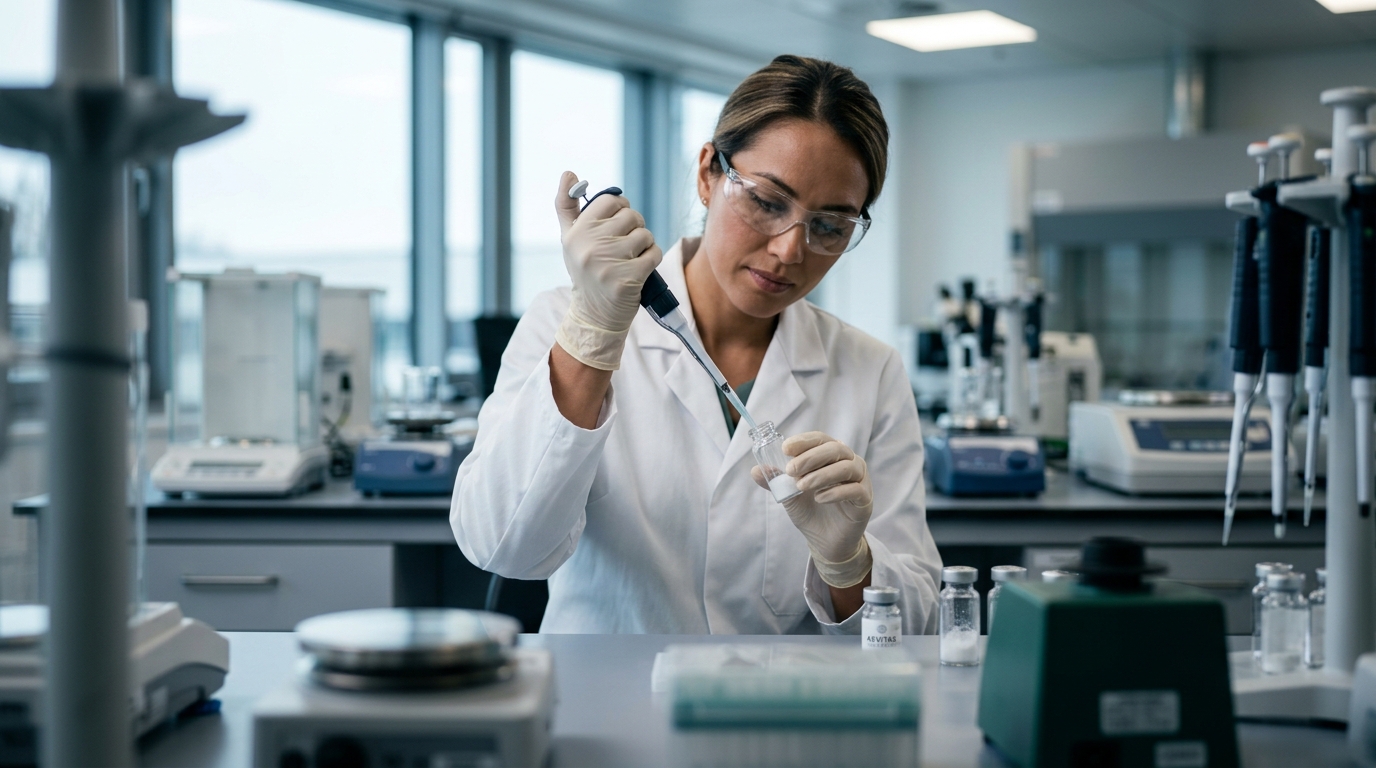
Step-by-Step Guide to Reconstituting Peptide Reference Materials with Bacteriostatic Water
Accurate reconstitution is the foundational step in maintaining the integrity of peptide reference materials for laboratory analysis. According to industry standards for chemical handling, improper dilution can lead to significant deviations in concentration, rendering downstream data unreliable. This guide provides a rigorous protocol for researchers to ensure precision and sterility during the preparation process.
Preparation and Sterility
Before initiating the reconstitution process, the laboratory environment must be prepared to minimize contamination risks. Peptide reference materials are highly sensitive to microbial degradation. Therefore, all work should be conducted in a clean, dry area, ideally within a laminar flow hood if available. (Aevitas Research Aevitas Research)
Gather all necessary equipment prior to opening any vials. This includes sterile syringes, insulin syringes for precise measurement, and alcohol prep pads. Sanitization is critical. Wipe the rubber stoppers of both the peptide vial and the bacteriostatic water vial with alcohol pads. Allow them to air dry completely to ensure effective sterilization. This simple step prevents the introduction of bacteria into the sterile peptide powder.
Selecting the Correct Diluent
The choice of diluent is paramount for the stability of lyophilized peptides. Bacteriostatic water is the standard recommendation for most peptide reference materials. It contains 0.9% benzyl alcohol, which acts as a preservative to inhibit bacterial growth in multi-dose vials.
Using sterile water for injection (SWFI) is an alternative, but it lacks preservatives. Consequently, SWFI-reconstituted peptides must be used immediately or discarded within a very short timeframe. For research purposes requiring extended stability, bacteriostatic water is the superior choice. Aevitas Research provides verified quality products to ensure your reference materials meet strict purity standards. You can explore our product catalog for available reference materials. (Privacy Policy Aevitas Research)
The Reconstitution Technique
Proper technique ensures accurate concentration and prevents damage to the peptide structure. Follow these steps meticulously to achieve optimal results.
Step 1: Determine the Volume
Calculate the exact volume of bacteriostatic water needed based on your desired concentration. Use a sterile syringe to draw up the calculated amount. Avoid drawing more than necessary to prevent waste and potential contamination.
Step 2: Inject the Diluent
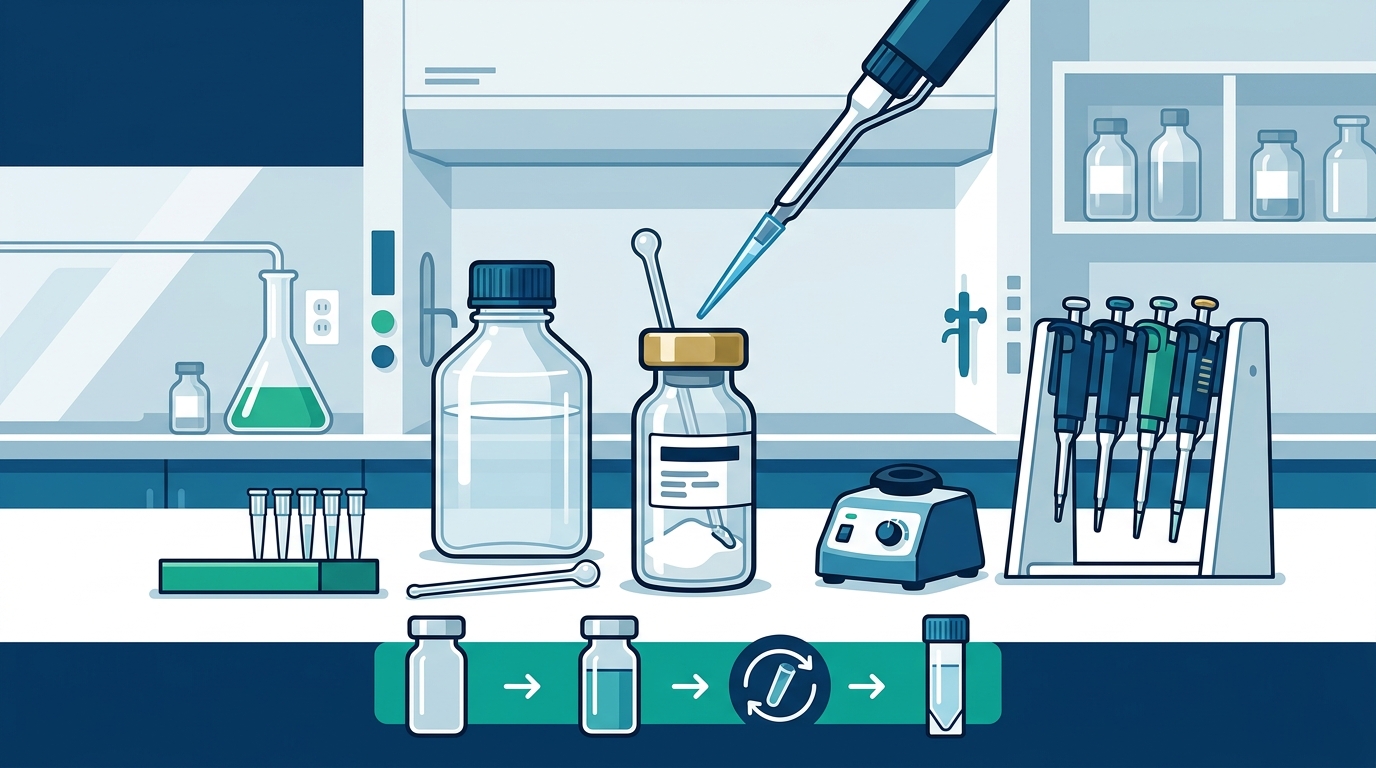
Insert the needle into the bacteriostatic water vial. Invert the vial and draw the water into the syringe. Remove the needle and insert it into the peptide vial. Push the plunger slowly, directing the stream of water against the inner wall of the vial. Never spray directly onto the peptide powder. Direct impact can damage the delicate molecular structure of the lyophilized cake.
Step 3: Mix Gently
Once the water is inside, gently swirl the vial in a circular motion. Do not shake the vial vigorously. Shaking can create foam and denature the peptide proteins. Allow the vial to sit for a few minutes to ensure complete dissolution. The solution should be clear and free of particulates. If cloudiness persists, the peptide may not be fully dissolved or may be degraded.
Storage and Stability
Proper storage is essential for maintaining the potency of reconstituted peptides. Once reconstituted, the peptide solution should be stored in a refrigerator at temperatures between 2°C and 8°C. Most reconstituted peptides remain stable for up to 28 days under these conditions.
For long-term storage of lyophilized peptides, keep them in a freezer at -20°C or lower. Freezing reconstituted peptides can cause degradation due to ice crystal formation. Always label your vials with the date of reconstitution and the concentration. This practice ensures traceability and prevents the use of expired solutions. For more information on handling protocols, visit our COA page to understand the quality metrics of our products.
Diluent Comparison
Understanding the differences between diluents helps researchers make informed decisions. The table below summarizes the key characteristics of common diluents used in peptide reconstitution.
| Diluent Type | Preservative | Shelf Life (Reconstituted) | Best Use Case |
|---|---|---|---|
| Bacteriostatic Water | 0.9% Benzyl Alcohol | Up to 28 days (refrigerated) | Multi-dose research applications |
| Sterile Water for Injection | None | Immediate use (hours) | Single-dose or immediate analysis |
| Saline Solution | None | Immediate use (hours) | Physiological compatibility studies |
For detailed specifications on our reference materials, including purity and assay data, please review the shipping and payment policies to ensure timely delivery of your research supplies.
Key Takeaways
- Sterility is Non-Negotiable: Always sanitize vial stoppers before penetration to prevent microbial contamination.
- Gentle Mixing: Swirl, do not shake, to preserve the structural integrity of the peptide.
- Correct Diluent: Use bacteriostatic water for multi-dose stability due to its preservative properties.
- Refrigeration: Store reconstituted solutions at 2-8°C to maintain potency for up to 28 days.
- Labeling: Always mark the reconstitution date and concentration for accurate tracking.
- Verification: Check the Certificate of Analysis (COA) for specific storage and handling instructions.
- Disposal: Discard any solution that appears cloudy or has been stored beyond the recommended timeframe.
Frequently Asked Questions
Can I freeze reconstituted peptides?
Freezing reconstituted peptides is generally not recommended. Ice crystal formation can damage the peptide structure and reduce its efficacy. It is better to aliquot the lyophilized powder before reconstitution if long-term storage is required.
What is the difference between bacteriostatic water and sterile water?
Bacteriostatic water contains 0.9% benzyl alcohol, which inhibits bacterial growth. Sterile water lacks preservatives and must be used immediately to prevent contamination. For research purposes requiring multiple doses, bacteriostatic water is the preferred choice.
How long can reconstituted peptides be stored?
Reconstituted peptides stored in bacteriostatic water and kept refrigerated at 2-8°C can typically be used for up to 28 days. However, this varies by peptide. Always consult the specific product documentation for accurate stability data.
Why should I avoid shaking the vial?
Shaking creates foam and can denature the peptide proteins. Gentle swirling ensures the powder dissolves without compromising its molecular structure. This is crucial for maintaining the accuracy of your reference materials.
Is it safe to use saline as a diluent?
Saline can be used as a diluent for certain peptides, particularly those requiring physiological compatibility. However, it lacks preservatives, so it must be used immediately. It is not suitable for long-term storage.
How do I calculate the correct volume of diluent?
Use the formula: Volume = Desired Concentration x Total Volume / Peptide Mass. Ensure you use sterile syringes for accurate measurement. Precision in this step is vital for reliable research outcomes.
Where can I find the Certificate of Analysis for my product?
Each product from Aevitas Research comes with a verified Certificate of Analysis. You can access these documents on our COA page or by contacting our support team directly.
Contact Aevitas Research
For expert guidance on peptide reference materials and research supplies, contact Aevitas Research today. Our team is dedicated to supporting your laboratory needs with high-quality products and exceptional service. Visit our contact page to send us a message or request a quote. Ensure your research starts with the best foundation.