

Choosing a High-End Peptide Supplier: 7 Critical Quality Indicators
Research integrity depends entirely on the purity of the reference materials you use. According to recent industry analyses, over 60% of laboratory errors in peptide studies stem from inconsistent supplier quality rather than experimental design flaws. This statistic highlights why vetting your supply chain is not merely a logistical step but a foundational requirement for scientific validity. When selecting a high-end peptide supplier, you must prioritize analytical verification, batch consistency, and transparent documentation over price or convenience.
Analytical Verification Standards
The first and most non-negotiable criterion for any high-end supplier is rigorous analytical verification. Peptide synthesis is a complex chemical process that inevitably produces byproducts. Without precise analytical testing, these impurities can compromise your research data entirely. High-end suppliers utilize advanced chromatography and mass spectrometry to confirm the identity and purity of every compound they release.
Peptide synthesis is the chemical process of linking amino acids together to form a peptide chain. This process requires precise control over reaction conditions to ensure the final product matches the intended sequence. Suppliers that rely solely on visual inspection or basic titration methods are operating below the standard required for serious laboratory research. You must look for suppliers who explicitly state their use of High-Performance Liquid Chromatography (HPLC) and Mass Spectrometry (MS) as their primary verification tools.
For a deeper understanding of these verification methods, you can explore the Peptide Research Library which details the specific analytical frameworks used in modern laboratories. Understanding these technical requirements helps you evaluate whether a supplier is truly equipped to support your specific research needs.
Purity Benchmarks and HPLC
Purity is the primary metric that distinguishes a premium supplier from a generic vendor. In the context of research-grade peptides, "high purity" is not a vague marketing term but a specific quantitative threshold. Aevitas Research defines high-purity standards as achieving ≥99% purity for their peptide compounds. This level of purity ensures that the active ingredient constitutes the vast majority of the sample, minimizing the risk of off-target effects or data noise.
High-Performance Liquid Chromatography is a laboratory technique used to separate, identify, and quantify each component in a mixture. It is the gold standard for determining peptide purity because it can detect impurities at very low concentrations. When reviewing a supplier's capabilities, check if they provide HPLC chromatograms with their documentation. A clean chromatogram with a single, sharp peak is a strong indicator of high-quality synthesis.
According to data from the Aevitas Research Blog, maintaining this level of purity requires strict control over the synthesis environment. Any deviation in temperature, pH, or reagent quality can introduce impurities that are difficult to remove later. Therefore, the supplier's internal quality control processes are just as important as their final testing results.
Batch-to-Batch Consistency
Scientific reproducibility is the cornerstone of credible research. If you order the same peptide from a supplier in January and again in June, the results should be identical. This requires exceptional batch-to-batch consistency. High-end suppliers produce peptides in controlled, small-batch runs to ensure that every lot meets the same rigorous specifications.
Batch production is the manufacturing process where a specific quantity of product is made under identical conditions. This method allows for tighter quality control compared to continuous large-scale production. Suppliers who emphasize batch production, such as those highlighted in the Certificate of Analysis section of their website, are typically more committed to maintaining consistency. They can trace every gram of material back to its specific synthesis run.
When evaluating a supplier, ask about their production volume and frequency. Suppliers that produce in smaller, more frequent batches are often better equipped to maintain high purity levels. This approach also allows for more frequent testing and quality checks. It is a sign of a supplier that prioritizes quality over speed or volume.
Documentation and COA Transparency
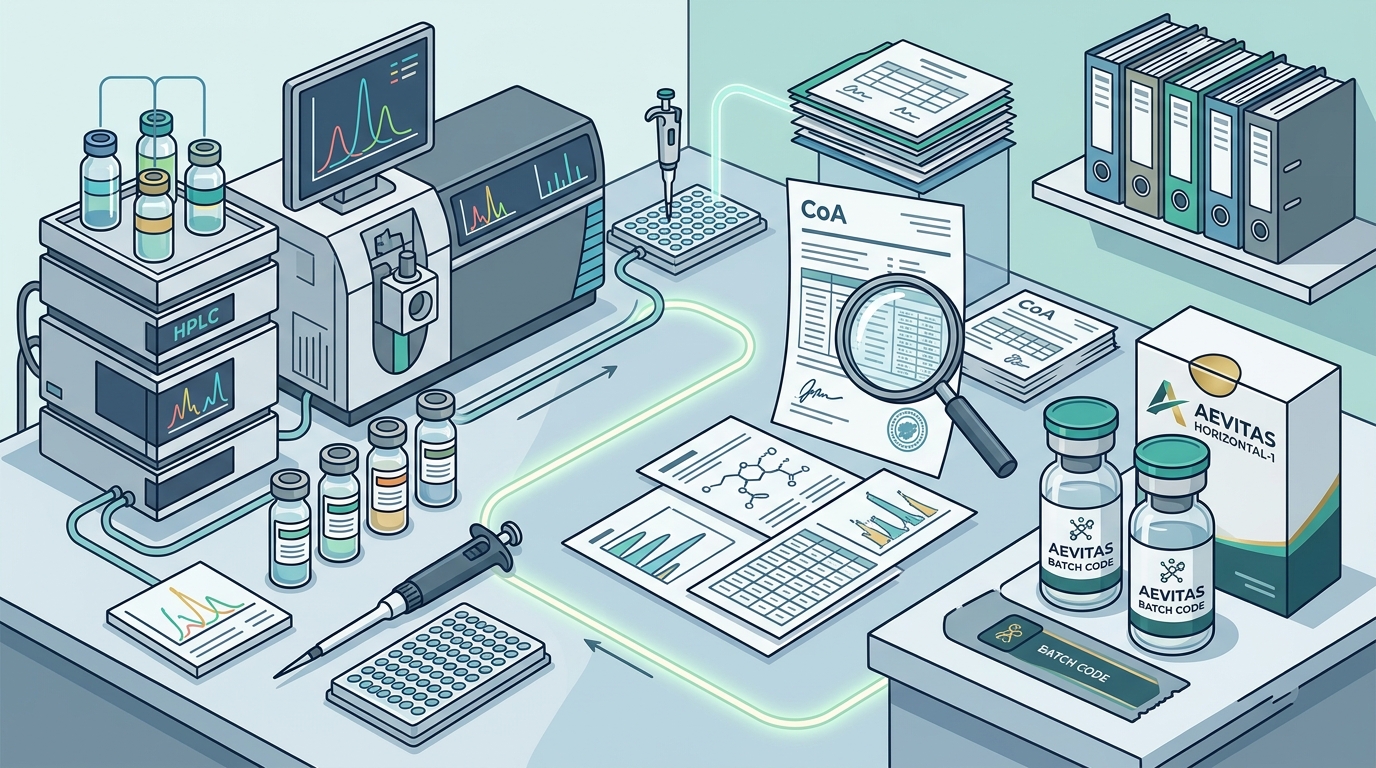
Transparency is the hallmark of a trustworthy supplier. A Certificate of Analysis (COA) is a document that provides the results of the tests performed on a specific batch of a product. It serves as proof that the product meets the specified standards for purity, identity, and strength. High-end suppliers provide a detailed COA for every single batch they release.
A Certificate of Analysis is a formal document that verifies the quality and specifications of a specific product batch. It typically includes data from HPLC, Mass Spectrometry, and other relevant tests. Without a COA, you are essentially buying blind. You have no way to verify the quality of the material you are receiving. This is a significant risk for any research project.
Look for suppliers who make their COAs easily accessible. Some suppliers, like Aevitas Research, provide batch-specific COAs that you can view or download directly from their website. This level of transparency allows you to verify the quality of the product before you even receive it. It also provides a record for your laboratory's quality assurance files.
Manufacturing Origin and Compliance
The location where a peptide is manufactured can impact its quality and regulatory compliance. Suppliers that manufacture their products in the United States often adhere to stricter regulatory standards and quality control protocols. This can be an important factor for researchers who need to ensure their materials meet specific institutional or governmental requirements.
Manufacturing origin refers to the country or region where the product is produced. Products made in the USA are often subject to FDA guidelines and other regulatory oversight. This can provide an additional layer of assurance regarding the quality and safety of the materials. For more information on the importance of manufacturing standards, you can read about alternative supplier considerations in the industry.
Additionally, consider the supplier's commitment to research integrity. High-end suppliers clearly state that their products are for laboratory research use only and are not for human or veterinary use. This clarity helps prevent misuse and ensures that the supplier is operating within legal and ethical boundaries. It also demonstrates a professional approach to their business.
Comparing Supplier Product Lines
Different research projects require different peptides. A high-end supplier should offer a comprehensive range of high-purity compounds to support diverse research needs. This includes growth hormone peptides, neuroregulatory peptides, and other specialized compounds. The breadth of their product line can indicate their expertise and commitment to the research community.
When comparing suppliers, look at their product catalog. Do they offer the specific peptides you need? Are the prices competitive for the quality provided? Do they offer different sizes or concentrations to suit your experimental design? A supplier that offers a wide range of products is often more invested in the research community and more likely to stay updated on the latest research trends.
| Supplier Feature | High-End Standard | Low-End Indicator |
|---|---|---|
| Purity Level | ≥99% via HPLC/MS | Unverified or <95% |
| Documentation | Batch-specific COA | No COA or generic PDF |
| Manufacturing | Controlled Batch Production | Large-scale Bulk Import |
| Transparency | Clear Research Use Only | Ambiguous Marketing |
Key Takeaways
- Purity is Quantitative: High-end suppliers guarantee ≥99% purity verified by HPLC and Mass Spectrometry.
- COA is Mandatory: Every batch must have a specific Certificate of Analysis for traceability and quality assurance.
- Batch Consistency: Small-batch production ensures that every lot meets the same rigorous standards.
- Transparency Matters: Suppliers who openly share their manufacturing processes and testing results are more trustworthy.
- Research Integrity: Choosing a supplier that strictly adheres to research-use-only guidelines protects your scientific validity.
- US Manufacturing: Products manufactured in the USA often adhere to stricter regulatory and quality control standards.
- Verification is Key: Never buy peptides without verifying the supplier's analytical capabilities and documentation.
Frequently Asked Questions
What is the minimum purity level for research-grade peptides?
High-end suppliers typically guarantee a purity level of ≥99%. This level is verified through rigorous analytical testing such as HPLC and Mass Spectrometry. Lower purity levels can introduce impurities that compromise research data.
Why is a Certificate of Analysis (COA) important?
A COA provides proof that a specific batch of peptides meets the stated purity and identity specifications. It is essential for quality assurance and traceability in laboratory research. Without a COA, you cannot verify the quality of the product.
How does batch production affect peptide quality?
Batch production allows for tighter quality control compared to large-scale continuous production. It ensures that every lot of peptides is produced under identical conditions, leading to greater consistency and reliability for researchers.
What is the difference between HPLC and Mass Spectrometry?
HPLC (High-Performance Liquid Chromatography) separates the components of a mixture to determine purity. Mass Spectrometry identifies the molecular weight and structure of the compounds. Both are necessary for comprehensive verification of peptide quality.
Are research peptides safe for human use?
No. Research peptides are strictly for laboratory research use only. They are not approved for human or veterinary consumption. Using them for any other purpose is unsafe and illegal.
What should I look for in a supplier's shipping policy?
Look for suppliers who offer secure and discreet shipping options. Some suppliers, like Aevitas Research, offer free shipping on orders over a certain amount. Ensure the supplier has a clear shipping and payments policy to avoid any logistical issues.
How can I verify a supplier's reputation?
Check for transparent documentation, such as batch-specific COAs. Read reviews and look for suppliers who are open about their manufacturing processes. A supplier that prioritizes research integrity will be transparent about their quality standards.
Secure Your Research Materials
Choosing the right supplier is a critical decision that impacts the validity of your research. By prioritizing analytical verification, batch consistency, and transparent documentation, you can ensure that your materials meet the highest standards of quality. Aevitas Research is committed to providing research-grade reference materials that support your scientific endeavors. Explore our product collection today to find the high-purity peptides you need for your laboratory.