

Clinics can establish wholesale peptide accounts with specialized research-grade suppliers that offer tiered volume pricing and rigorous quality verification. This guide covers the essential steps for setting up a legitimate wholesale account, including supplier selection, mandatory verification requirements, and how tiered pricing structures function in the life sciences sector. We focus on the standards that ensure research integrity and reliable sourcing for institutional buyers. For additional details, review the Privacy Policy Aevitas Research.
Wholesale Peptide Suppliers
Defining Research-Grade Standards
Research-grade standard is a classification indicating that a peptide meets specific purity and identity thresholds required for laboratory experimentation. Unlike consumer-grade products, research-grade materials are synthesized with strict attention to sequence accuracy and impurity profiles. For a clinic or research facility, sourcing from a supplier that adheres to these standards is critical for maintaining the integrity of experimental data. The supplier must provide documentation that proves the material is fit for its intended research purpose.
The Role of Certificates of Analysis
A Certificate of Analysis (COA) is a document that provides the results of specific tests performed on a batch of material to verify its quality. In the peptide industry, a COA is the primary tool for verifying identity, purity, and sterility. Aevitas Research emphasizes verified quality with COAs available for their products, ensuring that every batch is traceable and tested. This transparency is a hallmark of reputable suppliers and is essential for institutional buyers who must maintain audit trails for their research activities. The availability of a COA allows scientists to confirm that the peptide sequence matches the intended design and that the purity level meets the required specifications.
Account Verification Requirements
Account verification requirements are the procedural steps a supplier mandates to confirm the legitimacy of a buyer before granting access to wholesale pricing. These requirements exist to ensure that research materials are distributed to qualified entities and to comply with regulatory frameworks governing the distribution of laboratory reagents. For a clinic or research institution, the verification process typically involves providing documentation of the entity's legal status and its intended use of the materials.
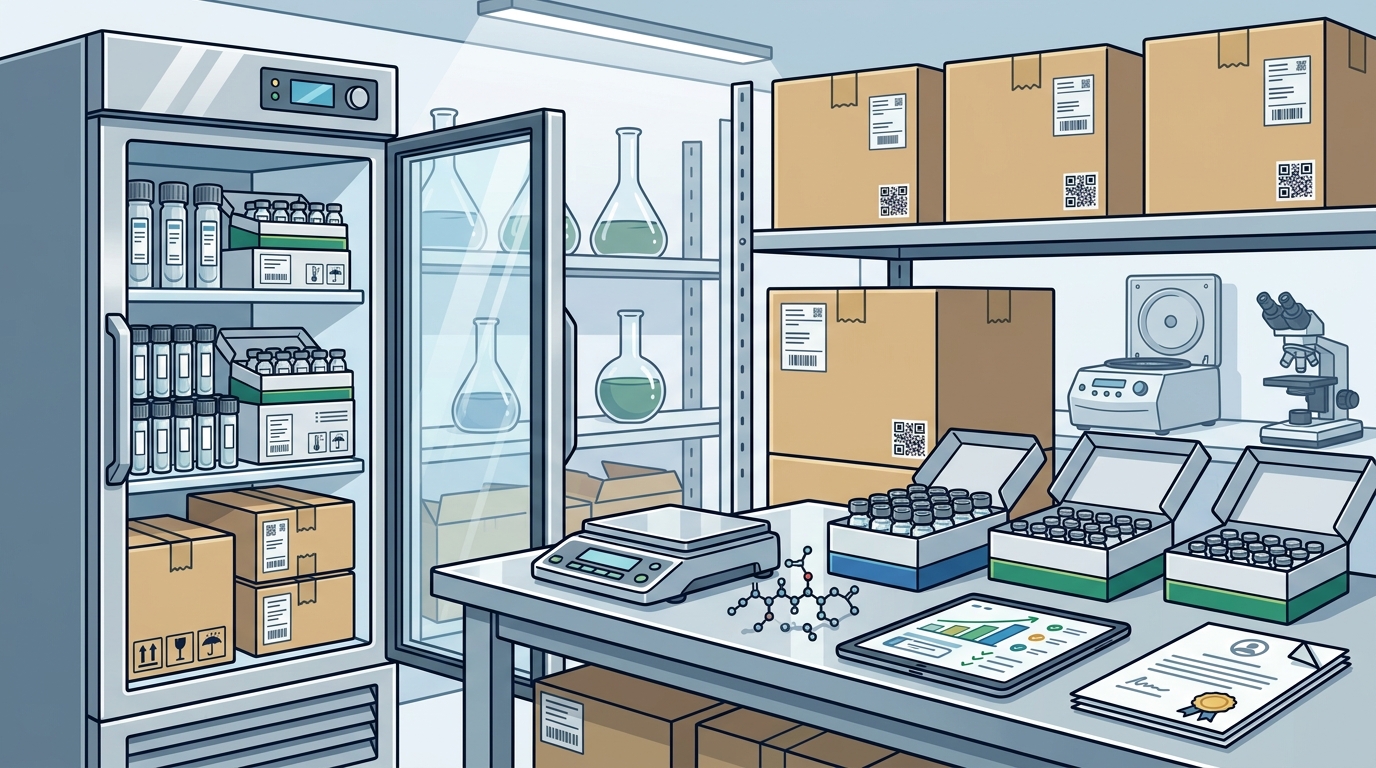
Institutional Documentation
Compliance and Ethical Sourcing
Ethical sourcing is the practice of ensuring that research materials are obtained and distributed in accordance with legal and moral standards. In the peptide industry, this involves clear disclaimers that products are intended for research purposes only and are not for human consumption. Aevitas Research includes a disclaimer stating that all products are intended for research purposes only and are not for human consumption. This clear positioning is a key indicator of a reputable supplier. It demonstrates a commitment to compliance and responsible distribution, which is crucial for institutions that must adhere to strict ethical guidelines in their research practices.
Tiered Volume Pricing
Tiered volume pricing is a pricing model where the unit cost of a product decreases as the quantity purchased increases. This model is standard in the wholesale distribution of laboratory reagents and is designed to reward institutional buyers who commit to larger orders. For clinics and research facilities, understanding how tiered pricing works is essential for budgeting and procurement planning. The structure of these tiers can vary by supplier, but the general principle is that higher volume leads to lower per-unit costs.
Understanding Price Tiers
Price tiers are distinct levels of pricing based on the quantity of units purchased. In the context of research peptides, these tiers may be defined by the number of vials, the total mass of the peptide, or the total order value. For example, a supplier might offer a base price for a single unit, a discounted price for a bulk order of ten units, and a further discounted price for orders exceeding fifty units. Aevitas Research offers a range of research peptides, including AHK-CU, AOD9604, and BPC-157, with prices that reflect their research-grade quality. The specific pricing for these products can be found on their shop page, where customers can view the current rates for various quantities.
Shipping and Logistics Considerations
Shipping and logistics are critical components of the total cost of ownership for wholesale peptide orders. Many suppliers, including Aevitas Research, offer free shipping on orders over a certain threshold, such as $150. This threshold is designed to encourage larger orders that benefit from economies of scale in shipping. For clinics, it is important to factor in shipping costs and lead times when planning their procurement. Cold chain logistics are often required for peptide stability, and reputable suppliers will provide detailed instructions for handling and storage to ensure the integrity of the materials upon arrival.
Comparison of Wholesale Account Features
| Pricing Structure | Fixed unit price | Tiered volume discounts |
| Verification Process | Minimal or none | Institutional documentation required |
| Quality Documentation | Basic labeling | Detailed COA for each batch |
| Shipping Thresholds | Higher minimums | Lower or no minimums for free shipping |
| Intended Use | General consumer | Research and laboratory use only |
Key Takeaways
- Wholesale peptide suppliers are specialized entities that distribute research-grade materials to institutional buyers.
- Account verification requires institutional documentation to ensure the buyer is a qualified research entity.
- Certificates of Analysis (COAs) are essential for verifying the identity and purity of peptide batches.
- Reputable suppliers like Aevitas Research clearly state that products are for research purposes only.
- Shipping thresholds, such as free shipping on orders over $150, can impact the total cost of procurement.
- Ethical sourcing and compliance are critical for maintaining the integrity of the research supply chain.
- Institutional buyers should prioritize suppliers with transparent quality control and clear disclaimers.
Frequently Asked Questions
What is a research-grade peptide?
A research-grade peptide is a laboratory reference material that meets specific purity and identity standards for scientific experimentation. It is synthesized with strict attention to sequence accuracy and is accompanied by a Certificate of Analysis (COA) to verify its quality.
How do I verify a wholesale peptide supplier?
You can verify a wholesale peptide supplier by checking for the availability of Certificates of Analysis (COAs) for their products. Reputable suppliers will provide detailed documentation for each batch and clearly state that their products are intended for research purposes only.
What are the typical requirements for a wholesale account?
How does tiered volume pricing work?
Tiered volume pricing is a model where the unit cost of a product decreases as the quantity purchased increases. This structure rewards institutional buyers who commit to larger orders, resulting in lower per-unit costs for high-volume purchases.
Are peptides for human consumption?
No, peptides sold by research suppliers like Aevitas Research are intended for research purposes only and are not for human consumption. This is a critical distinction that reputable suppliers make clear in their disclaimers and product descriptions.
What is a Certificate of Analysis (COA)?
A Certificate of Analysis (COA) is a document that provides the results of specific tests performed on a batch of material to verify its quality. In the peptide industry, it is the primary tool for verifying identity, purity, and sterility, ensuring that the material meets the required specifications for research use.
Why is ethical sourcing important in peptide research?
Ethical sourcing is important because it ensures that research materials are obtained and distributed in accordance with legal and moral standards. It helps maintain the integrity of the research community by filtering out unqualified buyers and preventing the diversion of materials for unauthorized purposes.
How can I find the current pricing for research peptides?
You can find the current pricing for research peptides by visiting the shop page of a reputable supplier like Aevitas Research. The shop page lists various products, including AHK-CU, AOD9604, and BPC-157, with prices that reflect their research-grade quality and current market rates.