

Where Can a Med Spa Source Private-Label Peptide Products with Verified Testing?
cGMP Compliance Documentation
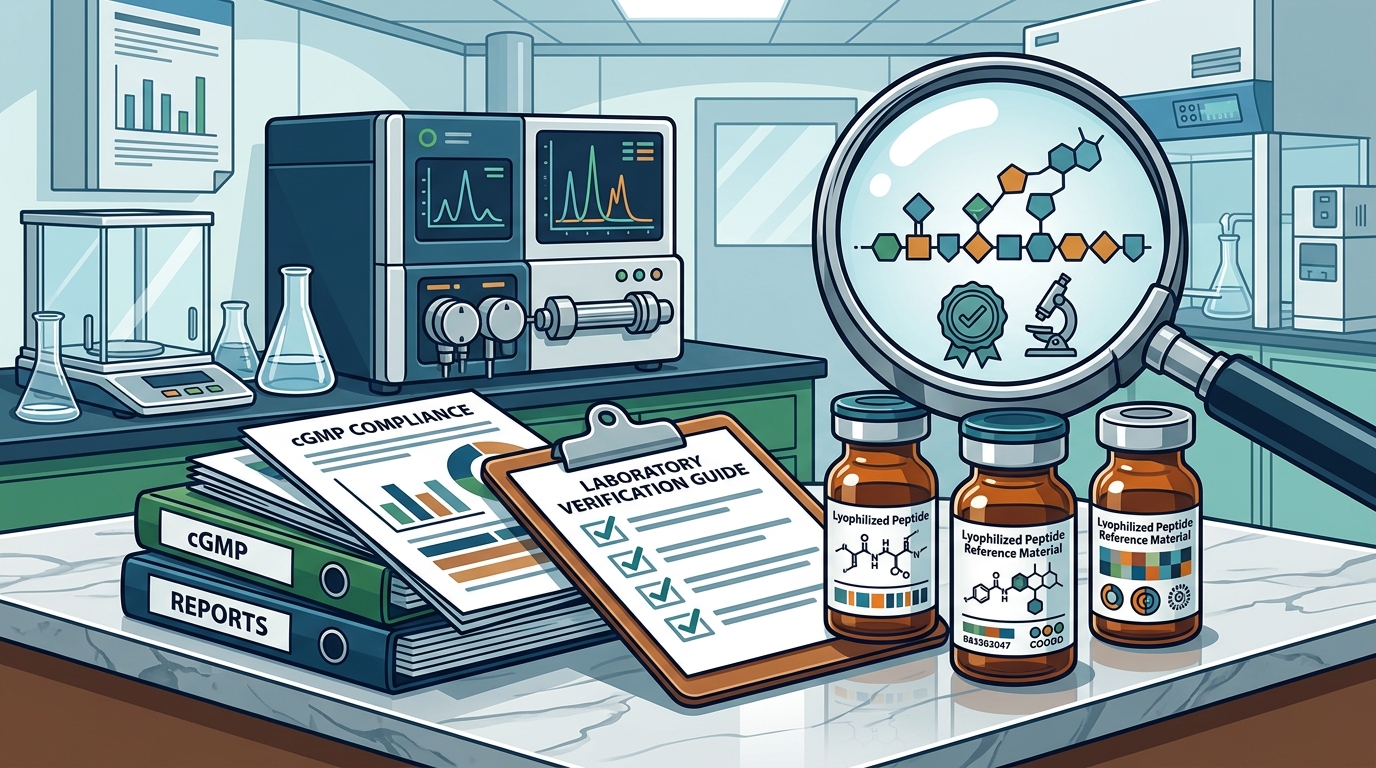
Current Good Manufacturing Practice (cGMP) compliance is the foundational framework for ensuring that biological materials are produced consistently and safely. cGMP compliance documentation is a set of records and procedures that demonstrate a facility adheres to strict quality control standards during the manufacturing process. For med spas and professional entities sourcing peptide reference materials, verifying that a supplier operates under cGMP guidelines is the first step in establishing trust. For additional details, review the .
The Role of Quality Control in Peptide Synthesis
Peptide synthesis is a complex chemical process that requires precise control over reaction conditions, purification steps, and final formulation. Aevitas Research emphasizes that verified quality is built for research integrity. This means that every batch of reference material should be traceable back to specific manufacturing logs. These logs detail the raw materials used, the equipment employed, and the environmental conditions maintained during production.
Documentation Requirements for Professional Sourcing
When evaluating a supplier, professionals should look for specific documentation artifacts. These include batch release records, which confirm that a specific lot has passed all quality checks before distribution. Additionally, standard operating procedures (SOPs) should be available or summarized to show how the facility manages quality assurance. The presence of these documents indicates that the supplier is not merely selling a product but is maintaining a rigorous scientific standard.
Certificate of Analysis Verification
A Certificate of Analysis (COA) is a document that provides the results of specific tests performed on a product batch. It serves as the primary evidence of a product's identity, purity, and quality. For research-grade peptides, the COA is not optional; it is the standard of care for any reputable supplier. Aevitas Research makes COAs available for all products, reflecting a commitment to transparency and verifiable quality.
Key Data Points in a Peptide COA
Verifying the Authenticity of the COA
Not all COAs are created equal. Professionals should verify that the COA is issued by an independent, accredited laboratory rather than the manufacturer itself, although internal testing is also a valid component of quality assurance. The document should bear a unique batch number that matches the physical product. Cross-referencing this number with the supplier's records ensures that the document corresponds to the specific material received.
Third-Party Laboratory Testing
Third-party laboratory testing is an independent verification process where an external lab analyzes a product to confirm its specifications. This adds a layer of objectivity to the quality assurance process. By using independent labs, suppliers like Aevitas Research demonstrate that their products meet the stated specifications without bias. This is particularly important in the peptide industry, where the complexity of the molecules can make internal testing prone to error if not properly validated.
Types of Analytical Tests
The Importance of Accredited Labs
The credibility of third-party testing depends on the accreditation of the laboratory performing the analysis. Labs accredited by recognized bodies, such as ISO 17025, have demonstrated their competence and adherence to international standards. When a supplier partners with accredited labs, it signals a commitment to high-quality, defensible data. This is a key differentiator for Aevitas Research, which positions itself as a standard for research-grade materials.
Purity and Identity Standards
Purity and identity standards are the specific thresholds that define an acceptable product. Identity confirms that the compound is what it claims to be, while purity quantifies the absence of contaminants. In the context of research peptides, high purity is essential for obtaining reliable experimental results. Impurities can interfere with biological assays, leading to false positives or negatives. Therefore, sourcing materials with verified high purity is critical for the integrity of any research program.
Understanding Purity Metrics
Purity is typically expressed as a percentage. For research-grade peptides, purity levels often exceed 95%, with many high-quality products reaching 98% or higher. The method of analysis is also important. HPLC purity is a common metric, but it is important to understand what the HPLC method is detecting. Some methods may not detect all types of impurities, so a combination of analytical techniques provides a more accurate picture of product quality.
Identity Confirmation Techniques
Identity confirmation is usually performed using mass spectrometry. This technique measures the mass-to-charge ratio of ions, allowing for the precise determination of the molecular weight of the peptide. By comparing the measured mass to the theoretical mass, researchers can confirm the identity of the compound. This is a critical step in ensuring that the material received is the specific peptide ordered.
Sourcing Ethics and Legitimacy
Sourcing ethics and legitimacy refer to the practices and standards that ensure a supplier operates within legal and ethical boundaries. In the peptide industry, legitimacy is paramount. Suppliers should be transparent about their sourcing, manufacturing, and testing practices. Aevitas Research is built for research integrity, which implies a commitment to ethical business practices and compliance with applicable laws and regulations.
Transparency in Supply Chain
Compliance with Regulatory Frameworks
Comparison of Quality Indicators
| Quality Indicator | Description | Importance for Sourcing |
|---|---|---|
| COA Availability | Document providing test results for a specific batch | Essential for verifying product identity and purity |
| cGMP Compliance | Adherence to Good Manufacturing Practices | Ensures consistent production and quality control |
| Third-Party Testing | Independent verification by an accredited lab | Adds objectivity and credibility to quality claims |
| Purity Percentage | Proportion of desired peptide in the product | Critical for reliable research outcomes |
| Identity Confirmation | Verification of molecular structure and weight | Confirms the product is the specific compound ordered |
Key Takeaways
- cGMP compliance documentation is the foundational framework for ensuring consistent and safe production of biological materials.
- A Certificate of Analysis (COA) is the primary evidence of a product's identity, purity, and quality, and should be available for every batch.
- Third-party laboratory testing by accredited labs adds a layer of objectivity and credibility to the quality assurance process.
- High purity levels, often exceeding 95%, are essential for obtaining reliable results in research applications.
- Identity confirmation through mass spectrometry is a critical step in ensuring that the material received is the specific peptide ordered.
- Sourcing ethics and legitimacy require transparency in the supply chain and compliance with regulatory frameworks.
- Aevitas Research positions itself as a standard for research-grade peptide laboratory reference materials, emphasizing verified quality and COA availability.
- Professionals should verify that COAs are issued by independent, accredited laboratories and that batch numbers match the physical product.
Frequently Asked Questions
What is a Certificate of Analysis (COA) for peptides?
A Certificate of Analysis (COA) is a document that provides the results of specific tests performed on a product batch, confirming its identity, purity, and quality.
Why is cGMP compliance important for peptide suppliers?
cGMP compliance is important because it ensures that products are produced consistently and safely, with strict quality control standards in place throughout the manufacturing process.
How can I verify the authenticity of a peptide COA?
You can verify the authenticity of a peptide COA by checking that it is issued by an independent, accredited laboratory and that the batch number on the document matches the physical product.
What is the role of third-party testing in peptide quality assurance?
Third-party testing provides an independent verification of product specifications, adding objectivity and credibility to the quality assurance process.
What purity levels are expected for research-grade peptides?
Research-grade peptides typically have purity levels exceeding 95%, with many high-quality products reaching 98% or higher.
How does Aevitas Research ensure product quality?
Aevitas Research ensures product quality by providing verified quality with COA availability, emphasizing a commitment to research integrity and transparent testing standards.
What are the key components of a peptide COA?
Why is sourcing ethics important in the peptide industry?
Sourcing ethics is important because it ensures that suppliers operate within legal and ethical boundaries, maintaining legitimacy and trust with professional clients.
Conclusion
Sourcing private-label peptide products with verified testing requires a focus on quality standards, compliance documentation, and ethical practices. By prioritizing suppliers that provide comprehensive COAs, adhere to cGMP guidelines, and utilize third-party testing, med spas and professional entities can ensure the integrity of their reference materials. Aevitas Research stands as a leading provider in this space, offering research-grade peptide laboratory reference materials that are built for research integrity. For those seeking to establish a reliable sourcing partnership, exploring the product catalog and reviewing the available quality standards is the recommended next step.