
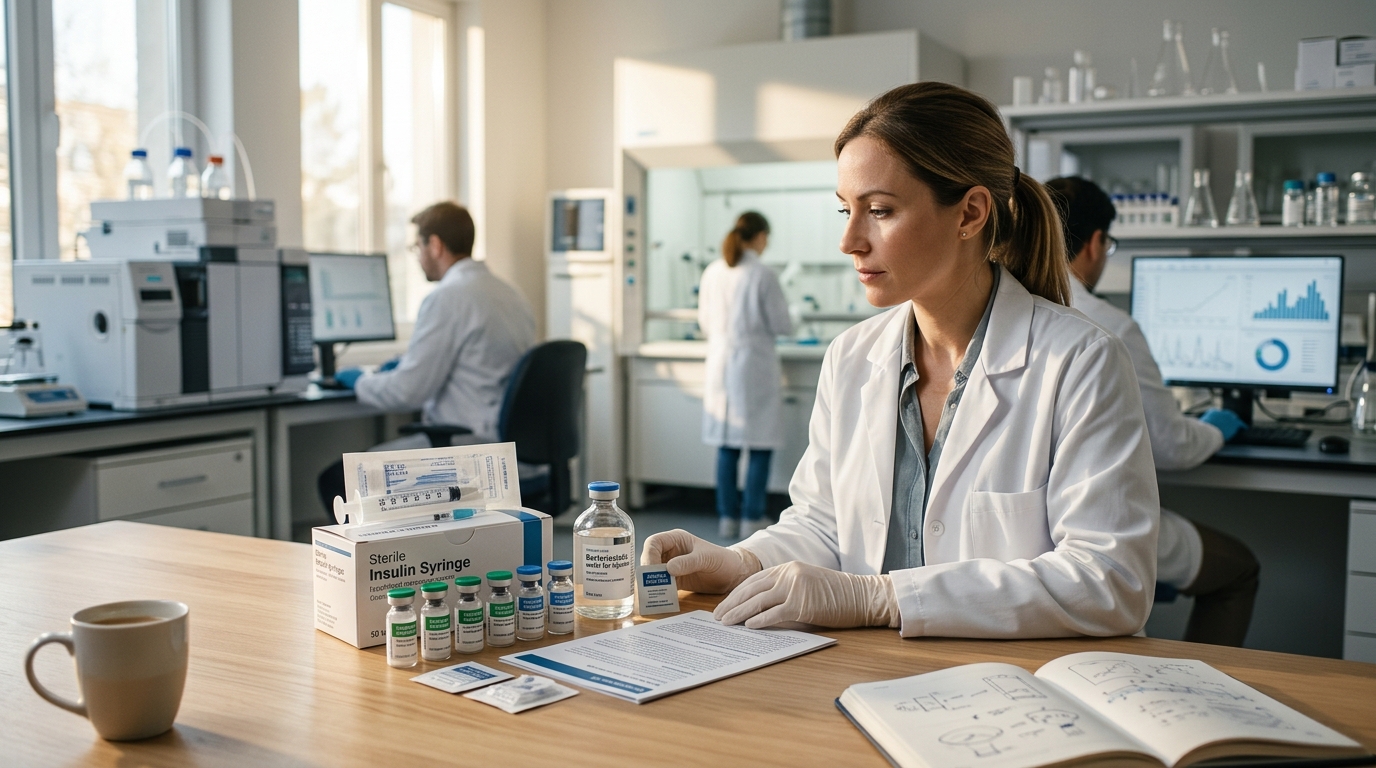
Getting started with peptide research can feel overwhelming. Between sourcing lyophilized reference materials, bacteriostatic water, syringes, and sterile supplies, new researchers often waste time and budget tracking down individual components. A peptide starter kit is a bundled collection of laboratory consumables designed to streamline peptide preparation workflows for research and educational purposes. In this guide, we break down what every beginner kit should include, compare essential components side by side, and explain how to evaluate quality so your first research project starts on solid ground.
What Is a Peptide Starter Kit?
A peptide starter kit is a pre-assembled set of laboratory supplies that provides everything needed for proper peptide reconstitution and handling. Rather than purchasing bacteriostatic water, insulin syringes, alcohol swabs, and filtration supplies individually, a starter kit bundles these items for convenience and consistency.
These kits are designed for researchers working with research-grade peptide reference materials who want to avoid sourcing errors. For newcomers, they remove the guesswork and ensure that sterile handling protocols are followed from the very first experiment.
Why Beginners Need a Dedicated Kit
New researchers face three common pitfalls: using the wrong reconstitution solvent, contaminating samples with non-sterile supplies, and miscalculating volumes due to incorrect syringe gauges. A well-designed starter kit addresses all three issues at once.
According to the National Institutes of Health, maintaining sterile technique during peptide reconstitution is critical to preserving compound integrity. Starting with individually sealed, research-grade components eliminates a significant source of experimental variability.
Common Beginner Mistakes
- Using sterile water instead of bacteriostatic water, which shortens shelf life
- Choosing syringes with incorrect gauge or volume markings
- Failing to swab vial septa with alcohol before each withdrawal
Essential Components of a Quality Kit
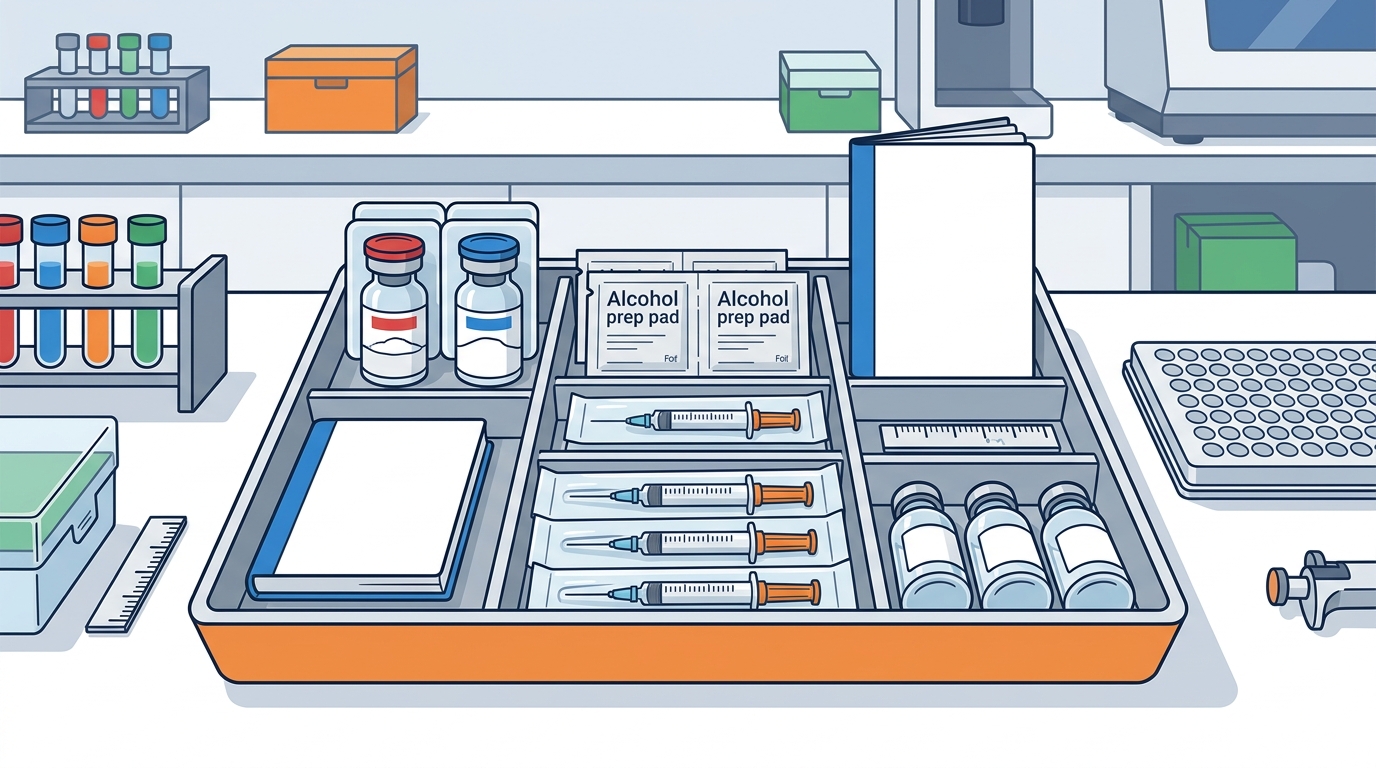
Not all starter kits are created equal. The best kits for beginners include a core set of supplies that support the full reconstitution workflow.
Bacteriostatic Water
Bacteriostatic water is sterile water containing 0.9% benzyl alcohol as a preservative. It is the standard reconstitution solvent for most lyophilized peptides and allows multi-use access to a single vial over time. Aevitas Research offers bacteriostatic water that is quality-verified for peptide compatibility. For a deeper look, read our guide on bacteriostatic water for peptides.
Syringes and Needles
Insulin syringes with 29-31 gauge needles are the standard for peptide work. They offer precise volume markings and minimize waste when handling small quantities. Look for individually sealed syringes to maintain sterility.
Alcohol Prep Pads and Filtration Supplies
Isopropyl alcohol pads are used to sterilize vial septa before each withdrawal. Some advanced kits also include 0.22 micrometer syringe filters for sterile filtration of reconstituted solutions.
Component Comparison Table
| Component | Purpose | Recommended Spec | Beginner Priority |
|---|---|---|---|
| Bacteriostatic Water | Reconstitution solvent | 0.9% benzyl alcohol, USP-grade | Essential |
| Insulin Syringes | Volume measurement and transfer | 31G, 1cc, individually sealed | Essential |
| Alcohol Prep Pads | Vial septum sterilization | 70% isopropyl alcohol | Essential |
| Syringe Filters (0.22 μm) | Sterile filtration | PES membrane, 4mm or 13mm | Recommended |
| Draw Needles (25G) | Transferring reconstituted solution | 25G 1.5", sterile | Optional |
| Vial Labels / Caps | Organization and contamination prevention | Color-coded, multi-size | Optional |
Choosing Your First Research Peptides
Once your supplies are ready, selecting the right reference materials matters just as much. Beginners should start with well-documented peptides that have extensive published literature. BPC-157 is a pentadecapeptide derived from gastric juice proteins that has been widely studied in tissue-repair research contexts. It is one of the most commonly chosen first peptides for new researchers.
Other beginner-friendly options include TB-500 for its documented role in cell migration studies, and Ipamorelin for growth hormone secretagogue research. Our detailed BPC-157 research overview is an excellent starting point for understanding peptide mechanisms.
Quality Verification and Certificates of Analysis
A Certificate of Analysis (COA) is a document issued by a third-party laboratory that confirms the identity, purity, and composition of a peptide sample. Always request a COA before beginning any research protocol. Reputable suppliers provide HPLC and mass spectrometry data for every batch.
Aevitas Research publishes third-party Certificates of Analysis for all products, giving researchers transparent access to purity verification data. For a practical walkthrough on reading these documents, see our guide on how to verify the purity of research-grade peptides.
Storage and Handling Best Practices
Proper storage directly impacts peptide stability and research outcomes. Lyophilized peptides should be stored at -20°C or below, while reconstituted solutions generally remain stable at 2-8°C for limited periods.
Avoid repeated freeze-thaw cycles, which degrade peptide bonds and reduce effective concentration over time. Our best practices for storing research-grade peptides article covers temperature guidelines, container selection, and shelf-life expectations in detail.
Quick Storage Rules
- Lyophilized: -20°C in sealed vials with desiccant
- Reconstituted: 2-8°C, use within 28 days
- Avoid direct light exposure at all stages
Key Takeaways
- A peptide starter kit bundles essential lab consumables so beginners can focus on research, not sourcing.
- Bacteriostatic water with 0.9% benzyl alcohol is the standard reconstitution solvent for most peptides.
- Individually sealed 31G insulin syringes provide the precision and sterility required for accurate peptide handling.
- Always verify peptide purity through a third-party Certificate of Analysis before starting experiments.
- Store lyophilized peptides at -20°C and reconstituted solutions at 2-8°C to maintain stability.
- Start with well-documented peptides like BPC-157 or TB-500 that have extensive published research.
- Choose suppliers that provide transparent testing documentation and responsive support.
Frequently Asked Questions
What should a peptide starter kit include?
A quality peptide starter kit should include bacteriostatic water, insulin syringes (29-31G), alcohol prep pads, and optionally syringe filters. These components cover the full reconstitution and handling workflow for lyophilized research peptides.
Do I need a peptide starter kit if I already have lab supplies?
If you already have individually sealed, sterile supplies in the correct specifications, you may not need a full kit. However, kits ensure component compatibility and save time compared to sourcing each item separately.
What is bacteriostatic water and why is it important?
Bacteriostatic water is sterile water preserved with 0.9% benzyl alcohol. It inhibits microbial growth, allowing researchers to withdraw from the same vial multiple times without contamination risk. It is preferred over sterile water for multi-dose peptide preparations.
Which peptides are best for beginners?
BPC-157, TB-500, and Ipamorelin are among the most popular choices for new researchers due to their extensive published literature and straightforward reconstitution requirements. Starting with well-characterized compounds reduces variables in early experiments.
How do I verify peptide quality before starting research?
Request a Certificate of Analysis from your supplier. A valid COA includes HPLC purity data, mass spectrometry confirmation, and batch-specific details. Reputable suppliers like Aevitas Research publish these documents for every product lot.
How should I store reconstituted peptides?
Store reconstituted peptides at 2-8°C (standard refrigerator temperature) and use them within 28 days. Avoid repeated freeze-thaw cycles, as these degrade peptide bonds and reduce potency over time.
What syringe gauge is best for peptide research?
Insulin syringes with 29G to 31G needles are the standard for peptide research. They offer fine-gauge precision suitable for small volumes and minimize compound loss during transfer.
Where can I buy research-grade peptide reference materials?
Look for suppliers that provide third-party testing documentation, transparent COAs, and quality-controlled manufacturing. Aevitas Research offers a full catalog of research-grade peptide reference materials with published purity data for every batch.
Start Your Research with Confidence
Building your first peptide research setup does not have to be complicated. With the right starter kit components and quality-verified reference materials, you can begin producing reliable results from day one. Browse the Aevitas Research product catalog to find research-grade peptides backed by third-party testing, or visit our research blog for more educational guides tailored to laboratory professionals.