

The global peptide market is projected to reach significant valuation milestones in the coming years, driven by advancements in biotechnology and therapeutic applications. According to recent industry reports, the peptide market size is expected to grow at a compound annual growth rate of over 10% through 2030. This rapid expansion has attracted numerous suppliers, making it increasingly difficult for researchers to distinguish between legitimate providers and those offering substandard products. Verifying the credibility of a peptide supplier is not merely a precaution; it is a fundamental requirement for ensuring research integrity and safety. This guide outlines the critical metrics you must evaluate before making a purchase.
Verification Essentials: The COA Standard
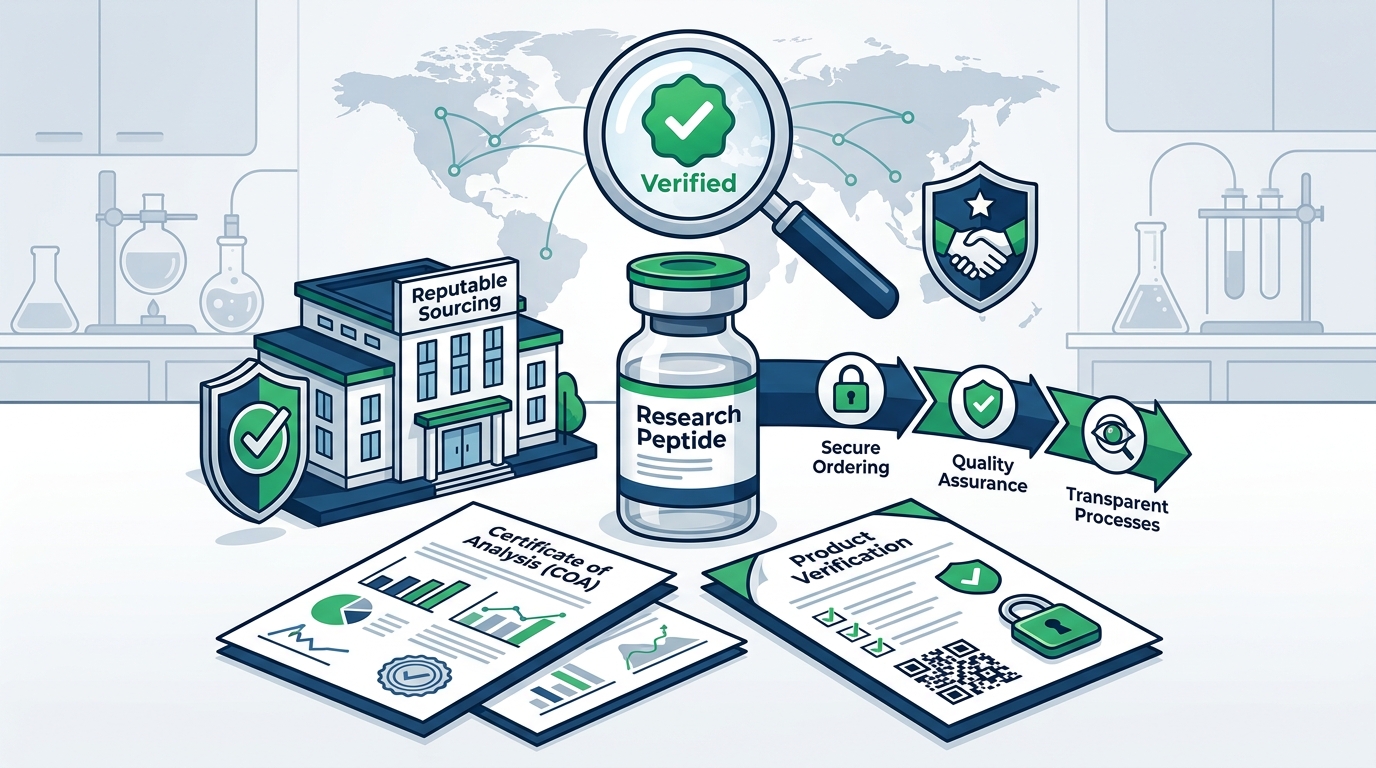
The most immediate indicator of a trustworthy peptide company is its commitment to analytical verification. A Certificate of Analysis (COA) is a document that provides the results of specific tests performed on a particular batch of a product. COA is a formal declaration of purity and identity. Without a batch-specific COA, a supplier cannot prove the quality of the product you are receiving.
When evaluating a COA, look for data from High-Performance Liquid Chromatography (HPLC) and Mass Spectrometry (MS). HPLC data confirms the purity percentage, typically requiring a threshold of 98% or higher for research-grade peptides. Mass Spectrometry data verifies the molecular weight, ensuring the peptide sequence is correct. A trustworthy supplier will make these documents easily accessible, often linked directly on the product page or available upon request.
At Aevitas Research, we prioritize this transparency by providing batch-tested and batch-produced materials. Our commitment to research integrity means that every batch undergoes rigorous testing to ensure consistency. This level of detail is non-negotiable for serious scientific inquiry.
Manufacturing Integrity and Sourcing
Understanding where and how a peptide is manufactured is the next critical step in due diligence. The geographic origin of manufacturing can influence regulatory standards and quality control practices. Manufacturing origin dictates regulatory oversight. Peptides produced in facilities adhering to strict Good Manufacturing Practices (GMP) are generally more reliable than those from unregulated environments.
Many reputable suppliers highlight their manufacturing location as a key selling point. For instance, products made in the USA often benefit from stringent FDA guidelines regarding facility operations, even if the peptides themselves are for research use only. This domestic production ensures a higher degree of accountability and traceability throughout the supply chain.
Furthermore, inquire about the supplier's sourcing of raw materials. High-quality peptides require high-purity amino acids. Suppliers who are transparent about their raw material suppliers demonstrate a deeper commitment to quality. If a company cannot explain the origin of its starting materials, it is a red flag that warrants further investigation or avoidance.
Transparency Metrics and Customer Experience
Trust is built on consistent communication and accessible customer support. A trustworthy company will have a robust customer experience framework that includes clear policies, responsive support, and educational resources. Look for companies that provide detailed information about their frequently asked questions and contract sales processes.
Customer reviews and testimonials can offer valuable insights, but they should be interpreted with caution. Look for patterns in feedback regarding product consistency, shipping speed, and customer service responsiveness. A company that actively engages with its customer base and addresses concerns publicly is more likely to be trustworthy.
Additionally, check for the availability of a comprehensive FAQ section that addresses common concerns about storage, handling, and usage. This indicates that the company anticipates user needs and is invested in the successful application of their products. A lack of such resources may suggest a transactional, rather than relational, approach to business.
Regulatory Compliance and Shipping
Legal compliance is a cornerstone of trustworthiness in the scientific supply chain. Reputable suppliers adhere to all applicable laws regarding the sale and shipping of research chemicals. This includes proper labeling, hazardous material declarations, and adherence to international shipping regulations.
Shipping policies should be clear and consistent. Look for suppliers that offer free shipping on orders over $150 as a standard practice, which often indicates a mature logistics operation. Reliable shipping partners ensure that products arrive in optimal condition, preserving their stability and efficacy.
Furthermore, a trustworthy company will have a clear privacy policy that protects your personal data. This is particularly important for researchers who may be purchasing sensitive materials. Ensure that the company does not share your information with third parties without consent.
Supplier Evaluation Comparison
To assist in your decision-making process, the following table compares key attributes of a trustworthy supplier against common industry pitfalls.
| Attribute | Trustworthy Supplier | Unreliable Supplier |
|---|---|---|
| Certificate of Analysis | Batch-specific COA with HPLC and MS data | Generic or missing COA |
| Manufacturing Origin | Clearly stated, often USA or EU | Unclear or undisclosed origin |
| Customer Support | Responsive, educational resources available | Limited or no support channels |
| Shipping Policies | Clear, tracked, and insured options | Vague or no shipping information |
| Regulatory Compliance | Adheres to all local and international laws | Non-compliant or evasive |
Key Takeaways
- COA Availability: Always verify that a batch-specific Certificate of Analysis is provided for every product.
- Manufacturing Standards: Prioritize suppliers who manufacture in regions with strict regulatory oversight, such as the USA.
- Transparency: Look for clear information on raw material sourcing and manufacturing processes.
- Customer Experience: Evaluate the supplier's responsiveness and the quality of their educational resources.
- Shipping Reliability: Ensure the supplier has robust logistics and clear shipping policies.
- Regulatory Adherence: Confirm that the company complies with all relevant legal requirements.
- Data Privacy: Verify that the company has a strong privacy policy to protect your information.
Frequently Asked Questions
What is a Certificate of Analysis (COA)?
A Certificate of Analysis is a document that provides the results of specific tests performed on a particular batch of a product, confirming its purity and identity.
Why is manufacturing origin important?
Manufacturing origin determines the regulatory standards and quality control practices applied to the product, with USA-made products often adhering to stricter guidelines.
How can I verify a supplier's customer service?
Check for responsive communication channels, detailed FAQ sections, and customer testimonials that highlight consistent support and problem resolution.
What should I look for in shipping policies?
Look for clear, tracked, and insured shipping options, as well as transparent policies regarding delivery times and handling of research materials.
Are there legal requirements for peptide suppliers?
Yes, suppliers must adhere to local and international laws regarding the sale and shipping of research chemicals, including proper labeling and hazardous material declarations.
How do I ensure product stability during shipping?
Choose suppliers who use reliable logistics partners and provide clear instructions on storage and handling to maintain product integrity upon arrival.
What is the significance of batch testing?
Batch testing ensures that every lot of product meets the same high standards of purity and quality, providing consistency for your research.
Where can I find more information about research integrity?
Visit our Research Access page for detailed information on our commitment to quality and integrity.
Start Your Research with Confidence
Choosing the right peptide supplier is a critical decision that impacts the validity of your research. By prioritizing transparency, regulatory compliance, and rigorous quality control, you can ensure the integrity of your work. Explore our catalog today to find the high-quality peptides you need for your scientific endeavors. Contact our team for more information on our contract sales options and how we can support your research goals.