

Choosing a High-End Peptide Supplier: 7 Critical Quality Indicators
Securing reliable research materials is the foundational step in any rigorous scientific inquiry. According to recent industry analyses, over 60% of experimental inconsistencies in peptide research stem from compromised supplier purity standards rather than flawed experimental design. This statistic underscores the critical need for researchers to prioritize verification over price when selecting a partner. The landscape of research peptide suppliers is vast, yet the gap between commercial retail and true laboratory-grade integrity is significant. Understanding this divide is essential for maintaining data validity and experimental reproducibility.
Analytical Verification Standards
The most defining characteristic of a high-end supplier is their commitment to analytical verification. In the context of peptide research, analytical verification is the process of using advanced chromatography and mass spectrometry to confirm the identity and purity of a compound. Without this step, a supplier is merely guessing at the quality of their inventory. Low-tier vendors often rely on supplier certificates from raw material manufacturers, which may be outdated or inaccurate for the specific batch being sold.
Elite suppliers conduct their own internal testing or partner with independent third-party laboratories. This approach ensures that the data provided to the researcher is specific to the product in hand. When evaluating a supplier, look for explicit mentions of High-Performance Liquid Chromatography (HPLC) and Mass Spectrometry (MS) in their quality control protocols. These are the gold standards for identifying peptide structure and detecting impurities.
For researchers seeking verified materials, platforms like Aevitas Research emphasize batch-level verification to ensure that every unit shipped meets strict analytical criteria. This level of scrutiny is non-negotiable for studies requiring high precision.
Purity Benchmarks and HPLC
Purity is not a binary state but a spectrum. In the research peptide industry, the benchmark for high-end materials is typically a purity level of 99% or greater. This threshold ensures that the active peptide constitutes the vast majority of the compound, minimizing the risk of off-target effects caused by byproducts or synthesis residues. High-purity peptides are defined as compounds containing less than 1% total impurities as measured by HPLC analysis.
When reviewing supplier data, pay close attention to the HPLC chromatograms. A clean chromatogram with a single, sharp peak indicates high purity. Multiple peaks suggest the presence of degradation products or incomplete synthesis. Furthermore, the supplier should provide the retention time and the percentage purity value for each batch. This data allows researchers to compare results across different orders and time periods.
Choosing a supplier that guarantees this level of purity protects the integrity of your research. It eliminates variables that could otherwise lead to false negatives or inconsistent biological responses. For those interested in exploring verified options, Aevitas Research maintains a catalog focused on achieving these rigorous purity standards.
Batch-to-Batch Consistency
Scientific reproducibility relies on the consistency of materials. A high-end supplier must demonstrate the ability to produce identical results across multiple manufacturing runs. This requires strict control over raw material sourcing, synthesis conditions, and purification processes. Batch consistency refers to the ability of a manufacturer to maintain identical purity and composition profiles across different production lots.
When a supplier releases a new batch, they should provide a new Certificate of Analysis (COA) that matches the previous ones in terms of purity and identity. If the purity fluctuates significantly between batches, it introduces a confounding variable into your research. This is particularly critical for long-term studies where materials are purchased over several months.
Reliable suppliers often maintain a database of COAs for all their products. This allows researchers to track the quality history of a specific compound. For example, Aevitas Research provides accessible COAs for every batch, ensuring that researchers have immediate access to the verification data they need. This transparency is a hallmark of a professional-grade supplier.
Manufacturing Origin and Compliance
The geographic origin of peptide synthesis can impact quality control standards. Suppliers manufacturing in regions with stringent regulatory oversight, such as the United States or the European Union, often adhere to higher standards of Good Manufacturing Practice (GMP). GMP is a system for ensuring that products are consistently produced and controlled according to quality standards.
While GMP is typically associated with pharmaceutical production, its principles are valuable for research suppliers. It implies a structured approach to documentation, facility maintenance, and personnel training. Suppliers that highlight their manufacturing location and compliance with international standards demonstrate a commitment to quality that goes beyond mere profit.
Additionally, consider the supplier's adherence to environmental and safety regulations. Proper disposal of chemical waste and safe handling of raw materials are indicators of a responsible and professional operation. For more information on shipping and handling protocols, Aevitas Research outlines their logistical standards to ensure product integrity during transit.
Documentation Transparency
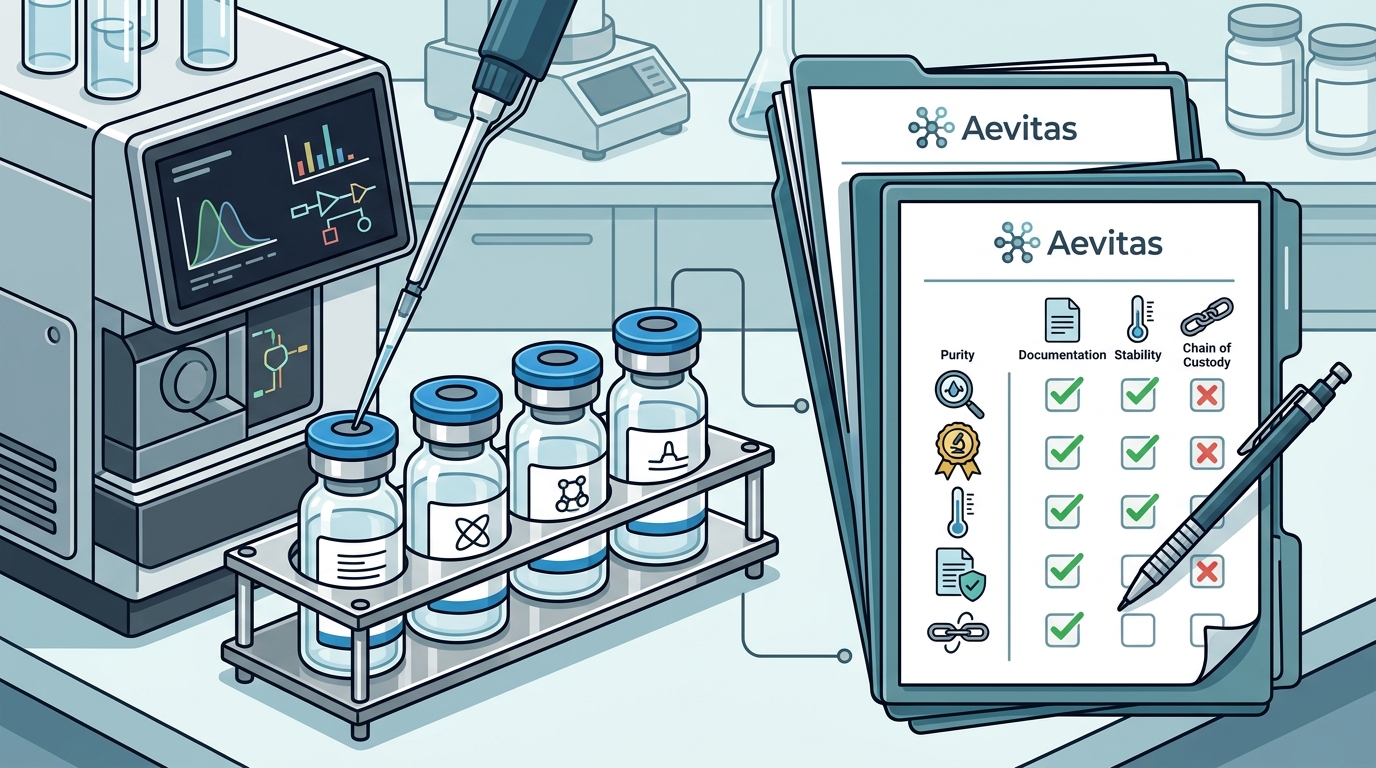
Transparency is the currency of trust in the research supply chain. A high-end supplier will provide comprehensive documentation for every product they sell. This includes detailed COAs, safety data sheets (SDS), and storage instructions. Documentation transparency is the practice of providing complete, accessible, and accurate technical data for every product batch.
Look for suppliers that make their COAs easily accessible, preferably linked directly from the product page. The COA should include the date of analysis, the method used, the results obtained, and the name of the analyst or laboratory. If a supplier requires you to request COAs individually or charges extra for them, it is a red flag.
Furthermore, the supplier should provide clear storage recommendations. Peptides are sensitive to temperature and humidity. Proper storage instructions help maintain stability and prevent degradation. For researchers needing to understand their rights and responsibilities, Aevitas Research provides clear policies on returns and refunds, ensuring a professional transaction process.
Specialized Product Range
The breadth and depth of a supplier's product range can indicate their expertise. High-end suppliers often specialize in specific classes of peptides, such as growth hormone secretagogues, neuroregulatory peptides, or antimicrobial peptides. Specialized product range refers to a curated selection of compounds focused on specific research applications rather than a generic catalog.
Specialization allows the supplier to invest in the specific synthesis and purification techniques required for those compounds. It also means they are more likely to stay current with the latest research trends and provide relevant technical support. For instance, a supplier specializing in neuroregulatory peptides will have deep knowledge of compounds like Selank and Semax.
When evaluating a supplier, consider whether their product line aligns with your specific research needs. A supplier with a narrow but deep focus may offer better quality and support than a generalist. Aevitas Research positions itself as a premium alternative for researchers seeking specialized, high-purity options.
Supplier Reputation and Support
Reputation is built over time through consistent quality and customer service. In the research community, word-of-mouth and peer reviews are powerful indicators of a supplier's reliability. Supplier reputation is the collective assessment of a company's quality, reliability, and ethical standards by its customer base.
Look for suppliers that have a strong presence in scientific forums and communities. Positive feedback from other researchers is a strong signal of quality. Additionally, consider the level of customer support provided. A high-end supplier should have knowledgeable staff who can answer technical questions about storage, solubility, and handling.
Responsive and professional customer service is essential for resolving any issues that may arise. This includes timely responses to inquiries and efficient handling of any logistical problems. For those interested in the broader context of the industry, Aevitas Research offers insights into the standards and practices that define the sector.
Key Takeaways
- Verification is Key: Always demand batch-specific COAs verified by HPLC and Mass Spectrometry.
- Purity Threshold: High-end suppliers guarantee purity levels of 99% or greater for all compounds.
- Consistency Matters: Batch-to-batch consistency is critical for long-term experimental reproducibility.
- Documentation Access: Transparent suppliers provide immediate access to COAs and Safety Data Sheets.
- Manufacturing Standards: Preference should be given to suppliers adhering to GMP and strict regulatory compliance.
- Specialization Benefits: Suppliers with focused product ranges often offer deeper technical expertise.
- Reputation Signals: Peer reviews and community feedback are reliable indicators of supplier reliability.
Frequently Asked Questions
What is the minimum purity level for research peptides?
High-end research peptides typically have a purity level of 99% or greater as measured by HPLC analysis. Lower purity levels may contain impurities that can interfere with experimental results.
Why are Certificates of Analysis (COAs) important?
COAs provide verified data on the purity, identity, and composition of a specific batch. They are essential for ensuring that the materials used in research meet the required scientific standards.
How should research peptides be stored?
Peptides should generally be stored in a cool, dry place, often at -20°C or lower, to maintain stability. Once reconstituted, they should be kept refrigerated and used within a specific timeframe.
What is the difference between analytical grade and pharmaceutical grade?
Pharmaceutical grade implies compliance with strict regulatory standards for human use, while analytical grade is intended for laboratory research. Both require high purity, but the documentation and testing protocols differ.
Can I trust online peptide suppliers?
Trust is earned through transparency and verification. Reputable online suppliers provide batch-specific COAs, clear manufacturing information, and responsive customer support. Always verify the supplier's credentials before purchasing.
What is HPLC and why is it used?
HPLC stands for High-Performance Liquid Chromatography. It is a technique used to separate, identify, and quantify each component in a mixture. In peptide research, it is the primary method for determining purity.
What is the role of Mass Spectrometry in peptide verification?
Mass Spectrometry (MS) is used to determine the molecular weight and structure of peptides. It confirms the identity of the compound and can detect trace impurities that HPLC might miss.
Secure Your Research Foundation Today
The integrity of your scientific work depends on the quality of the materials you use. By prioritizing analytical verification, purity benchmarks, and documentation transparency, you can mitigate risk and enhance the reliability of your results. High-end suppliers like Aevitas Research are dedicated to providing the rigorous standards necessary for advanced laboratory research. Explore their catalog to find the verified peptides your research demands.