

Not all peptide suppliers operate at the same level of quality, transparency, or accountability. For researchers sourcing laboratory reference materials, the difference between a premium supplier and a mediocre one can directly affect experimental reproducibility and data integrity. With the research peptide market expanding rapidly, evaluating suppliers has become more complex and more important than ever. This guide breaks down the critical factors that separate high-end peptide suppliers from the rest, helping qualified purchasers make confident, evidence-based sourcing decisions.
Third-Party Testing Is Non-Negotiable
Third-party testing is the process of having an independent, external laboratory verify a peptide's identity, purity, and composition without any financial stake in the results. It is widely regarded as the gold standard in peptide quality assurance. Unlike in-house testing, independent verification removes the conflict of interest that arises when a manufacturer evaluates its own product.
A high-end supplier will submit every batch to an accredited external laboratory before making it available. This practice provides objective confirmation that the material matches its labeled specification. At Aevitas Research, all reference materials include supporting documentation from independent analytical testing, which you can review on our Certificates of Analysis page.
How to Read a Certificate of Analysis
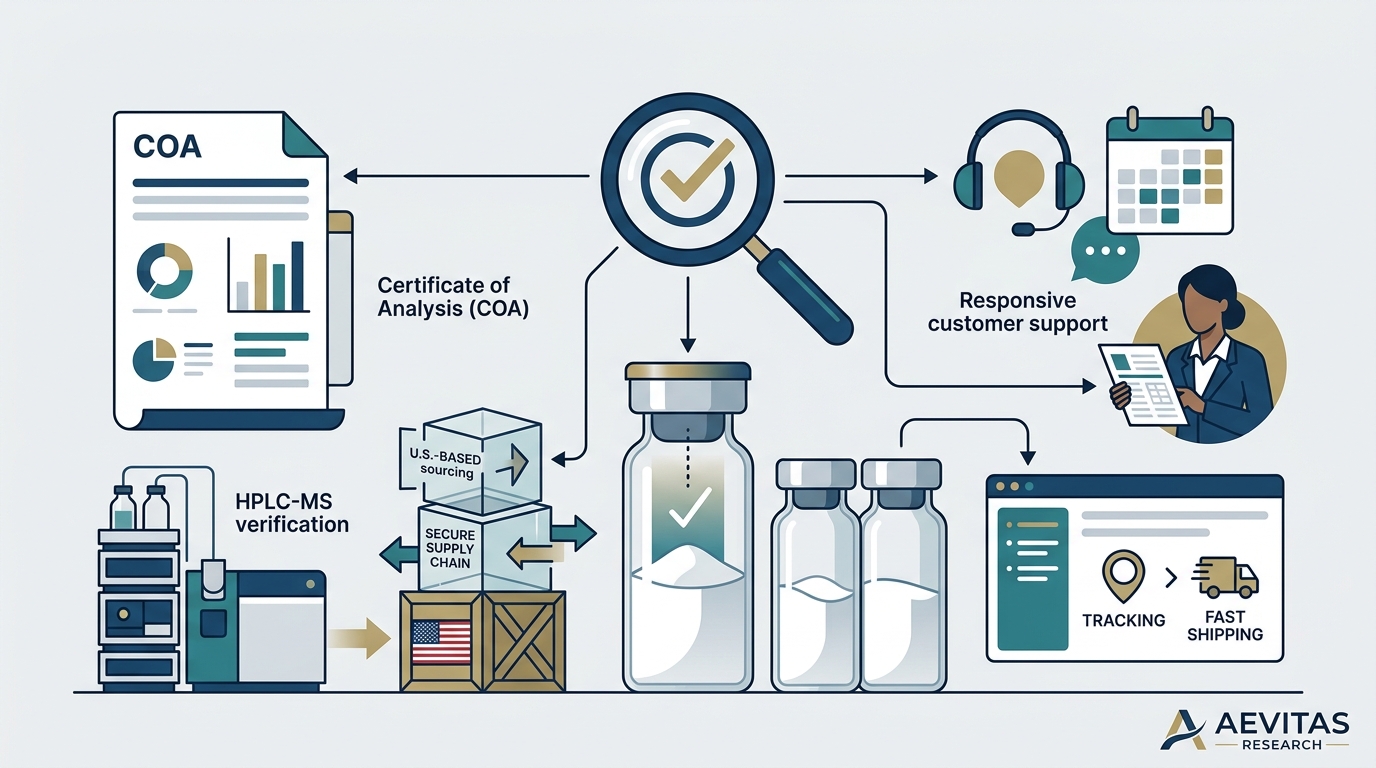
A Certificate of Analysis (COA) is a document issued by a testing laboratory that reports the analytical results for a specific batch of material. It typically includes purity data, identity confirmation, batch or lot numbers, and the date of analysis. COAs are the primary documentation tool researchers use to verify supplier claims before beginning experimental work.
What a Credible COA Includes
Look for a named third-party laboratory, a unique batch number that corresponds to your specific product, and a recent testing date. Generic COAs that lack batch specificity offer no meaningful quality assurance. Our guide on peptide certificates of analysis explains what to look for in greater detail.
In-House vs. Independent COAs
A COA produced solely by the manufacturer introduces potential bias. An independent COA from an accredited lab, ideally one with ISO/IEC 17025 accreditation, carries significantly more weight because its protocols are held to international standards of accuracy and method validation.
Purity Standards and Analytical Methods
High-performance liquid chromatography (HPLC) is the standard analytical method for determining peptide purity. It separates the target peptide from impurities and reports purity as a percentage. Mass spectrometry (MS) is a complementary technique used to confirm the peptide's molecular identity by measuring its molecular weight and fragmentation pattern.
Premium suppliers typically report HPLC purity of 98% or higher and provide MS confirmation for every catalog item. These two methods together give researchers confidence that the material is both pure and correctly identified. Learn more about why analytical verification matters in our article on why purity matters in research-grade peptides.
Transparency Signals That Matter
Beyond testing data, several operational indicators help distinguish a high-end supplier from an average one. These signals reflect the internal standards and commitment to quality that define a premium operation.
Clear Product Documentation
Reputable suppliers present consistent naming conventions, detailed product pages, and accessible handling or storage notes. Sloppy formatting, recycled descriptions, or inconsistencies across listings often point to weaker internal standards. Our peptide research library provides structured reference information for each compound we carry.
Responsive Customer Support
A supplier's willingness to answer technical questions about sourcing, testing methodology, or documentation speaks volumes about their operational confidence. High-end operations invest in knowledgeable support teams rather than deflecting inquiries.
Streamlined Purchasing Experience
Straightforward checkout processes, standard payment methods, and clear shipping policies reduce friction and signal legitimacy. You can review Aevitas Research's shipping and payment policies for an example of what transparent terms look like.
Supplier Evaluation Comparison Table
Use the following criteria when evaluating any research peptide supplier. This framework focuses on verifiable, objective quality indicators rather than marketing language.
| Evaluation Criterion | High-End Supplier | Low-Quality Supplier |
|---|---|---|
| Third-Party COA | Batch-specific, independent lab, recent date | Generic, in-house, or missing entirely |
| HPLC Purity | 98%+ with documentation | Vague claims without supporting data |
| Mass Spectrometry | MS identity confirmation per batch | Not provided or not batch-specific |
| Product Pages | Detailed, consistent, well-structured | Thin, recycled, or inconsistent |
| Customer Support | Responsive, technically knowledgeable | Slow, evasive, or nonexistent |
| Payment and Shipping | Standard methods, clear terms | Unusual payment requirements, vague policies |
| Educational Content | In-depth research library and guides | Minimal or promotional-only content |
Red Flags to Watch For
Certain patterns should prompt caution when evaluating a peptide supplier. These are not edge cases; they appear frequently across the market and can indicate a lack of operational rigor.
Outdated or generic COAs: If a supplier cannot provide a batch-specific, recently dated certificate of analysis, there is no way to confirm what you are receiving matches any tested material.
Vague sourcing language: Terms like "lab-tested" or "premium quality" without supporting documentation are marketing phrases, not quality indicators. Credible suppliers back claims with verifiable data.
No educational resources: Suppliers that invest in educating their customers through research libraries, blog content, and reference guides demonstrate long-term commitment to the category. Explore the Aevitas Research blog for examples of evidence-based educational content.
Key Takeaways
- Third-party testing by an independent, accredited laboratory is the single most important quality indicator when choosing a peptide supplier.
- A Certificate of Analysis should be batch-specific, recently dated, and issued by a named external lab.
- HPLC purity analysis and mass spectrometry identity confirmation are the two core analytical methods to look for.
- Transparent product pages, clear shipping terms, and responsive support signal operational quality.
- Generic quality claims without supporting documentation should be treated as a red flag.
- Educational content and research libraries indicate a supplier's depth of commitment to the category.
- Evaluate suppliers using objective, verifiable criteria rather than marketing language or price alone.
Frequently Asked Questions
What is a Certificate of Analysis (COA)?
A Certificate of Analysis is a document from a testing laboratory that reports the identity, purity, and composition of a specific batch of material. It serves as the primary quality verification tool for research peptides.
Why does third-party testing matter more than in-house testing?
Third-party testing removes the conflict of interest that exists when a manufacturer tests its own product. An independent lab has no financial incentive to report favorable results, making the data more reliable and objective.
What purity level should I expect from a high-end supplier?
Research-grade peptide reference materials from premium suppliers typically report HPLC purity of 98% or higher. Any supplier making purity claims should provide batch-specific analytical documentation to support them.
What analytical methods are used to verify peptide quality?
The two primary methods are high-performance liquid chromatography (HPLC) for purity analysis and mass spectrometry (MS) for identity confirmation. Together, they verify that a peptide is both pure and correctly identified.
How can I tell if a COA is legitimate?
Look for the name of the testing laboratory, a batch or lot number matching your product, a recent testing date, and results for both HPLC purity and MS identity. Generic or undated COAs should raise concerns.
What are common red flags when evaluating a peptide supplier?
Watch for missing or generic COAs, vague quality claims, unusual payment requirements, thin product pages, and a lack of educational or reference content. These patterns often indicate lower operational standards.
Does price alone indicate quality?
Not necessarily. While extremely low prices may signal cut corners, a higher price does not guarantee quality either. The most reliable indicator is verifiable documentation, not cost.
Where can I find Aevitas Research COAs?
All Aevitas Research certificates of analysis are available on our dedicated COA page, organized by product and batch for easy verification.
Start Your Evaluation
Choosing a high-end peptide supplier comes down to verifiable quality, transparent documentation, and operational consistency. If you are sourcing research-grade peptide laboratory reference materials and want to see what premium quality standards look like in practice, explore the Aevitas Research catalog and review our third-party tested COAs for yourself.