

Not every supplier of research peptides treats quality control the same way. The difference between a credible brand and a questionable one often comes down to testing methodology, documentation transparency, and supply chain integrity. For researchers evaluating where to source laboratory reference materials, understanding these distinctions is essential. This guide breaks down the specific quality control benchmarks that separate premium research peptide suppliers from the rest, so you can make sourcing decisions grounded in evidence rather than marketing claims.
Why Quality Control Matters in Peptide Research
Quality control (QC) is the systematic process of verifying that a research material meets defined specifications for identity, purity, and consistency. In peptide research, even small impurities can compromise experimental validity. According to published literature, uncharacterized impurities at the 10-15% level introduce uncontrolled biological variables that can confound results and compromise reproducibility.
This is why leading suppliers invest heavily in analytical testing rather than relying solely on synthesis-side quality checks. If you are evaluating why purity matters in research-grade peptides, the answer starts with the testing infrastructure behind each vial.
HPLC Testing: The Purity Baseline
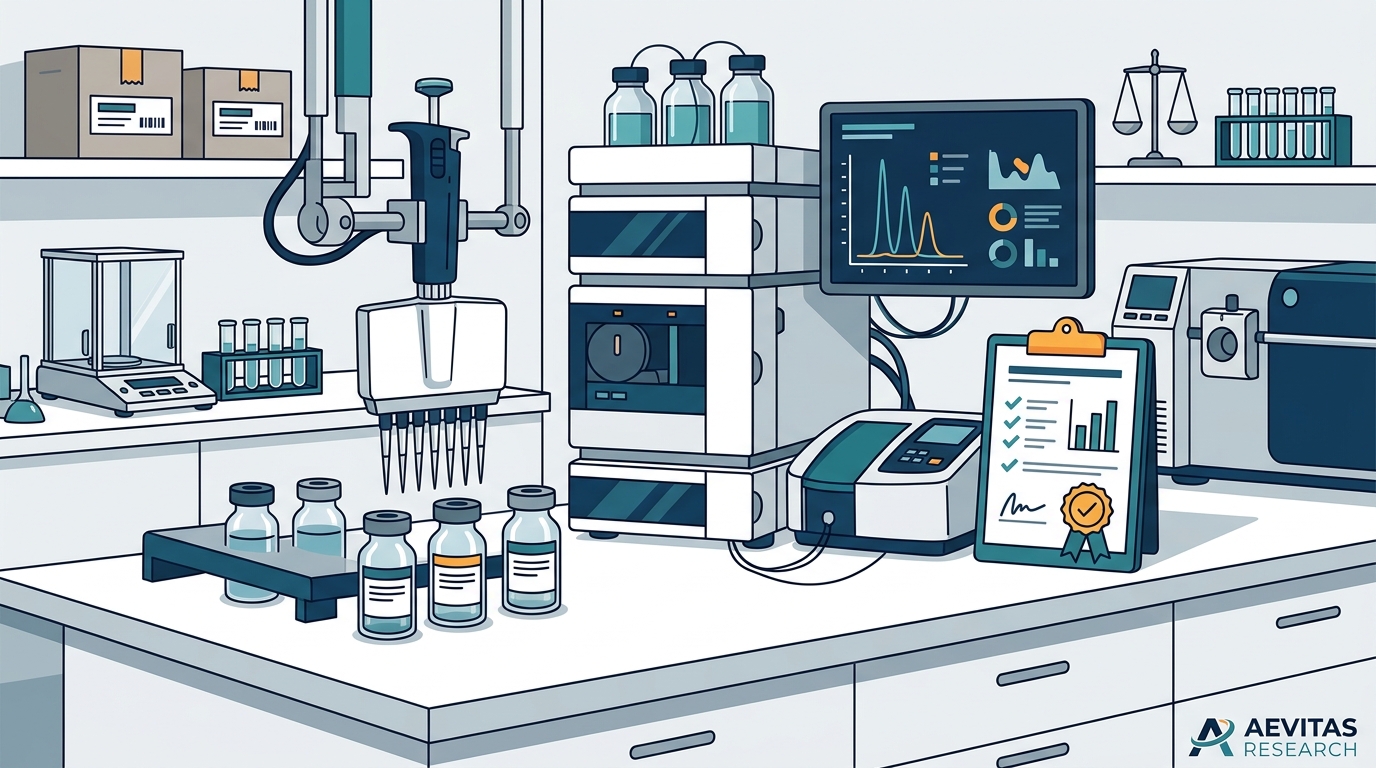
High-performance liquid chromatography (HPLC) is the gold-standard analytical method for quantifying peptide purity. It works by separating compounds in a sample and measuring the relative concentration of each component. The result is a chromatogram where a dominant, clean peak indicates high purity.
What to Look For
Reputable brands publish HPLC data showing purity levels of 98% or higher. Reversed-phase HPLC (RP-HPLC) monitoring peptide bonds at 214 nm wavelength is the most widely accepted approach for short-chain peptides. Suppliers that do not disclose their HPLC methodology or threshold should be approached with caution.
Why Purity Percentage Alone Is Not Enough
A critical nuance: HPLC confirms what percentage of the sample is the dominant peak, but it does not confirm what that peak actually is. A sample could register 99% purity and still be the wrong compound entirely. This is why identity verification through mass spectrometry is non-negotiable. Learn more about interpreting these results in our guide to verifying the purity of research-grade peptides.
Mass Spectrometry for Identity Verification
Mass spectrometry (MS) is an analytical technique that measures the molecular weight of a compound to confirm its chemical identity. While HPLC tells you how pure a sample is, MS tells you what the sample actually is. Both are required for a complete quality picture.
ESI-MS and MALDI-TOF
Two dominant techniques in peptide analysis are Electrospray Ionization MS (ESI-MS) and MALDI-TOF MS. ESI-MS is particularly well-suited for peptides under 5,000 g/mol, providing molecular weight confirmation within a tight tolerance, typically plus or minus 1 Da. As the USP reference standard methodology demonstrates, MS/MS fragmentation further confirms amino acid sequencing accuracy.
Top-tier brands include full MS traces on every batch certificate, listing both detected and theoretical molecular weights. Suppliers that skip MS verification leave a critical gap in their quality documentation.
The Role of Third-Party Testing
Third-party testing is an independent analytical verification performed by a laboratory with no financial relationship to the supplier. It is widely regarded as the most objective form of quality assurance in the research materials industry.
In-house certificates of analysis (COAs) from suppliers that lack independent verification carry limited scientific weight. The best brands submit finished product to accredited external labs and publish those results alongside their internal data. This dual-layer approach builds credibility that no amount of marketing can replicate.
Aevitas Research maintains a dedicated COA and research access portal where qualified purchasers can review batch-specific documentation, reinforcing the kind of transparency that defines a premium supplier.
Certificate of Analysis Transparency
A Certificate of Analysis (COA) is a document issued by a supplier or testing lab that reports the results of quality testing for a specific batch of material. A meaningful COA should include HPLC purity data, mass spectrometry confirmation, batch number, synthesis date, and the name of the testing entity.
Red Flags in COA Documentation
Watch for COAs that lack batch-specific data, omit the testing laboratory name, or show templated results that appear identical across different products. These are indicators of superficial documentation rather than genuine analytical work. Our in-depth breakdown of what a peptide certificate of analysis should contain covers this topic in detail.
Sourcing and Manufacturing Standards
Quality does not begin at the testing bench. It starts with raw material sourcing and synthesis conditions. Leading brands work with manufacturers that follow ICH quality guidelines, including the Q6B framework for biotechnological products that covers identity verification, purity assessment, and strength testing.
Factors that distinguish credible suppliers include controlled storage environments, documented chain-of-custody procedures, and clear terms around shipping and handling protocols. Browse the full Aevitas Research peptide research library to see how reference materials are categorized and documented.
Quality Control Comparison Table
| Quality Control Feature | Premium Supplier Standard | Common Shortcut |
|---|---|---|
| HPLC Purity Testing | RP-HPLC at 214 nm, ≥98% threshold, batch-specific | No published method or generic claims |
| Mass Spectrometry | ESI-MS or MALDI-TOF per batch, MW within ±1 Da | MS omitted entirely |
| Third-Party Verification | Independent lab results published per batch | In-house COA only, no external validation |
| COA Documentation | Batch number, date, testing lab, full traces | Templated, non-batch-specific documents |
| Endotoxin Testing | LAL testing below research-grade threshold | Not performed or not disclosed |
| Regulatory Framework | Aligned with ICH Q6B guidelines | No stated quality framework |
Key Takeaways
- HPLC purity testing at or above 98% is the minimum baseline for research-grade peptides.
- Mass spectrometry must accompany HPLC to confirm the molecular identity of the compound, not just its purity level.
- Third-party testing provides the most objective verification and separates credible brands from the rest.
- A proper COA includes batch-specific data, testing lab identification, and full analytical traces.
- Sourcing standards aligned with ICH Q6B guidelines indicate a supplier operating at a professional level.
- Endotoxin testing (LAL) is an additional benchmark used by top-tier suppliers to ensure material safety for research environments.
- Transparency in documentation is not optional; it is the single clearest indicator of supplier legitimacy.
Frequently Asked Questions
What does 98% purity mean for a research peptide?
A purity of 98% means that 98% of the material in the sample corresponds to the target peptide as measured by HPLC peak area integration. The remaining 2% may include synthesis byproducts, truncated sequences, or residual solvents.
Why is mass spectrometry necessary if HPLC already measures purity?
HPLC quantifies how pure a sample is, but cannot confirm what the dominant compound actually is. Mass spectrometry verifies the molecular weight matches the target peptide, catching errors like wrong amino acid incorporation or incomplete deprotection.
What should a credible COA include?
A credible COA should list the batch number, synthesis date, HPLC chromatogram data, mass spectrometry results with detected and theoretical molecular weights, and the name of the testing laboratory.
What is third-party testing and why does it matter?
Third-party testing is analytical verification performed by a laboratory independent of the supplier. It matters because it removes the conflict of interest inherent in self-reported quality data.
What are common impurities found in research peptides?
Common impurities include truncated sequences, deletion peptides, oxidized residues, excess acetate counterions, and residual trifluoroacetic acid (TFA) from synthesis processes.
What is endotoxin testing in peptide quality control?
Endotoxin testing, typically performed via the Limulus Amebocyte Lysate (LAL) assay, detects bacterial endotoxins that could interfere with sensitive research applications. Premium suppliers include this as a standard batch test.
How can I evaluate a peptide supplier before purchasing?
Review their published COAs for batch specificity, confirm they perform both HPLC and MS testing, check for third-party verification, and assess whether their documentation follows recognized quality frameworks like ICH Q6B.
Evaluate Your Next Source
Choosing a peptide supplier is a research decision, not a shopping decision. Apply the quality benchmarks outlined above to any source you consider. To see these standards in practice, explore the Aevitas Research approach to research-grade peptide reference materials and review batch-specific documentation in the COA library.