

Choosing a research peptide supplier is one of the most consequential decisions a laboratory can make. Unreliable materials compromise data integrity, waste resources, and undermine reproducibility. Yet the online peptide market is crowded with vendors making bold claims and offering little proof. So how do you separate credible suppliers from questionable ones? This guide breaks down the concrete indicators of trustworthiness, from third-party testing documentation to transparent sourcing, so you can evaluate any peptide company with confidence before placing an order.
Why Supplier Trustworthiness Matters in Peptide Research
Research outcomes are only as reliable as the materials behind them. A peptide solution containing 10 to 15 percent uncharacterized impurities introduces uncontrolled variables that can confound results and compromise the scientific integrity of entire research programs. Trustworthy suppliers eliminate this risk through rigorous quality assurance.
Reproducibility is the cornerstone of valid research. When a supplier provides verified, high-purity reference materials backed by documentation, laboratories can confidently design experiments knowing their starting materials meet consistent standards. This is why understanding why purity matters is essential before selecting a vendor.
Certificates of Analysis: The Foundation of Credibility
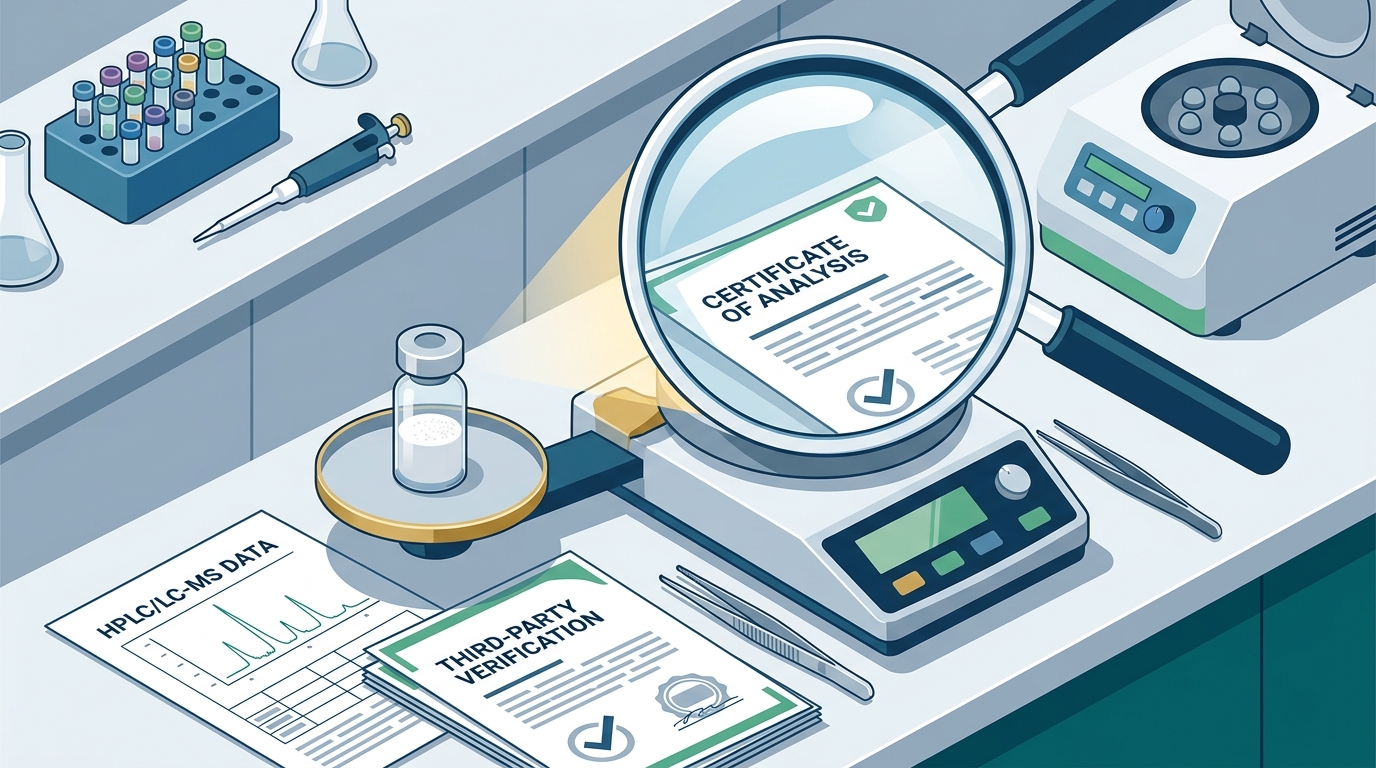
A Certificate of Analysis (COA) is a document issued alongside a product batch that details the results of quality-control testing performed on that specific lot. It typically includes purity percentage, molecular weight confirmation, and the analytical methods used. Legitimate COAs are batch-specific, not generic templates reused across products.
What a COA Should Include
Look for HPLC chromatograms, mass spectrometry data, batch numbers, and testing dates. A trustworthy supplier publishes COAs openly or provides them on request for every batch. Aevitas Research maintains a dedicated COA access page where qualified purchasers can review documentation tied to specific lots.
Why Generic COAs Are a Problem
Some vendors display a single COA for an entire product line rather than per-batch documentation. This approach offers no assurance that the specific vial you receive has been individually tested. Always verify that the batch or lot number on your product matches the COA provided.
HPLC and Mass Spectrometry Testing Standards
High-Performance Liquid Chromatography (HPLC) is the gold-standard method for quantifying peptide purity by measuring the percentage of the target compound relative to all detectable species in a sample. It separates a peptide sample into its constituent components under high pressure and produces a chromatogram showing the dominant peak alongside any impurities.
Mass Spectrometry (MS) is an analytical technique that measures molecular weight to verify that the compound in the vial matches its expected identity. A peptide could technically score 99 percent purity on HPLC but be the wrong molecule entirely if a synthesis error occurred. MS eliminates this risk by confirming molecular identity independently of purity. To learn more about interpreting these results, visit the purity verification guide on Aevitas Research.
Research-grade peptides are generally expected to meet a minimum purity threshold of 98 percent, as established by analytical chemistry standards referenced in sources such as the National Library of Medicine (PubMed).
Third-Party vs. In-House Testing
Third-party testing is quality verification performed by an independent analytical laboratory that has no financial relationship with the peptide supplier. This independence is critical because in-house COAs from suppliers without external verification carry an inherent conflict of interest.
Why Independence Matters
An independent lab has no incentive to inflate purity figures or overlook contaminants. When a supplier publishes third-party verified results, it demonstrates a willingness to be held accountable by an objective standard. This is one of the strongest trust signals in the research peptide space.
Questions to Ask Your Supplier
Before purchasing, ask whether testing is performed in-house, by a third party, or both. Request the name or accreditation details of the testing facility. Reputable suppliers are transparent about their analytical partners and methods.
Transparency Indicators to Look For
Beyond testing, several operational signals distinguish trustworthy companies from unreliable ones. These include clear business information, responsive customer support, published policies, and educational content that helps researchers make informed decisions.
Educational Resources
A credible supplier invests in educating its audience. Resources like the Peptide Research Library from Aevitas Research provide compound-specific reference information grounded in published literature. This type of content signals expertise and a commitment to the research community rather than aggressive sales tactics.
Published Policies
Look for clearly stated shipping and payment policies, return procedures, and terms of service. Vendors who obscure these details or lack them entirely may not prioritize customer accountability.
Red Flags That Signal an Untrustworthy Supplier
Not every warning sign is obvious. Here are patterns that should prompt caution:
- No COAs available: If a vendor cannot produce batch-specific testing documentation, there is no way to verify what you are purchasing.
- Vague purity claims: Statements like "high purity" without quantified HPLC data are meaningless.
- No verifiable business identity: Anonymous websites with no physical address, company registration, or named leadership lack accountability.
- Unrealistically low pricing: Prices significantly below market averages often indicate corners cut in synthesis, purification, or testing.
- Outcome promises: Any supplier making specific claims about what a peptide will "do" is crossing a credibility line. Research materials are characterized by their composition, not by guaranteed results.
Quality Indicator Comparison Table
| Quality Indicator | Trustworthy Supplier | Questionable Supplier |
|---|---|---|
| Certificate of Analysis | Batch-specific, publicly accessible | Generic or unavailable |
| HPLC Testing | Chromatogram included per lot | Purity claimed without data |
| Mass Spectrometry | Molecular weight verified per batch | Not mentioned or absent |
| Third-Party Testing | Independent lab verification disclosed | In-house only, no external audit |
| Business Transparency | Named entity, published policies, U.S.-based support | Anonymous, no contact details |
| Educational Content | Research library, blog, compound references | Sales-only pages, no educational value |
| Pricing | Consistent with market for verified materials | Suspiciously low with no quality justification |
Key Takeaways
- Always request and review batch-specific Certificates of Analysis before purchasing research peptides.
- HPLC confirms purity percentage, while mass spectrometry independently verifies molecular identity; both are essential.
- Third-party testing by an independent laboratory is the strongest single indicator of supplier credibility.
- Transparent business practices, including published policies and responsive support, signal accountability.
- Educational resources and compound reference libraries demonstrate genuine expertise and commitment to research.
- Red flags include absent COAs, vague purity claims, anonymous operations, and unrealistically low prices.
- Trustworthy suppliers characterize their materials by composition and quality, not by outcome promises.
Frequently Asked Questions
What is a Certificate of Analysis (COA) for peptides?
A Certificate of Analysis is a batch-specific document that reports the results of quality-control testing, including purity percentage from HPLC and molecular weight confirmation from mass spectrometry. It serves as verifiable proof that a given lot meets stated quality specifications.
Why is third-party testing more reliable than in-house testing?
Third-party testing is performed by a laboratory with no financial stake in the supplier's sales, removing the conflict of interest inherent in self-reported results. Independent verification provides an objective quality assurance layer that in-house testing alone cannot offer.
What purity level should I expect from research-grade peptides?
Research-grade peptides are generally expected to be at least 98 percent pure as measured by HPLC. This threshold helps ensure that uncharacterized impurities remain low enough to avoid confounding experimental data.
How do HPLC and mass spectrometry work together?
HPLC quantifies the percentage of the target compound in a sample, while mass spectrometry confirms the molecular identity by measuring molecular weight. Together, they verify both the purity and identity of a peptide, providing comprehensive quality assurance.
What are common red flags when evaluating a peptide supplier?
Key warning signs include the absence of batch-specific COAs, unverified purity claims, no traceable business identity, prices far below market norms, and any language promising specific outcomes from research materials.
Does Aevitas Research provide COAs for its products?
Yes. Aevitas Research publishes testing documentation through its COA access portal and provides batch-specific certificates that include HPLC and mass spectrometry results for its research-grade peptide reference materials.
Why should I avoid suppliers who make outcome claims?
Suppliers who promise specific results are misrepresenting the nature of research materials. Legitimate reference materials are defined by their composition, purity, and identity, not by predicted experimental outcomes. Outcome claims suggest a marketing-first approach rather than scientific rigor.
Where can I learn more about specific peptide compounds?
Aevitas Research offers a Peptide Research Library with compound-specific reference pages covering topics like BPC-157 and TB-500, grounded in published scientific literature.
Evaluate Your Next Peptide Supplier with Confidence
Now that you know what separates a trustworthy peptide company from a questionable one, put these criteria into practice. Explore the Aevitas Research catalog to see how transparent documentation, third-party testing, and research-grade standards come together in one supplier.