

Choosing a peptide research supplier is not just a purchasing decision. It is a methodological one that directly affects data integrity, experimental reproducibility, and the credibility of your findings. With hundreds of online vendors now offering research-use peptides, distinguishing trustworthy sources from unreliable ones requires a structured evaluation framework. This guide walks you through the key criteria every researcher should assess before placing an order, from third-party testing documentation and Certificates of Analysis to shipping practices and customer support responsiveness. Whether you are sourcing BPC-157 or growth hormone secretagogues, applying these standards protects both your budget and your research.
Why Supplier Reliability Matters in Peptide Research
Reliability in the peptide supply context means the compound you receive is chemically identical in sequence, purity, and composition to what the certificate states, batch after batch. A supplier that fails to meet this standard can introduce variability that invalidates experimental data and delays research timelines.
As the number of online peptide vendors grows, so do risks. Some vendors create fake Certificates of Analysis, while others skip independent verification entirely. Researchers who invest time in proper supplier evaluation protect not just their budgets but the integrity of their work.
Third-Party Testing and Certificates of Analysis
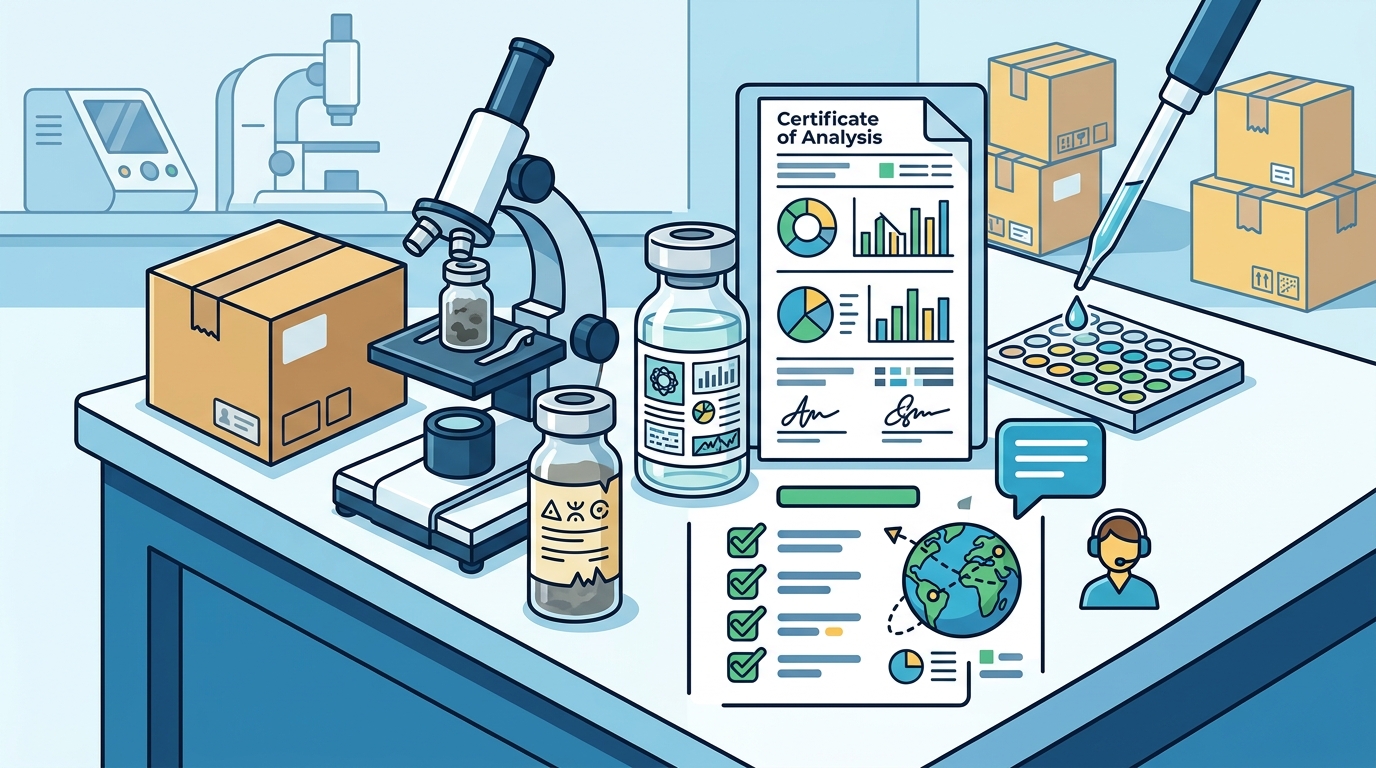
A Certificate of Analysis (COA) is a document issued alongside a product batch that reports identity, purity, and other quality metrics obtained through analytical testing. It is one of the most important tools for evaluating a peptide supplier.
What to Look for in a COA
Strong indicators of quality include batch-specific COAs, independent verification by an accredited laboratory, and transparency around the testing methods used. Generic or duplicated COAs without traceable lot information are a significant red flag. Every peptide vial should include a unique batch or lot number linked to its corresponding COA.
Why Third-Party Testing Matters
Third-party testing is the process of having an independent, accredited laboratory verify purity and identity claims made by the supplier. It provides documented proof that removes bias from the quality assurance process. Aevitas Research publishes its third-party COA documentation so researchers can verify results before purchasing.
Purity Standards and Analytical Methods
A common baseline for research-grade quality is 98%+ purity as measured by HPLC analysis, while 99%+ is considered excellent when paired with identity confirmation via mass spectrometry. Purity alone does not tell the full story, however. Researchers should also look for endotoxin screening results and residual solvent data.
Multiple rounds of HPLC purification remove contaminating reagents and synthesis byproducts. Mass spectrometry then verifies the theoretical molecular weight, confirming the correct sequence was synthesized. Suppliers who openly share this analytical data, such as on Aevitas Research's purity standards page, demonstrate a commitment to transparency.
Domestic vs. Overseas Synthesis
Where peptides are synthesized has a direct impact on quality. Domestically synthesized compounds, particularly those produced in the United States, are generally subject to higher manufacturing standards and more consistent production practices.
Advantages of USA-Based Suppliers
Domestic synthesis offers shorter supply chains that reduce degradation risk during transit, easier communication with the production team, and greater accountability under domestic commercial standards. This does not mean every international supplier is inferior, but USA-based synthesis provides practical advantages that reduce uncertainty around quality and shipping timelines.
When evaluating a supplier, ask where their compounds are synthesized. A transparent supplier will be forthcoming about their manufacturing origins. Aevitas Research details its shipping and fulfillment practices to give researchers full visibility into handling procedures.
Documentation and Transparency Signals
Strong documentation is one of the clearest signals that a peptide supplier prioritizes consistency and quality control. A credible research supplier focuses on analytical validation, scientific terminology, and Research Use Only (RUO) compliance rather than vague marketing language.
Green Flags to Look For
- Batch-specific COAs available before purchase
- Clear product labeling with lot numbers and storage instructions
- Published research library with compound-specific information
- Responsive customer support for documentation questions
- Transparent return and quality assurance policies
Red Flags to Avoid
- No batch numbers on vials or documentation
- COAs that appear generic or reused across products
- Pricing dramatically below market average without explanation
- No verifiable business address or contact information
Explore research-grade peptide reference materials to see how proper documentation and labeling should look in practice.
Supplier Evaluation Comparison Table
| Evaluation Criterion | Reliable Supplier | Unreliable Supplier |
|---|---|---|
| Certificate of Analysis | Batch-specific, third-party verified | Generic, self-reported, or missing |
| Purity Level | 98%+ with HPLC/MS documentation | Unverified or vague purity claims |
| Batch Numbering | Unique lot number on every vial | No lot numbers or traceability |
| Synthesis Location | Clearly disclosed (e.g., USA-based) | Undisclosed or evasive |
| Customer Support | Responsive to documentation inquiries | Slow, generic, or unavailable |
| Pricing | Market-consistent with justification | Suspiciously low with no explanation |
| Return/Quality Policy | Published and accessible | Hidden or nonexistent |
Key Takeaways
- Supplier reliability directly impacts experimental reproducibility and data integrity.
- Always request batch-specific, third-party verified Certificates of Analysis before purchasing.
- Look for HPLC purity of 98% or higher, confirmed by mass spectrometry identity testing.
- Favor suppliers that disclose their synthesis location and manufacturing practices.
- Evaluate documentation quality, labeling consistency, and RUO compliance as trust signals.
- Avoid vendors with pricing far below market average, as this often reflects cut corners in testing.
- Responsive customer support for documentation questions is a strong indicator of supplier credibility.
Frequently Asked Questions
What is a Certificate of Analysis (COA)?
A Certificate of Analysis is a document that accompanies a specific product batch and reports analytical results such as purity percentage, identity confirmation, and testing methodology. It serves as documented proof that the product meets stated specifications.
Why is third-party testing important for research peptides?
Third-party testing removes supplier bias by having an independent, accredited laboratory verify purity and identity claims. This provides researchers with an additional layer of confidence that the material matches its documentation.
What purity level should I look for in research-grade peptides?
A baseline of 98%+ HPLC purity is considered standard for research-grade peptides. Purity of 99% or higher, when paired with mass spectrometry identity verification, is considered excellent.
Does it matter where peptides are synthesized?
Yes. Domestically synthesized peptides, especially those produced in the United States, typically benefit from shorter supply chains, higher manufacturing oversight, and easier accountability. However, synthesis location should be evaluated alongside documentation and testing quality.
How can I spot a fake COA?
Red flags include COAs that lack unique batch or lot numbers, documents that appear identical across multiple products, missing laboratory identification, and absence of specific analytical data like HPLC chromatograms or mass spectra.
What is Research Use Only (RUO) compliance?
Research Use Only is a regulatory designation indicating that a product is intended exclusively for laboratory investigation and is not approved for human or clinical use. Credible suppliers label products with RUO designations and structure their documentation accordingly.
Should price be a primary factor when choosing a supplier?
No. Price comparison is the least useful metric for evaluating peptide quality. Compounds priced significantly below market average may reflect omitted testing steps, offshore manufacturing with lax controls, or dishonest purity labeling.
How do I verify a supplier's reputation?
Check for independent vendor rating platforms like Finnrick Analytics, which tests samples from hundreds of vendors using commercial laboratories. Also look for published customer reviews, documented quality assurance processes, and consistent batch-to-batch results.
Start Evaluating Your Supplier Today
Use the criteria outlined above the next time you source peptide reference materials. If you are looking for a supplier that meets these standards, explore the Aevitas Research catalog to review our third-party tested products, batch-specific COAs, and transparent documentation practices. Every order ships with full analytical verification so you can focus on your research, not your supply chain.