

Starting peptide research can feel overwhelming. Between sourcing lyophilized reference materials, selecting the right reconstitution supplies, and understanding proper storage protocols, new researchers face a steep learning curve. A peptide starter kit is a curated bundle of laboratory consumables and reference materials designed to simplify the preparation workflow so you can focus on the science. In this guide, we break down the essential components every beginner needs, compare popular kit configurations, and explain how to evaluate quality before placing your first order.
What Is a Peptide Starter Kit?
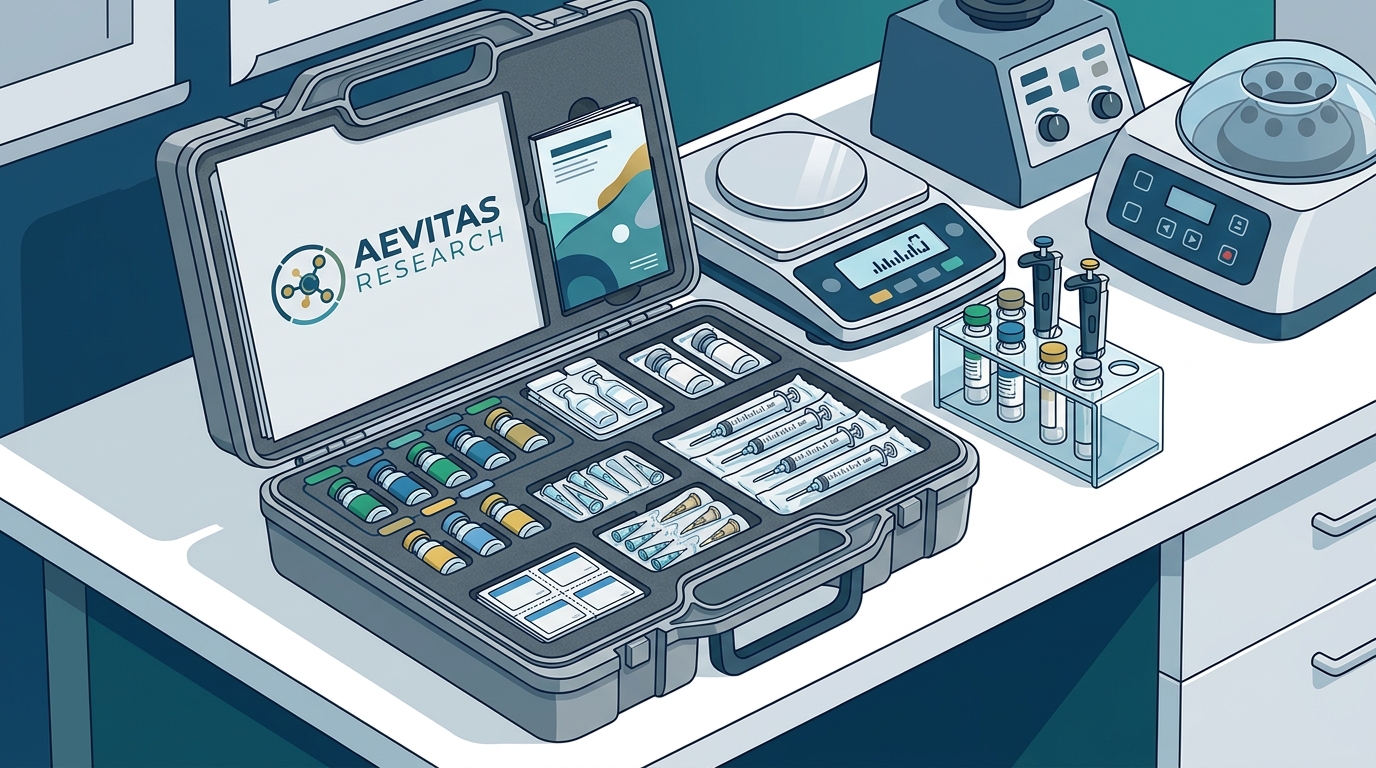
A peptide starter kit is a bundled set of laboratory consumables and, in some cases, reference-grade peptides packaged together to streamline peptide preparation workflows for research and educational purposes. These kits typically include bacteriostatic water, sterile syringes, alcohol prep pads, and sometimes syringe filters.
The goal is convenience: instead of sourcing each item individually from different vendors, beginners receive everything needed to reconstitute and handle lyophilized compounds in one shipment. This reduces errors and ensures compatibility between components.
Essential Components of a Beginner Kit
Bacteriostatic Water
Bacteriostatic water is sterile water containing 0.9% benzyl alcohol that inhibits microbial growth after opening. It is the standard solvent for reconstituting lyophilized peptides in laboratory settings. Aevitas Research offers 3 mL bacteriostatic water vials designed specifically for small-volume peptide reconstitution. For a deeper understanding, read our guide on bacteriostatic water best practices for peptides.
Syringes and Needles
Insulin-type syringes (29-31 gauge) are standard for precise volumetric transfers. Look for individually wrapped, sterile units. Most starter kits include both draw needles (typically 25G) for reconstitution and finer-gauge options for measured transfers.
Alcohol Prep Pads and Filters
Sterile alcohol swabs maintain aseptic technique when cleaning vial stoppers. Some advanced kits also include 0.22 micron PES syringe filters for sterile filtration of reconstituted solutions, adding an extra layer of contamination control.
Most Popular Peptides for New Researchers
Not all peptides are equally suited for beginners. The best starting compounds share wide safety margins in published literature, straightforward reconstitution, and extensive research histories. According to Nature's peptide research index, peptides are among the most actively studied molecular classes in modern biology.
BPC-157
BPC-157 is a 15-amino acid synthetic peptide derived from a protein found in human gastric juice. It is one of the most widely referenced peptides in tissue repair research, with studies spanning over 30 years. Explore the BPC-157 10 mg reference material or read our researcher's guide to BPC-157 for a full overview.
Ipamorelin
Ipamorelin is a selective growth hormone secretagogue peptide known for its favorable side-effect profile in preclinical literature. It is often recommended as a first growth-hormone-related peptide for laboratory investigation. Aevitas Research stocks Ipamorelin 10 mg with third-party verified certificates of analysis.
TB-500
TB-500 (Thymosin Beta-4 fragment) is studied for its role in cell migration and tissue remodeling. Many researchers pair it with BPC-157 for complementary mechanistic studies. See our TB-500 vs. BPC-157 research comparison for a detailed look at both compounds.
How to Evaluate Kit Quality
Quality control separates reliable research materials from questionable ones. Every peptide you purchase for laboratory work should come with a Certificate of Analysis (CoA) showing purity verification via HPLC and mass spectrometry. Aevitas Research publishes CoAs for every product batch, giving researchers full transparency.
Key quality markers to look for include purity levels at or above 98%, endotoxin testing documentation, proper lyophilization (dry, intact cake in the vial), and tamper-evident packaging. Our overview of why purity matters in research-grade peptides explains how impurities can compromise experimental results.
Starter Kit Component Comparison
| Component | Purpose | Typical Quantity | Beginner Priority |
|---|---|---|---|
| Bacteriostatic Water (3 mL) | Reconstitution solvent | 1-2 vials | Essential |
| Insulin Syringes (29-31G) | Measured transfers | 10-20 units | Essential |
| Alcohol Prep Pads | Aseptic technique | 20-50 pads | Essential |
| 0.22 µm Syringe Filters | Sterile filtration | 4-8 filters | Recommended |
| Draw Needles (25G) | Reconstitution transfer | 4-10 needles | Recommended |
| Sharps Container | Safe disposal | 1 unit | Essential |
| Reference Peptide (e.g., BPC-157) | Research compound | 1 vial (5-10 mg) | Optional in kit |
Storage and Handling Best Practices
Proper storage is critical for maintaining peptide integrity. Lyophilized (freeze-dried) peptides should be stored at -20 °C for long-term preservation. Once reconstituted with bacteriostatic water, store at 2-8 °C and use within 2-4 weeks. Never freeze reconstituted peptides, as water expansion destroys the peptide structure.
For a thorough walkthrough of reconstitution steps, read our guide on how to reconstitute peptides with bacteriostatic water. Additional details on temperature sensitivity and degradation factors are covered in our article on peptide stability and proper storage.
Key Takeaways
- A peptide starter kit bundles essential lab consumables so beginners can focus on research instead of sourcing individual items.
- Bacteriostatic water, insulin syringes, alcohol prep pads, and a sharps container are the minimum required supplies.
- BPC-157, Ipamorelin, and TB-500 are among the most beginner-friendly reference peptides due to their extensive published research.
- Always verify that your peptide supplier provides third-party Certificates of Analysis with HPLC and mass spectrometry data.
- Store lyophilized peptides at -20 °C and reconstituted solutions at 2-8 °C; never freeze reconstituted peptides.
- Start with a single compound before combining peptides in more complex research protocols.
- Quality packaging, tamper-evident seals, and transparent purity documentation are non-negotiable quality markers.
Frequently Asked Questions
What is included in a typical peptide starter kit?
A typical peptide starter kit includes bacteriostatic water, sterile syringes, alcohol prep pads, draw needles, and sometimes syringe filters. Some kits also include a reference peptide, but many are sold as supply-only bundles without active compounds.
What is the best peptide for a beginner researcher?
BPC-157 is widely regarded as the best starting peptide for beginners because it has over 30 years of published research, a well-documented safety profile in preclinical studies, and straightforward reconstitution requirements.
Do I need bacteriostatic water or sterile water for peptides?
Bacteriostatic water is strongly preferred. It contains 0.9% benzyl alcohol, which prevents microbial growth after the vial is punctured. Sterile water lacks this preservative and must be used in a single session once opened.
How should I store peptides after reconstitution?
Reconstituted peptides should be refrigerated at 2-8 °C and used within 2 to 4 weeks. Unreconstituted lyophilized peptides are best stored at -20 °C, where they remain stable for months or even years.
What does a Certificate of Analysis (CoA) tell me?
A CoA is a document issued by a third-party laboratory confirming a peptide's identity and purity. It typically includes HPLC chromatography results, mass spectrometry confirmation, and purity percentage. Aevitas Research provides CoAs for every batch.
Can I combine multiple peptides as a beginner?
It is best to start with a single compound and observe results for at least 2-3 months before introducing additional peptides. This approach allows you to isolate variables and attribute observations accurately in your research log.
Why does peptide purity matter?
Impurities such as truncated sequences, residual solvents, or salt contaminants can introduce confounding variables into your research. High purity (98% or above) ensures the compound behaves as expected and that your data is reproducible.
Where can I find research-grade peptide reference materials?
Aevitas Research provides research-grade peptide laboratory reference materials with full CoA documentation, quality-controlled packaging, and responsive customer support. Browse the complete catalog in the Aevitas Research shop.
Start Your Research with Confidence
Building your first peptide research setup does not have to be complicated. Begin with quality-verified reference materials, the right consumables, and clear documentation. Visit the Aevitas Research catalog to explore research-grade peptides backed by third-party testing and transparent Certificates of Analysis. Every order ships with supporting documentation so you can focus on what matters: your research.