

Peptide Quality Documentation: What Researchers Need to Validate Research-Grade Materials
Validating research-grade peptide quality is not optional. Every credible laboratory workflow depends on documentation that confirms the identity, purity, and consistency of the materials being used. Without proper records, experimental reproducibility suffers, data integrity erodes, and downstream conclusions become unreliable. Whether you are building a new peptide research program or auditing your current supplier, understanding the required documentation is essential. This guide breaks down the core documents, analytical methods, and best practices that define research-grade peptide quality validation in 2026.
What Does "Research-Grade" Actually Mean?
A research-grade peptide is a synthetic peptide manufactured and purified to a standard suitable for controlled laboratory experimentation, labeled exclusively for research use only (RUO). This classification means the product is not intended for human therapeutic use and is not subject to the same regulatory oversight as FDA-approved drug products.
The distinction matters because research-grade lab reference materials must still meet rigorous analytical benchmarks. Typical purity thresholds for research-grade peptides fall between 95% and 98% as measured by HPLC, while premium research-grade materials often exceed 98% purity. Suppliers who clearly label products as RUO on product pages, vial labels, and accompanying documentation demonstrate proper classification practices.
The Certificate of Analysis (COA): Your Primary Document
A Certificate of Analysis (COA) is a formal document issued by a laboratory that reports batch-specific analytical test results for a peptide product. It is the single most important piece of quality documentation a researcher should review before using any peptide in an experiment.
What a COA Should Include
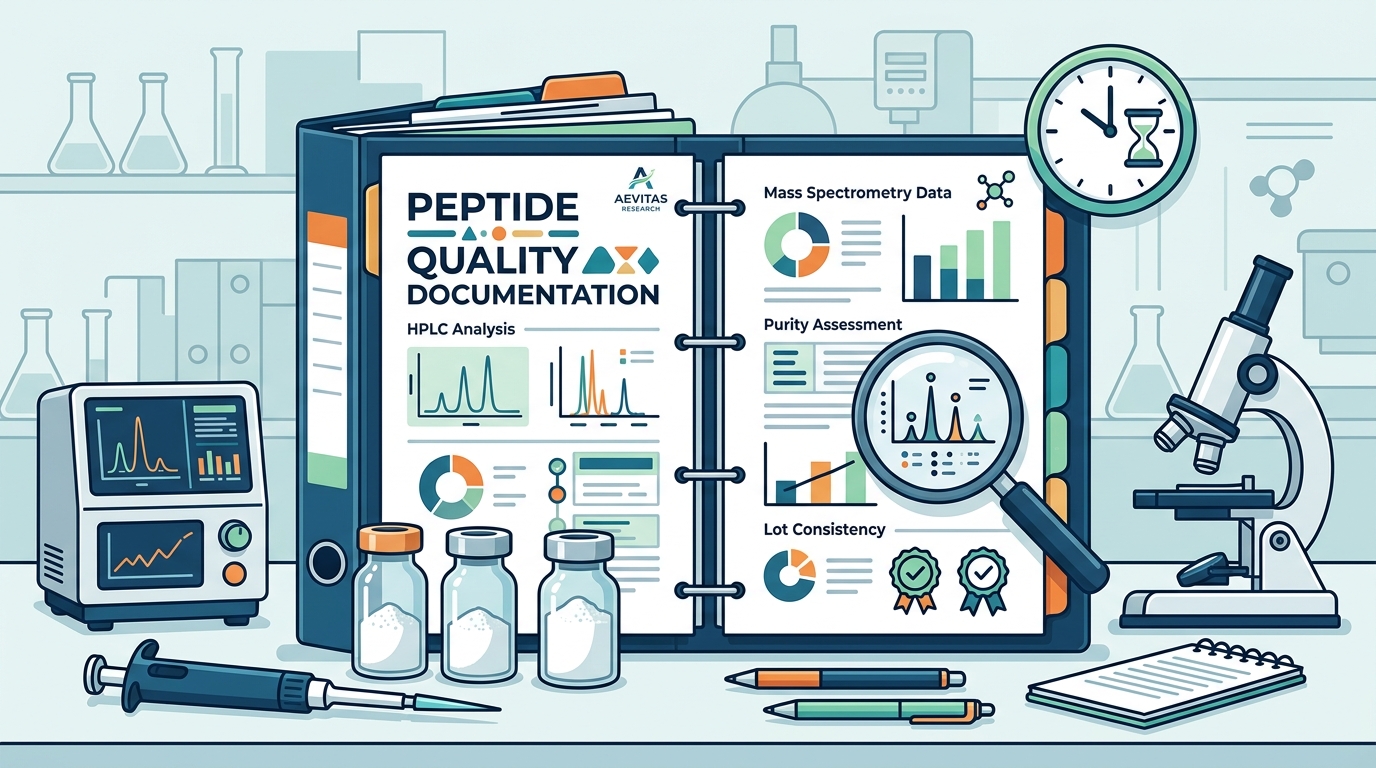
A properly prepared COA typically reports purity percentage (via HPLC), molecular weight confirmation (via mass spectrometry), lot or batch number, testing date, and the analytical methods used. Some COAs also include appearance, solubility data, and storage recommendations. You can review example documentation on the Aevitas Research COA page.
How to Read a COA Critically
Look for the name of the testing laboratory. Confirm the batch number on the COA matches the batch number on your product vial. Verify that the reported molecular weight aligns with the expected molecular formula of the peptide. A COA missing any of these elements should raise questions about supplier reliability.
Why COAs Support Reproducibility
Researchers rely on COAs as documented proof that materials meet defined specifications. This documentation creates a paper trail for compliance and record-keeping, especially when results are published or audited. Even outside regulated environments, having COAs on file is considered a best practice for quality assurance.
Key Analytical Methods Behind Quality Documentation
No single test tells the whole story of peptide quality. Reliable verification requires multiple orthogonal methods, each addressing a different dimension of the material's characteristics.
HPLC (High-Performance Liquid Chromatography)
HPLC is the primary analytical method used to assess peptide purity. It separates chemical species based on hydrophobic interactions, and purity is calculated as the area of the primary peak relative to total integrated area. Research-grade peptides should demonstrate a purity of 95% or above via this method.
Mass Spectrometry (MS / LC-MS)
Mass spectrometry confirms molecular identity by measuring the mass-to-charge ratio of ionized peptide molecules. LC-MS combines liquid chromatography with mass spectrometry for simultaneous identity and quantitation. This is essential for verifying that the synthesized peptide matches its intended sequence.
Additional Tests
Depending on the application, suppliers may also provide amino acid analysis, endotoxin testing, or residual solvent analysis. Understanding why purity matters in research-grade peptides helps researchers determine which tests are relevant to their specific protocols.
Why Third-Party Testing Documentation Matters
Third-party testing is analytical verification performed by an independent laboratory rather than the peptide supplier itself. This independence removes potential conflicts of interest and adds a layer of credibility to quality claims.
Suppliers who rely solely on internal testing leave researchers without objective confirmation. Reputable vendors identify the external testing laboratory by name and make results accessible before purchase. When evaluating vendors, look for references to ISO/IEC 17025 accreditation, which is the international standard for testing and calibration laboratory competence.
At Aevitas Research, third-party testing documentation is a core component of our quality assurance process. Browse our peptide certificate of analysis resources for more detail on how we present batch-level verification.
Batch Traceability and Lot Documentation
Batch traceability is the ability to track a specific peptide product from synthesis through purification, testing, and delivery using a unique lot number. This traceability supports scientific transparency and allows researchers to reference exact material batches in publications or audit records.
Every vial in your lab should have a lot number that connects directly to a corresponding COA. If a supplier cannot provide this linkage, the documentation chain is broken. Consistent batch numbering also indicates structured internal workflow and reliable quality control. Learn more about proper handling after receipt by reading our guide on peptide stability and proper storage.
Documentation Comparison: Quality Tiers at a Glance
| Quality Tier | Typical Purity | Documentation Included | Common Use Case |
|---|---|---|---|
| Crude | <70% | Minimal or none | Method development only |
| Research Grade | 95%–98% | COA with HPLC & MS data | Standard laboratory assays |
| Premium Research Grade | >98% | COA, third-party testing, batch traceability | Quantitative assays, publication-quality work |
| GMP Grade | >99% | Extensive regulatory documentation | Clinical trials, regulated environments |
This table illustrates why documentation requirements scale with quality expectations. Researchers conducting quantitative assays or preparing publishable data should target premium research-grade materials with full third-party documentation.
Key Takeaways
- A Certificate of Analysis (COA) is the foundational document for validating peptide quality and should be reviewed before every experiment.
- HPLC and mass spectrometry are the two primary analytical methods reported on research-grade peptide documentation.
- Third-party testing from an independent, accredited laboratory adds objective credibility to quality claims.
- Batch traceability via unique lot numbers links each vial to its specific test results and supports audit readiness.
- Research-grade peptides typically require 95%+ HPLC purity, while premium tiers exceed 98%.
- Documentation standards scale with quality tier, from minimal records for crude peptides to extensive packages for GMP-grade materials.
- Suppliers who publish COAs, name their testing labs, and maintain consistent batch numbering demonstrate higher reliability.
Frequently Asked Questions
What is a Certificate of Analysis (COA) for peptides?
A Certificate of Analysis is a formal document that reports batch-specific test results including purity, molecular identity, lot number, and the analytical methods used. It serves as the primary quality assurance record for research-grade peptide materials.
What purity level should research-grade peptides meet?
Research-grade peptides should meet a minimum of 95% HPLC purity. For quantitative or high-sensitivity assays, premium research-grade materials with purity exceeding 98% are recommended.
Why is third-party testing important for peptide quality?
Third-party testing provides independent verification of a supplier's quality claims. It removes potential bias from internal testing and is especially credible when performed by an ISO/IEC 17025-accredited laboratory.
What analytical methods are used to verify peptide identity?
The two most common methods are HPLC for purity assessment and mass spectrometry (MS or LC-MS) for molecular identity confirmation. Some suppliers also offer amino acid analysis and endotoxin testing.
How do I verify that a COA matches my peptide product?
Check that the lot or batch number printed on your product vial matches the lot number listed on the COA. Also confirm that the reported molecular weight aligns with the expected value for the specific peptide sequence.
What is batch traceability in peptide research?
Batch traceability is the system of assigning unique lot numbers to each production batch so that every vial can be traced back to its synthesis, purification, and testing records. It supports reproducibility and audit compliance.
Are research-grade peptides FDA regulated?
Research-grade peptides labeled for research use only (RUO) are not regulated as prescription drug products by the FDA. They are intended exclusively for laboratory investigation and are not marketed for human therapeutic use.
Where can I find COAs for Aevitas Research products?
Aevitas Research publishes Certificates of Analysis on our dedicated COA documentation page. You can also request batch-specific documentation through our customer support team.
Verify Your Materials with Confidence
Strong documentation is the foundation of trustworthy research. If you are sourcing peptide reference materials for your laboratory, start by reviewing the quality documentation your current supplier provides. Then explore the Aevitas Research catalog to see how transparent, third-party-verified documentation supports every product we offer. Quality research starts with quality materials.