
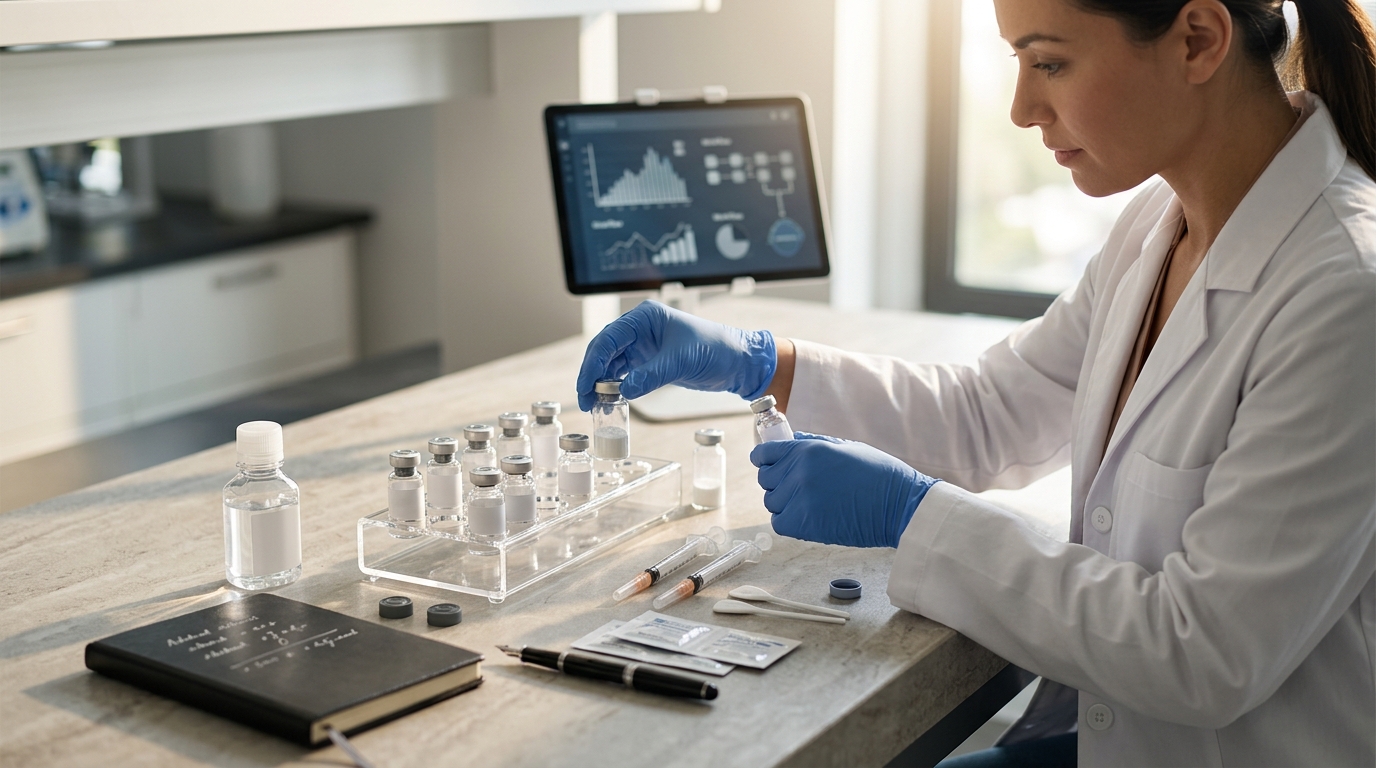
Starting peptide research can feel overwhelming. Between lyophilized vials, reconstitution protocols, and sterile handling requirements, new researchers face a steep learning curve before they even begin an experiment. A well-assembled peptide starter kit solves this problem by bundling the essential reference materials, solvents, and consumables you need into a single purchase. In this guide, we break down what every beginner kit should include, highlight the most popular peptide categories for early-stage studies, and explain how to evaluate quality before you buy.
What Is a Peptide Starter Kit?
A peptide starter kit is a curated bundle of laboratory consumables and reference materials designed to help new researchers prepare, handle, and store lyophilized peptides correctly. Unlike ordering each item separately, a kit streamlines procurement and reduces the risk of missing a critical supply on day one.
Most kits target researchers who work with water-soluble peptides in controlled lab settings. The goal is convenience and consistency: fewer vendors, matched components, and a clear workflow from vial to storage.
Essential Components Every Kit Should Include
Bacteriostatic Water
Bacteriostatic water is sterile water for injection containing 0.9% benzyl alcohol as a preservative. The benzyl alcohol inhibits microbial growth, which allows multi-dose vials to remain usable for up to 28 days after first puncture. Every beginner kit should include at least one vial. Aevitas Research offers bacteriostatic water in a 3 mL format that pairs directly with individual peptide vials.
Sterile Syringes and Needles
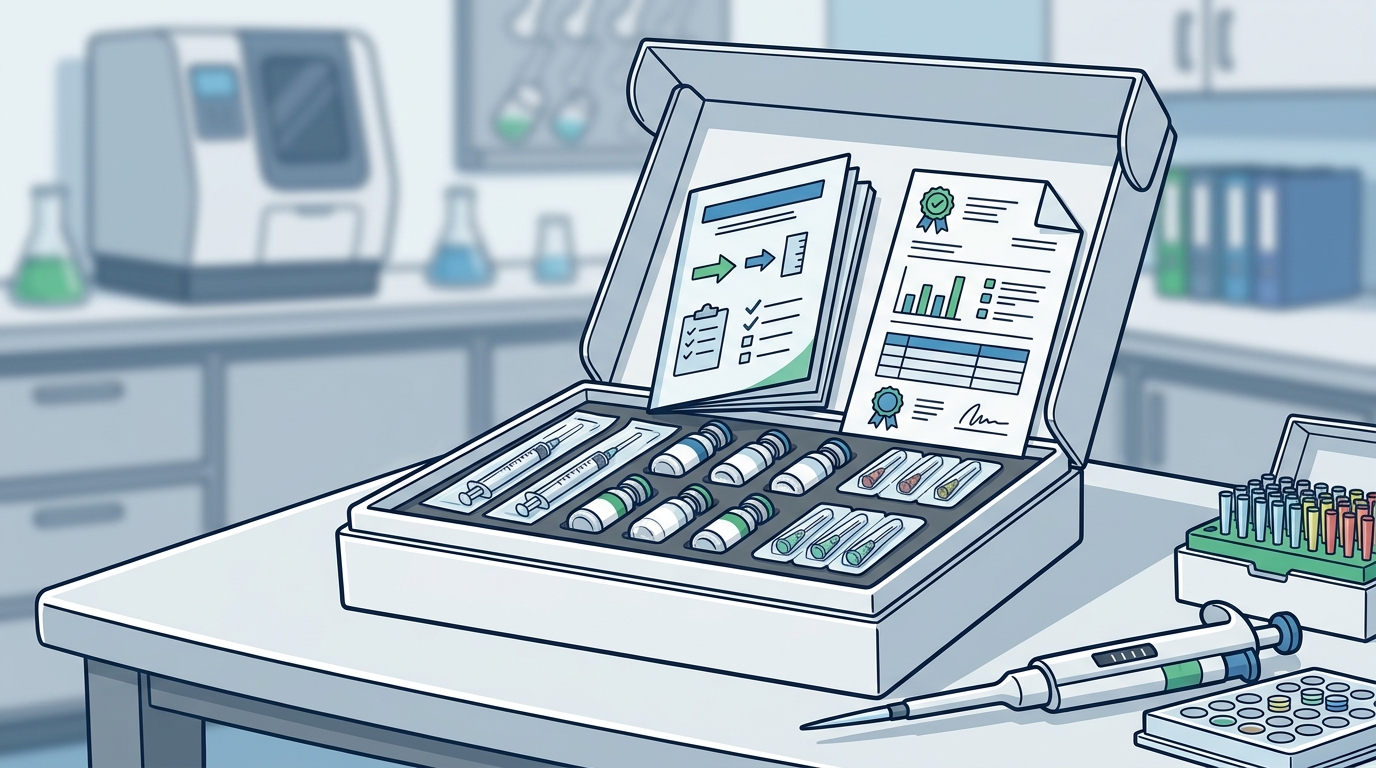
Accurate reconstitution depends on proper transfer tools. Larger-gauge needles (18G to 20G) work best for drawing solvent, while finer-gauge needles (25G to 27G) are preferred for precise volume measurement. Kits should include both sizes.
Alcohol Prep Pads and Vial Accessories
Swabbing vial stoppers with alcohol before each puncture is a non-negotiable step in aseptic technique. Quality kits also include vial labels so researchers can document reconstitution dates and concentrations, supporting traceability.
Top Peptides for Beginner Research Projects
Not every peptide is equally suited for a first project. Beginners benefit from compounds that are well-characterized in published literature, stable when reconstituted, and straightforward to handle. Here are five popular starting points:
- BPC-157 (10 mg) - One of the most widely studied regenerative peptides, with extensive published data on tissue-repair mechanisms.
- TB-500 (10 mg) - A synthetic fragment of thymosin beta-4 researched for its role in cell migration and inflammatory response.
- Sermorelin (5 mg) - A growth-hormone-releasing hormone analog used as a diagnostic agent in clinical studies.
- Ipamorelin (10 mg) - A selective growth-hormone secretagogue with a favorable specificity profile in preclinical literature.
- BPC-157 / TB-500 Blend (10 mg) - A combination reference material for researchers studying synergistic regenerative pathways.
Each of these products is available through the Aevitas Research catalog with third-party testing documentation.
Reconstitution Basics: Getting Started Safely
Reconstitution is the process of dissolving a lyophilized (freeze-dried) peptide powder back into a liquid solution using an appropriate solvent. For most water-soluble peptides, bacteriostatic water is the standard choice.
The basic steps are straightforward: sanitize the workspace, swab both vial stoppers with alcohol, draw the calculated volume of bacteriostatic water, inject it slowly against the inner wall of the peptide vial, and swirl gently until the powder dissolves. Never shake the vial, as vigorous agitation can cause aggregation and molecular degradation. For a detailed walkthrough, see our guide on how to reconstitute peptides with bacteriostatic water.
Once reconstituted, store the solution at 2 to 8 degrees Celsius. Most peptide solutions remain stable for 4 to 6 weeks under proper refrigeration. Learn more in our article on peptide stability and proper storage.
Quality Indicators to Look For
Certificates of Analysis
A Certificate of Analysis (COA) is a document issued by an independent laboratory that verifies the identity, purity, and composition of a peptide batch. Reputable suppliers publish COAs for every lot. You can learn how to read one in our peptide certificate of analysis guide.
Purity Standards
Research-grade peptides should meet a minimum purity threshold, typically 98% or higher as measured by HPLC. Purity directly affects experimental reproducibility. Our deep dive into why purity matters in research-grade peptides explains the analytical methods behind these numbers.
Transparent Sourcing
Look for suppliers who disclose manufacturing origin, storage conditions during transit, and batch-specific documentation. Transparency reduces the risk of receiving degraded or mislabeled materials.
Starter Kit Component Comparison
| Component | Purpose | Typical Quantity | Beginner Priority |
|---|---|---|---|
| Bacteriostatic Water (3 mL) | Reconstitution solvent with preservative | 1-3 vials | Essential |
| Insulin Syringes (1 mL, 29-31G) | Precise volume measurement | 10-20 units | Essential |
| Draw Needles (18-20G) | Solvent transfer | 5-10 units | Essential |
| Alcohol Prep Pads | Aseptic vial prep | 20-50 pads | Essential |
| Peptide Reference Material (e.g., BPC-157) | Primary research compound | 1-2 vials | Essential |
| Sterile Vial Labels | Documentation and traceability | 10-20 labels | Recommended |
| Sharps Container | Safe needle disposal | 1 unit | Recommended |
| 0.22 μm Syringe Filters | Sterile filtration of solutions | 4-8 filters | Optional |
Key Takeaways
- A peptide starter kit bundles reconstitution supplies, solvents, and reference materials so beginners can focus on research instead of procurement.
- Bacteriostatic water with 0.9% benzyl alcohol is the standard solvent for multi-dose peptide reconstitution.
- BPC-157, TB-500, Sermorelin, and Ipamorelin are among the most beginner-friendly peptides due to extensive published literature and stable handling profiles.
- Always verify supplier quality through Certificates of Analysis and HPLC purity data before purchasing.
- Reconstituted peptides should be refrigerated at 2 to 8 degrees Celsius and typically remain stable for 4 to 6 weeks.
- Never shake a peptide vial during reconstitution; gentle swirling prevents aggregation and molecular damage.
- Proper documentation, including vial labeling with dates and concentrations, is critical for reproducible results.
Frequently Asked Questions
What should a peptide starter kit include?
At minimum, a peptide starter kit should include bacteriostatic water, sterile syringes in at least two gauge sizes, alcohol prep pads, and one or more lyophilized peptide reference materials. Optional additions include syringe filters, vial labels, and a sharps disposal container.
What is bacteriostatic water used for in peptide research?
Bacteriostatic water is a sterile solvent containing 0.9% benzyl alcohol that is used to reconstitute lyophilized peptides. The preservative inhibits bacterial growth, making the solution safe for repeated access over approximately 28 days.
Which peptides are best for beginners?
BPC-157 and TB-500 are widely recommended for first-time researchers because they are well-documented in scientific literature, stable at standard refrigeration temperatures, and straightforward to reconstitute. Our TB-500 vs. BPC-157 research comparison outlines the key differences.
How do I reconstitute a peptide for the first time?
Sanitize your workspace, swab the vial stoppers with alcohol, draw the calculated volume of bacteriostatic water, inject it slowly along the vial wall, and swirl gently until dissolved. Detailed steps are available in our reconstitution tutorial.
How long do reconstituted peptides last?
Most reconstituted peptides remain stable for 4 to 6 weeks when stored at 2 to 8 degrees Celsius. Lyophilized (unreconstituted) peptides stored frozen can remain stable for much longer. Always label vials with the reconstitution date.
Why does peptide purity matter?
Purity determines how much of the vial content is the target peptide versus impurities or degradation products. Higher purity, typically 98% or above by HPLC, leads to more reproducible and reliable experimental outcomes.
What is a Certificate of Analysis?
A Certificate of Analysis is a third-party laboratory report that confirms a peptide batch meets specified quality criteria including identity, purity, and sterility. It is the primary quality-assurance document researchers should review before starting any project.
Where can I buy research-grade peptide starter supplies?
Aevitas Research supplies research-grade peptide laboratory reference materials with published COAs and responsive customer support, shipping nationwide across the United States.
Ready to Start Your Research?
Browse the full Aevitas Research product catalog to find peptide reference materials backed by third-party testing documentation, quality-controlled bacteriostatic water, and the support resources you need to begin your first project with confidence.