

Starting a new laboratory project is exciting, but sourcing the right materials can make or break your results. A reference material is a substance with one or more sufficiently well-established property values used for calibration, method validation, or quality control. Whether you are setting up peptide stability studies or running biochemical assays, every data point you generate depends on the quality of your inputs. This guide walks you through a clear, repeatable process for sourcing research-grade laboratory materials, from defining project requirements to placing your first order with a trusted supplier like Aevitas Research.
Define Your Project Requirements First
Before browsing any catalog, document what your project actually needs. Identify the specific compounds, the required purity levels, and the quantities you will use over the project timeline. A project requirements document is a written specification that outlines every material input, storage condition, and quality threshold your study demands.
For peptide-based research, this means specifying molecular weight, sequence identity, and the minimum purity percentage. Browse the Aevitas Peptide Research Library to see how reference materials are organized by category, including regenerative peptides and growth hormone peptides.
Match Materials to Your Analytical Method
The analytical method you plan to use dictates the grade of material you need. According to Sigma-Aldrich's reference material guide, fit-for-purpose selection depends on regulatory requirements, testing application, and required accuracy level.
Understand Material Grades and Purity Standards
Not all laboratory chemicals are interchangeable. Materials are available in grades ranging from technical to reagent/analytical to pharmacopeial, each suited to different levels of precision. A certificate of analysis (CoA) is a document issued by a supplier that details the measured purity, identity, and quality attributes of a specific material lot.
For research-grade peptide work, purity above 98% is a common baseline. Aevitas Research explains this in detail in their guide on why purity matters in research-grade peptides. Understanding the difference between stated purity and verified purity is critical before you commit to a supplier.
ISO Standards to Know
Two ISO standards are especially relevant when sourcing laboratory materials. ISO/IEC 17025 specifies requirements for the competence of testing and calibration laboratories. ISO 17034 outlines the requirements for producing reference materials to high-quality standards. Suppliers aligned with these frameworks demonstrate a commitment to traceability and consistency.
Evaluate Suppliers Using a Structured Checklist
Choosing the right vendor is one of the most consequential decisions in project planning. A supplier evaluation checklist is a standardized tool researchers use to score vendors on quality, documentation, support, and logistics before making a purchase.
What to Look For
According to Lab Manager, vendor qualification is your first line of defense against poor-quality materials. Key criteria include:
- Third-party testing documentation and publicly accessible CoAs
- Transparent quality assurance processes
- Responsive, knowledgeable technical support
- Cold-chain shipping for temperature-sensitive compounds
- Clear return and refund policies
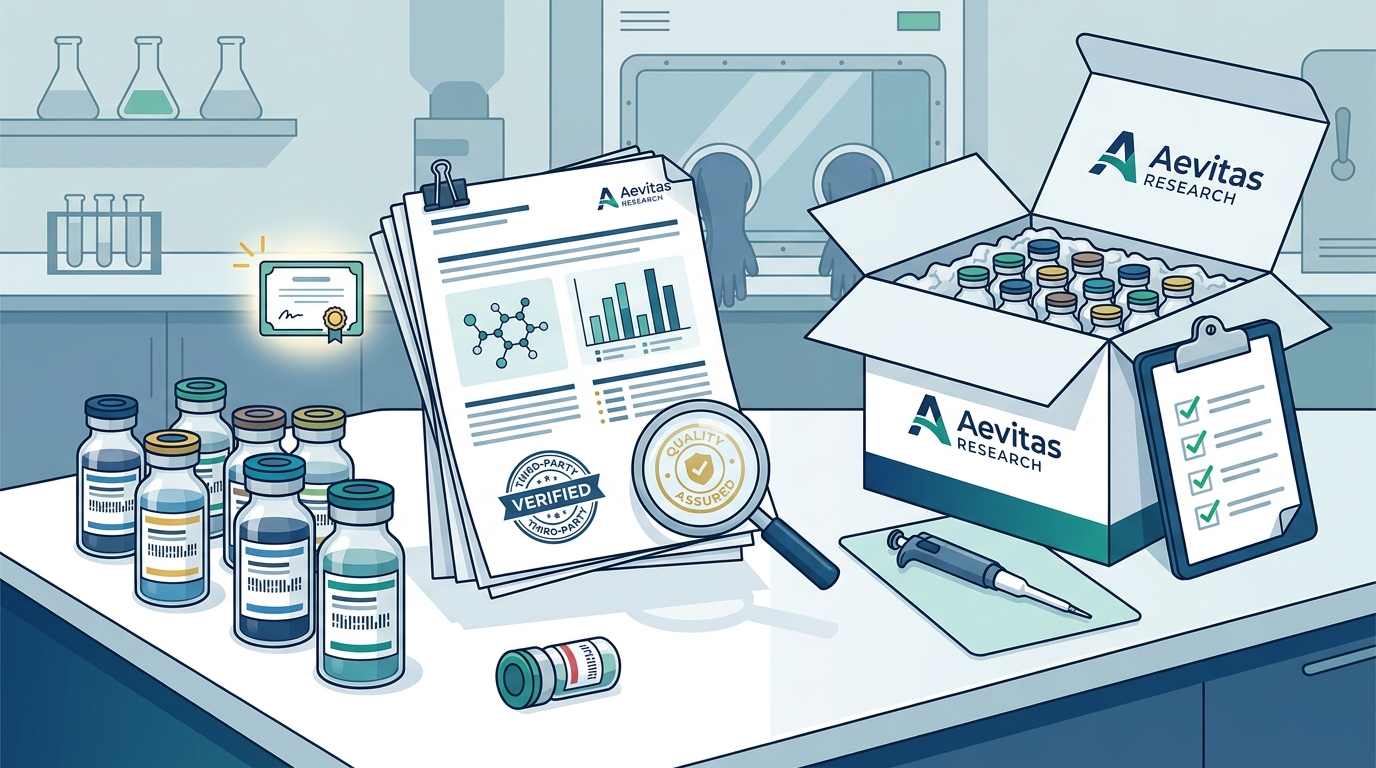
Aevitas Research checks each of these boxes. Their research access portal provides CoA documentation, and their shipping and payments page details fulfillment standards.
Avoid Red Flags
Be cautious of suppliers that list vague purity information, lack verifiable testing data, or cannot discuss synthesis methods when asked. Standardizing on a small number of vetted suppliers reduces inter-supplier variability and simplifies procurement documentation.
Verify Documentation and Certificates of Analysis
Every lot of material you receive should arrive with a CoA that matches the product label. Upon arrival, inspect the packaging for damage, confirm the lot number, and cross-reference the CoA data with your project specifications.
Aevitas Research publishes a detailed breakdown of what a peptide certificate of analysis should include, covering HPLC purity data, mass spectrometry confirmation, and batch-specific testing results. This transparency is exactly what you should demand from any vendor.
Plan for Storage and Handling Before Materials Arrive
Proper storage is non-negotiable. Many peptides and sensitive compounds degrade quickly if exposed to heat, light, or moisture. Review Aevitas Research's peptide stability and storage guide for best practices on maintaining compound integrity once materials reach your lab.
Key storage principles include segregating reference standards from general reagents, sealing containers tightly after each use, and logging every material into your inventory system immediately upon receipt.
Reconstitution Planning
If your project involves lyophilized peptides, plan your reconstitution protocol in advance. Aevitas Research offers guidance on how to reconstitute peptides with bacteriostatic water and carries bacteriostatic water as a companion product.
Compare Supplier Features at a Glance
| Feature | What to Expect from a Quality Supplier | Red Flag |
|---|---|---|
| Certificate of Analysis | Lot-specific, third-party verified, publicly accessible | Generic or unavailable CoA |
| Purity Verification | HPLC and MS confirmation on every batch | "Purity guaranteed" with no data |
| Cold-Chain Shipping | Insulated packaging, dry ice for sensitive compounds | Standard packaging only |
| Technical Support | Reachable team that can discuss synthesis and handling | No direct contact or slow response |
| Return Policy | Clear, documented policy for damaged or incorrect items | No returns or vague terms |
| Educational Resources | Blog posts, research libraries, and handling guides | No supporting content |
Key Takeaways
- Define your material requirements, including compound identity, purity, and quantity, before contacting any supplier.
- Understand the difference between material grades and choose the one that fits your analytical method.
- Use a structured supplier evaluation checklist covering CoAs, testing transparency, shipping, and support.
- Always verify the certificate of analysis against your project specifications upon receipt.
- Prepare storage and handling protocols before materials arrive to prevent degradation.
- Standardize on a small number of vetted suppliers to reduce variability and simplify documentation.
- Leverage educational resources from your supplier, such as the Aevitas Research blog, to stay current on best practices.
Frequently Asked Questions
What is the first step in sourcing materials for a lab project?
The first step is to document your project requirements: the specific compounds, required purity levels, quantities, and storage conditions. This specification guides every purchasing decision that follows.
How do I know if a supplier is trustworthy?
Look for third-party tested certificates of analysis, transparent quality assurance processes, responsive technical support, and clear shipping and return policies. Aevitas Research provides all of these through their About Us and CoA pages.
What should a certificate of analysis include?
A complete CoA should include HPLC purity data, mass spectrometry identity confirmation, lot number, production date, and storage recommendations. Each document should be specific to the exact lot you received.
Why does material purity matter so much?
Inconsistent or low-purity materials introduce variability that is difficult to detect and can compromise months of experimental work. Higher purity means more reliable, reproducible data.
What are ISO 17025 and ISO 17034?
ISO/IEC 17025 specifies requirements for the competence of testing and calibration laboratories. ISO 17034 outlines requirements for the production of reference materials. Both standards help ensure traceability and quality in the materials you purchase.
How should I store peptide reference materials?
Most lyophilized peptides should be stored at -20°C or lower, protected from light and moisture. Always follow the manufacturer's specific recommendations included with the CoA.
Can I order small quantities to test a new supplier?
Yes. Ordering a small initial batch and verifying the CoA, packaging quality, and compound performance is a smart way to evaluate a new supplier before committing to larger orders.
Where can I find research-grade peptide reference materials?
Aevitas Research supplies research-grade peptide laboratory reference materials with third-party testing documentation. Browse the full catalog in the Aevitas Research shop.
Start Sourcing Smarter Today
Ready to set your next laboratory project up for success? Visit the Aevitas Research shop to explore research-grade peptide reference materials backed by third-party CoAs, responsive support, and fast shipping. Your results are only as good as your inputs. Make them count.