

Peptide Quality Documentation: What Researchers Need to Validate Research-Grade Materials
Validating research-grade peptide quality is not a matter of trusting a label. It requires a structured set of documentation that confirms identity, purity, and batch consistency before materials ever enter a controlled experiment. Without proper records, even high-purity peptides become scientifically unreliable. This guide breaks down every document researchers should expect from a credible supplier, the analytical methods behind each one, and how to evaluate whether your documentation meets professional laboratory standards. Whether you are sourcing research-grade peptide lab reference materials for the first time or auditing an existing vendor, this resource covers the essentials.
What Is Peptide Quality Documentation?
Peptide quality documentation is the collection of analytical records and formal reports that verify a peptide's identity, purity, composition, and batch origin. It serves as the objective evidence that separates verified research materials from unsubstantiated claims.
In professional research environments, documentation is not optional. Reproducible results depend on knowing exactly what compound entered the experiment and at what purity. Suppliers that prioritize why purity matters in research-grade peptides build their processes around transparent analytical reporting.
The Certificate of Analysis (COA)
A Certificate of Analysis (COA) is a formal laboratory document summarizing analytical results for a specific batch of material. It is the single most important quality record a peptide supplier can provide.
What a COA Should Include
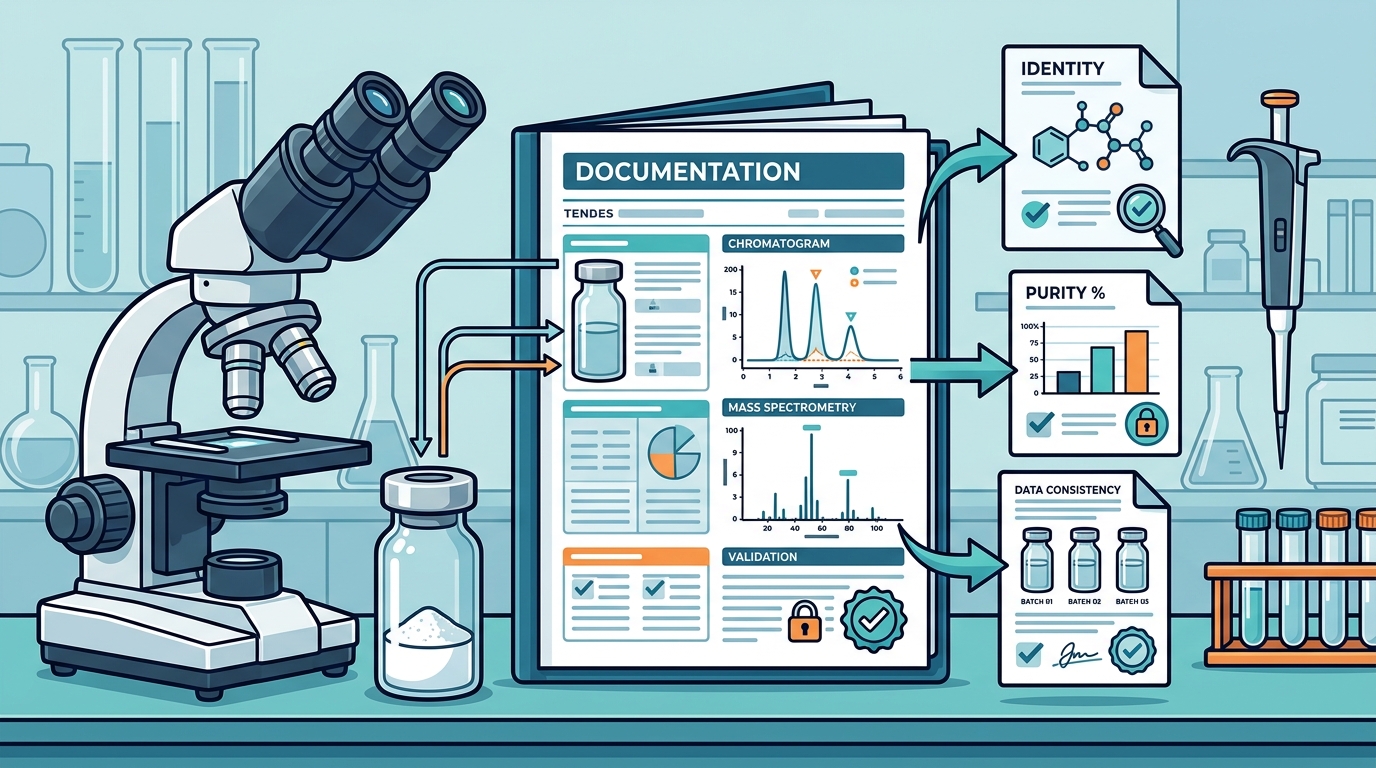
A complete COA lists the peptide name, sequence, molecular weight, purity percentage, analytical method used, batch or lot number, date of analysis, and the name of the testing laboratory. It may also include chromatograms, mass spectra, and acceptance criteria.
In-House vs. Third-Party COAs
COAs issued by an independent, third-party laboratory carry greater weight than in-house documents alone. Third-party testing reduces the risk of bias and adds a layer of verification that professional researchers expect. At Aevitas Research, COAs are accessible to qualified purchasers for every product batch.
Why Batch-Specific COAs Matter
A batch-specific COA is a document tied to one unique production run. Generic COAs reused across batches provide no assurance about the specific vial in a researcher's hands. Purity can vary between production runs even from the same manufacturer, making batch-level documentation essential.
HPLC Purity Testing Explained
High-Performance Liquid Chromatography (HPLC) is one of the most widely used analytical methods for peptide purity verification. HPLC separates compounds based on their interaction with a stationary phase and a mobile solvent, producing a chromatogram that reveals composition.
A valid HPLC report includes method parameters such as column type, gradient profile, and detection wavelength. Research-grade peptides typically report purity of 95% or higher, though premium-grade materials often exceed 98% HPLC purity. A purity percentage without an accompanying chromatogram is considered scientifically insufficient.
Mass Spectrometry for Identity Confirmation
Mass spectrometry (MS) is the standard analytical technique for confirming peptide identity. Liquid Chromatography-Mass Spectrometry (LC-MS) or Matrix-Assisted Laser Desorption/Ionization Time-of-Flight (MALDI-TOF) methods compare a peptide's observed molecular mass against its theoretical mass calculated from the amino acid sequence.
MS data detects truncated sequences, deletion peptides, oxidation products, and mislabeled compounds. For longer peptides where synthesis complexity increases error probability, identity confirmation through MS is a non-negotiable requirement. Researchers can review how Aevitas Research documents identity verification on individual entries in the peptide research library.
Batch Traceability and Lot Numbering
Every peptide vial should carry a unique batch or lot number that links directly to the corresponding COA. Batch traceability is the system that connects a finished product back to its synthesis, purification, and testing records.
Without a batch identifier, the material cannot be independently validated. Proper labeling also supports downstream documentation needs such as lab notebooks, institutional review records, and experimental audit trails. Learn more about what to look for when choosing where to buy research peptides.
Comparing Documentation Standards by Peptide Grade
| Documentation Element | Research Grade | Premium Research Grade | GMP / API Grade |
|---|---|---|---|
| Certificate of Analysis | Required | Required (third-party preferred) | Required (accredited lab) |
| HPLC Purity Report | ≥95% | ≥98% | Per pharmacopeial specs |
| Mass Spectrometry Data | Recommended | Required | Required |
| Batch/Lot Number | Required | Required | Required with full audit trail |
| Endotoxin/Sterility Testing | Not standard | Optional | Required |
| Residual Solvent Analysis | Optional | Recommended | Required |
This comparison highlights that research-grade documentation, while less extensive than GMP, still demands COAs, HPLC data, and batch traceability as baseline requirements.
Red Flags in Peptide Documentation
Not all documentation is created equal. Researchers should watch for these warning signs when reviewing supplier records:
- Generic COAs reused across multiple batches or products
- Purity claims with no chromatogram or raw data
- Missing lot numbers on vials or paperwork
- No mention of the analytical laboratory or testing method
- Suppliers that cannot provide COAs upon request
Incomplete or inconsistent labeling suggests weak quality-control procedures. Reputable suppliers like Aevitas Research provide peptide certificate of analysis documentation as a standard part of every order.
Key Takeaways
- A Certificate of Analysis (COA) is the foundational quality document for any research-grade peptide.
- HPLC purity testing confirms composition, while mass spectrometry verifies molecular identity.
- Batch-specific COAs are essential because purity can vary between production runs.
- Third-party testing adds objectivity and reduces the risk of supplier bias.
- Every vial must carry a unique lot number linked to its COA for full traceability.
- Documentation standards increase in rigor from research grade through GMP/API grade.
- Missing chromatograms, generic COAs, or absent lot numbers are red flags that warrant caution.
Frequently Asked Questions
What is a Certificate of Analysis (COA) for peptides?
A COA is a formal laboratory document that summarizes the analytical test results for a specific batch of peptide material. It typically includes purity data, identity confirmation, molecular weight, the testing method used, and the batch or lot number.
Why is HPLC testing important for peptide quality?
HPLC separates the target peptide from impurities and quantifies purity as a percentage. It is the industry-standard method for assessing peptide composition and is expected on any credible COA.
What is the difference between research-grade and GMP-grade peptides?
Research-grade peptides are intended for laboratory and research purposes only and are verified through HPLC and MS testing. GMP-grade peptides undergo additional regulatory oversight, sterility testing, and documentation requirements for clinical or pharmaceutical use.
How do I verify a peptide COA is legitimate?
Check for a unique batch number, a named testing laboratory, specific method parameters, and accompanying raw data such as chromatograms. Third-party COAs from accredited labs offer the highest level of credibility.
What purity level should research-grade peptides have?
Most research-grade peptides report HPLC purity of 95% or above. Premium research-grade materials often exceed 98% purity, which is preferred for quantitative assays and controlled experiments.
Can I request a COA before purchasing?
Yes. Reputable suppliers provide COAs upon request or make them available through their website. Aevitas Research maintains a dedicated COA access page for this purpose.
What role does mass spectrometry play in peptide validation?
Mass spectrometry confirms that a peptide's observed molecular weight matches its theoretical weight, verifying that the correct sequence was synthesized. It detects errors such as truncations, deletions, and oxidation.
How should peptide documentation be stored after receipt?
COAs and related records should be filed alongside lab notebooks and experimental protocols. Proper storage and handling of the peptides themselves is also critical. Review best practices in our guide on peptide stability and proper storage.
Validate Your Next Peptide Purchase
Quality documentation is not a bonus feature. It is the baseline standard for any research-grade peptide supplier. Before your next purchase, review the COA, confirm the batch number, and verify that HPLC and MS data are included. Explore the full catalog of third-party tested reference materials at Aevitas Research and see what properly documented peptides look like.